Voting in Colombia has become one of the most significant democratic acts in a country marked by political polarization. In the presidential runoff, citizens once again face a decision that goes beyond choosing a candidate. It becomes a way of actively shaping the country’s democratic direction.
Voting is, at its core, one of the simplest acts in democratic life.
However, its simplicity is deceptive.
Behind a ballot cast into a box lies a complex universe of rights, responsibilities, historical memory, and collective decisions. Together, these elements shape both the present and the future of a country.
In Colombia, this issue has once again taken center stage in the public debate at a time of intense political and social tension. The presidential runoff stands as a turning point within the democratic system. As a result, majorities are reconfigured. Decisions take on a particularly visible weight.
This is not merely an electoral event.
Rather, it is a tangible expression of how a society understands itself.
In this context, voting in Colombia becomes a collective decision that transcends the individual.
Voting in Colombia in Times of Political Polarization
In every election, there comes a moment when the country seems to pause for an instant. Conversations intensify, convictions become stronger, and differences become more visible. In this context, the presidential runoff election does more than determine an electoral outcome: it also raises deeper questions about democracy, representation, and the role of citizens in shaping the country’s future.
Since the 1991 Constitution, Colombia has had a presidential runoff system designed to ensure that whoever reaches the presidency does so with the support of a majority of voters. When no candidate obtains the required number of votes in the first round, the two leading candidates advance to a second election that determines who will govern the country for the next four years.
Throughout recent history, this mechanism has become a regular part of Colombian democratic life. In fact, only twice was a runoff unnecessary: in 2002 and 2006, when Álvaro Uribe Vélez secured the required majority in the first round. In every other presidential election held under the 1991 Constitution, the final decision has been made through a second vote.
Within this system, there is also an option that often generates debate: the blank vote. Although it is not counted toward any candidate and does not directly alter the outcome of a presidential election, it constitutes a legitimate form of citizen participation and a recognized expression within the democratic process.
Laura Viera A.: How are you experiencing this runoff election from where you are now?
Alejandro Villamil, political scientist and cattle rancher: In rural areas, there is little connection to demonstrations, campaign advertising, or pollsters reminding us every day of the pre-election atmosphere. Because of that, things are relatively calm here.
Constanza Vanegas Villa, business administrator: With great concern, because I feel the numbers are extremely close between the two candidates competing for first place. Although I am politically conservative and hope the right wins, I feel that the left, which is currently in power, has money and can be so manipulative that it could steal the results. Anything can happen.
Mariana Cortés, TV Producer: These are complex days for our democracy. I am concerned about the institutional tension we are experiencing and the difficulty of building even a minimal consensus around the rules of the democratic game. Beyond who wins, what worries me is the ability of the next president to unite the country.”
Today, in a context marked by political polarization, the runoff election once again places citizens before a decision that goes beyond the names of the candidates. Beyond individual preferences, voting in Colombia means becoming part of a collective decision that will influence the country’s political, social, and institutional direction.
A Country Shaped by Its Own History
Polarization in Colombia is neither a recent phenomenon nor something that can be explained solely by the current electoral moment. Rather, it is the result of overlapping layers of history, inequality, and conflict that have accumulated over time, becoming part of the way the country sees itself and discusses its own reality.
One key factor lies in the depth of its inequalities. Colombia is a country marked by significant gaps in access to education, healthcare, land, and economic opportunities. These differences not only create distinct living conditions but also produce different interpretations of reality. What some perceive as institutional stability may feel like persistent exclusion to others. This material divide eventually becomes a political divide.

Added to this is an internal armed conflict that has evolved over the years. It is a conflict that has left deep marks on the way people understand the state, security, and authority. For decades, politics was shaped by dynamics of confrontation that were not always resolved through democratic debate but often through violence. That memory still influences how ideological positions are interpreted today.
It is important to understand that Colombia’s armed conflict is not merely a matter of the past. It remains profoundly present.
Laura Viera A.: What comes to mind when you think about Colombia’s current political situation?
Alejandro Villamil: It inspires unity in the face of the fear of losing democracy and complete solidarity with those seeking to restore and strengthen the practice of politics in Colombia.
Simón García, university student: The current political situation worries me a great deal because of issues we see every day, such as insecurity, the lack of opportunities for many people, and economic uncertainty. At the same time, it strengthens my conviction that we need to become more involved and not remain indifferent to what is happening in the country.
Constanza Vanegas Villa: A lot of stress, discouragement, frustration, and anger. Sometimes I think we have the leaders we deserve.
Mariana Cortés: For many years I considered myself a centrist because I have always believed that a country’s problems require balance, dialogue, and the ability to listen to different positions. However, the current situation has led me to become more concerned with the defense of principles that I consider fundamental: democracy, the independence of institutions, respect for the rules of the game, and economic freedom. I also believe that a healthy democracy needs clear and stable rules that we are all willing to respect, regardless of who is in power. Those rules are what allow people to start businesses, invest, work, and build life projects with confidence. When rules change according to the political convenience of the moment or when institutions lose credibility, it is not only democracy that is affected: the country’s ability to generate prosperity and opportunities is also undermined.
Isabella García, university student: I feel a great deal of uncertainty and disappointment because I believe there are still many people who do not fully understand the significance of elections in the country.
One way this becomes evident is through the continued importance of issues such as security, order, and authority. For many voters, these are not abstract discussions. They are shaped by lived or inherited experiences: memories of violence, displacement, absent family members, or the feeling of having grown up in a country where stability was never entirely guaranteed.
It is also reflected in how political leadership is interpreted. During this campaign, various narratives have once again brought references to conflict, peace, guerrilla groups, and the “risk of repeating the past” to the forefront. These are not always presented as technical explanations, but as words that trigger very specific emotions: fear, distrust, or even the desire to heal wounds that remain open.
The conflict has also left its mark on the way politics is practiced. For many years, the country became accustomed to a logic in which an opponent was not merely someone who thought differently but someone who could represent a threat. That way of understanding political difference does not disappear easily, and it still surfaces in certain political discourses and in how some sectors view one another.
In the 2026 elections, this translates into campaigns where security and the idea of “what is at stake” occupy a central place. Even when the armed conflict is not directly discussed, its presence can be felt in the tone, the arguments, and the ways candidates seek to mobilize voters.
And perhaps most importantly, this impact is not limited to the regions that experienced the conflict most directly. The armed conflict eventually became a kind of shared backdrop for the entire country—something that, in one way or another, has influenced how almost everyone in Colombia learned to think about politics.
Politics as the Country’s Emotional Mirror
In Colombia, politics is not understood solely through programs, proposals, or institutions. It is also—and perhaps increasingly—understood through the emotions it evokes in people. What inspires trust, fear, hope, or rejection can carry as much weight as any technical argument and may directly influence how people decide to vote in Colombia.
The role of contemporary political leadership is also crucial. In recent years, public debate has increasingly been organized around figures who inspire strong loyalty and equally intense rejection. As a result, the middle ground has shrunk, and the space for consensus has narrowed. In this context, citizens tend to position themselves more definitively.
At the same time, changes in traditional media and social media have amplified this phenomenon. Information now circulates more quickly, but also in a more fragmented way. Algorithms tend to reinforce content that generates reactions rather than understanding. This contributes to different groups receiving different versions of the same events, reinforcing their existing beliefs and making common dialogue more difficult.
All of this takes place in a country where political identities are not always built around solid ideological platforms, but often around everyday experiences, emotions, and perceptions of belonging or exclusion. As a result, polarization is not merely a rational disagreement over public policy; it is also a deeply emotional way of experiencing politics.
Beyond polls, televised debates, and constant activity on social media, several of the people I spoke with expressed a sense of exhaustion with an increasingly intense and polarized public conversation.
For Alejandro Villamil, the issue lies in the quality of today’s political debate. He believes substantive discussions have been losing ground and that it has become difficult to find truly enriching exchanges between candidates or analysts. “I haven’t seen serious debates among the candidates, or even among many political analysts trained in academia,” he says.
Constanza Vanegas Villa shares a different feeling that ultimately leads to the same conclusion: fatigue. After following national politics for years, she admits that she now prefers to distance herself from everyday political discussions. “I don’t want to hear anything. I’m fed up. The left-wing candidate doesn’t connect with me, and the right-wing candidate exhausts me,” she says.
For her part, Mariana Cortés acknowledges that she remains highly informed, although that closeness comes at an emotional cost. “I’m very engaged, and probably because of that, I’m also very stressed. There is a lot of verbal violence and tension. Sometimes I feel we’ve stopped listening to different viewpoints and have devoted ourselves entirely to discrediting those who think differently.”
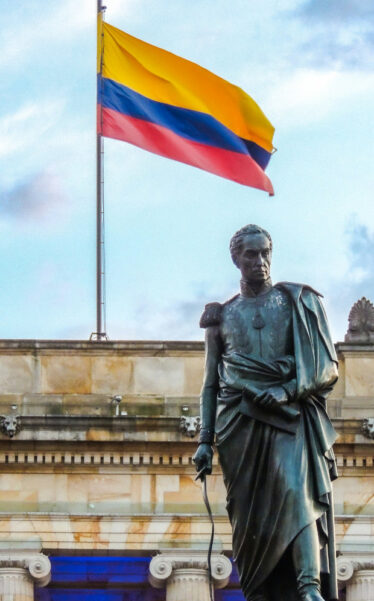
Likewise, Elvira says she feels quite engaged, as the current debate represents a decisive tension between democracy and totalitarianism.
At the same time, I try to stay very connected to the political debate. I make an effort to stay informed in every way possible, not only through traditional media but also through alternative sources. That said, while the candidates running in the second round represent some of my ideas, there are others with which I disagree. However, as is often the case in Colombia, we are used to choosing what we see as the lesser evil and supporting whoever is most capable of fulfilling the responsibilities of the presidency.
For his part, Simón says he feels very connected to the political debate in the country. He has tried to stay as informed as possible, keeping up with current events and everything happening in Colombia.
Although their motivations differ, both testimonies reflect a reality that affects part of the Colombian electorate: the difficulty of remaining engaged in a political debate marked by constant confrontation, even while recognizing the importance of participating in it.
Ideological differences are expressed not only in institutional debates but also in everyday conversations, the media, and digital spaces.
In many cases, this polarization translates into a fragmentation of shared language. Each group interprets reality through different frameworks, consumes different information, and constructs partially incompatible versions of the same country.
This polarization, however, is not an isolated phenomenon. It is part of a global trend in which contemporary democracies face challenges related to disinformation, accelerating news cycles, and the difficulty of sustaining meaningful spaces for dialogue.
In this environment, citizens cease to be passive actors and become a structural element of the democratic system. The quality of information and public debate directly influences how people decide to vote in Colombia.
Because beyond parties, speeches, and campaigns, democracy exists only insofar as people participate in it.
The electoral map and the weakening of the center
In a political context marked by polarization, the results of the first round reveal something deeper than a simple distribution of votes. What they make evident is the clear transformation the Colombian political system is undergoing.
One of the most visible changes is the weakening of the center as an articulating force within the electoral landscape.
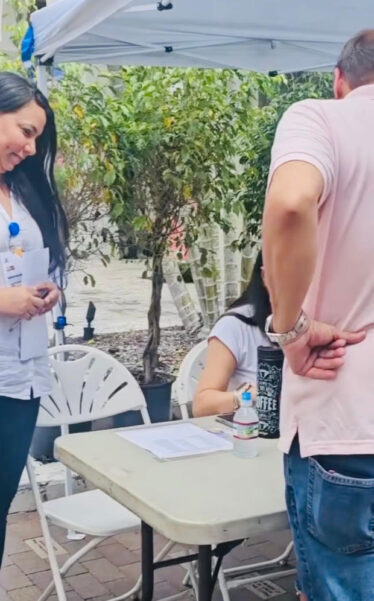
More moderate options entered this election with limited ground. None managed to consolidate enough support to seriously compete for a place in the second round, which reduced the political space of those positioned in intermediate ground.
Within that spectrum, Sergio Fajardo obtained the best result, with 4.2% of the total, equivalent to just over one million votes. Paloma Valencia, meanwhile, attempted to position herself as a centrist alternative from within Uribismo, but her strategy ended up pulled in two directions: she lost support in right-wing sectors, which leaned toward Abelardo de la Espriella, and at the same time failed to consolidate a solid base among moderate voters. Her final result was 6.9%, around 1.6 million votes.
To these results are added approximately 225,000 votes for Claudia López, a figure that is not only small in electoral terms but also below the threshold required to qualify for campaign cost reimbursement.
Together, these three spaces account for nearly three million votes. They were not decisive in the first round, but in this new stage, they take on a different weight. These votes become a key electorate in the second round. Both campaigns are aware of this, and a significant part of current political strategy involves interpreting and competing for these voters who do not automatically align with either of the extremes.
Rather than a homogeneous bloc, this electorate functions as a fragmented space, shaped by doubts, nuances, and diverse readings of the political moment.
In that sense, voting in Colombia is not limited to choosing one option among others. It also implies assuming a collective responsibility for the country’s political, social, and institutional direction.
Voting in Colombia is not simply about supporting a political option
Voting means accepting the responsibility of being part of a collective decision that will have real effects on the country’s social, economic, and institutional life.
Laura Viera A.: Do you remember the first time you voted and what it meant to you at that moment?
Alejandro Villamil, political scientist and cattle rancher: Yes, it was interesting to be part of the group of adults with a great responsibility. There was also a street celebration around the Conservative and Liberal candidates, and showing the inked finger that identified voters.
Simón García, university student: Of course I remember it because it happened during this election. It was special because it was the first time I could take part in an important decision for the country. I felt that I was no longer someone who simply had opinions, but someone who could contribute through my own decision. It was a feeling of responsibility, but also of pride.
Constanza Vanegas Villa, business administrator: Yes, I clearly remember my first time. I voted in local elections to choose the mayor of the city where I live. It meant that I was already an adult, with the ability to make decisions and contribute to the well-being of my city.
Mariana Cortés, TV Producer: Turning eighteen and being able to vote made me feel grown-up and responsible, and for the first time, I understood the responsibility I had regarding something like democracy. I felt that my opinion mattered and that I had a small role in the direction the country was taking.
Isabella García, university student: I remember the first time I voted perfectly because it was this very year. I would dare say it has been one of the most meaningful moments of my life, not only because I was able to cast my vote, but also because the political situation in the country is quite complex. I believe voting is a way for me to contribute to what I consider best for my country and for myself.
Elvira, democracy and citizenship leader: I remember it with joy and a deep sense of civic commitment. My first experience as a voter coincided with the 1990 elections, supporting the historic “Séptima Papeleta.” That moment meant understanding the transformative power of popular will and witnessing the birth of a new constitutional era, marking the beginning of my institutional vocation.
Beyond the current electoral options, what emerges underneath is a political climate that has been built around the center over recent years.
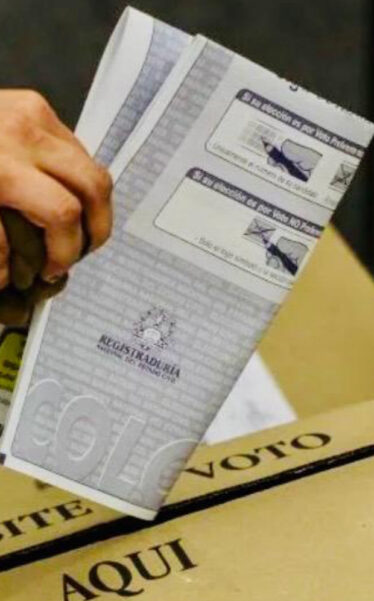
Among different voters, a recurring feeling appears: having been criticized or dismissed for holding intermediate positions, while at the same time, now being addressed as a key electorate in the second round.
In this context, decisions are not linear—and rarely are. Some voters consider supporting Iván Cepeda as a form of containment against the right, while others, to a lesser extent, even consider Abelardo de la Espriella under certain conditions, although with strong reservations.
De la Espriella’s campaign, meanwhile, has not needed to build major bridges toward the center. Its strongest base comes from the rapid alignment of Uribismo after the first round, which leaves its main growth potential in already consolidated right-wing sectors rather than in moderate voters.
Taken together, these positions reveal something broader than a simple electoral dispute. They speak of an electorate that does not move automatically between blocs, but instead negotiates, hesitates, compares, and constantly reinterprets its decisions.
And in that back-and-forth, centrist votes—fragmented, uncomfortable, and at the same time decisive—once again occupy a key place in understanding how Colombia’s next president may be decided.
The value of voting in Colombia beyond the individual act
Let us begin by saying that voting is often understood as a personal, almost intimate decision. A brief gesture that takes place at a specific moment on election day.
But its impact is profoundly collective.
Each participation adds to a structure that defines majorities, guides public policy, and shapes the country’s institutional direction for years. Even when it seems like an isolated act, it is part of a network of consequences that extends far beyond the moment the ballot is cast.
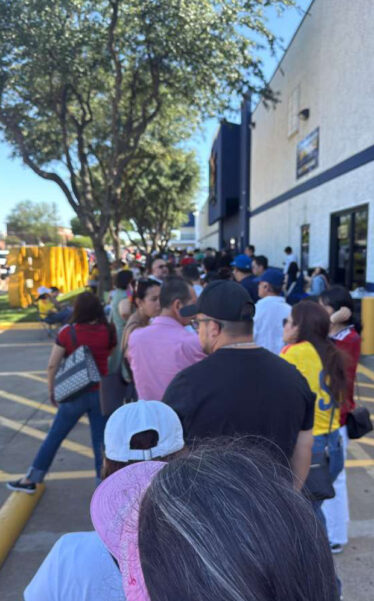
At the same time, abstention also participates in this system—not as a neutral gesture, but as an absence that shifts the balance of power and affects the outcome of the democratic process.
In that sense, voting in Colombia is not only a right guaranteed by the Constitution.
It is also a way of sustaining the legitimacy of the political system.
Laura Viera A.: What does voting in Colombia today represent for you?
Alejandro Villamil: Freedom.
Simón García, university student: Voting represents the opportunity to participate in building the country I want to live in. It is a way to express our ideas and to take responsibility for Colombia’s future.
Constanza Vanegas Villa: An act of responsibility.
Mariana Cortés: Today, voting represents much more than choosing between candidates. It represents defending a system that allows us to change the country’s direction through the ballot box, while respecting democratic rules.
Isabella García, university student: It means voting for a better country and a better future. I care about everyone having a better quality of life, and I can contribute to that through my vote. Honestly, I feel very happy to have that opportunity.
Democracy does not end on election day. It is a continuous process that requires attention, monitoring, and participation beyond the moment of voting.
From public conversation to civic oversight, including informed debate, demands for institutional transparency, and the ability to question those in power.
Voting in Colombia as a shared decision
We must keep in mind that in polarized contexts, information becomes an especially sensitive field. What matters is not only what is said, but how it circulates. It also matters which versions gain space in public conversation.
Political narratives can be simplified, accelerated, or fragmented with ease. This makes it increasingly difficult to understand what is at stake. In this scenario, the role of an informed citizenry becomes central.
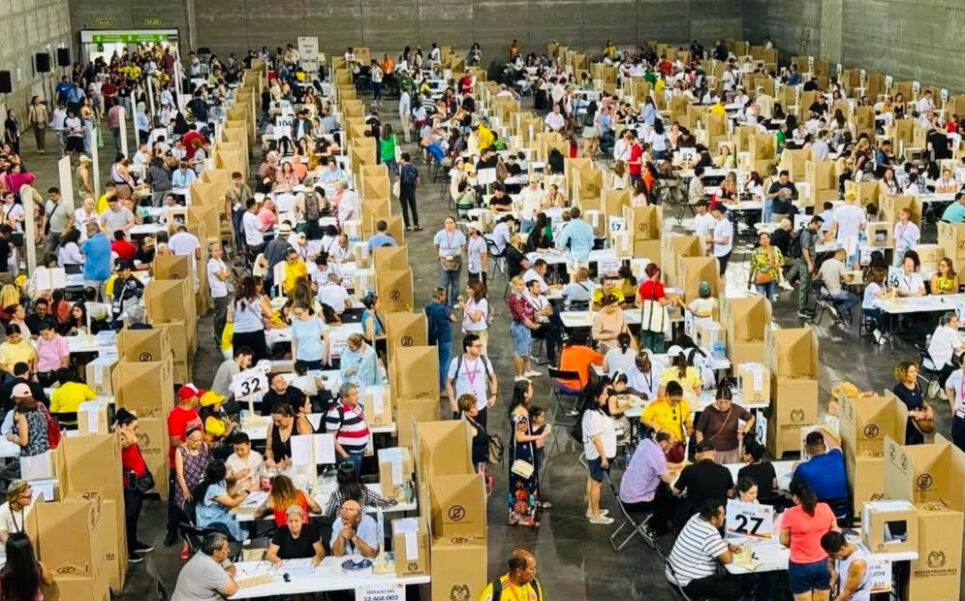
It is not only about accessing information. It is about comparing it, interpreting it, and situating it within a broader framework. This is easier said than done. That framework includes political history, social inequality, and institutional processes.
The quality of a democracy does not depend only on its formal institutions. It also depends on the quality of the public debate that sustains it.
When that debate deteriorates, democracy weakens. When it expands and becomes more demanding, it strengthens. In that sense, voting does not begin on election day. It begins long before—within the way a society talks to itself.
The vote as an act of presence
In every democracy there is a gesture that seems simple, almost routine, yet sustains much of the system: voting. It is the moment in which citizens make themselves present within a mechanism that works through delegation, but depends on participation to remain alive.
The Colombian political system is based on a simple idea: delegating decisions to those elected to represent the citizenry. For this reason, voting is not only choosing—it is deciding to participate.
Every publicly elected office defines the direction of policies that affect everyday life. But it is important to understand that voting not only chooses individuals; it also demands accountability. It works as a form of memory and control: a reminder that power is neither permanent nor automatic.
And when participation is broad, democracy becomes more legible. Decisions gain collective weight, and the system is sustained with greater legitimacy.
In that sense, voting is not merely an electoral procedure, but a form of presence in the public sphere: a way of affirming that one is part of the decisions that shape the country.
When politics becomes economics
Behind every election, it is not only political ideas that are at stake, but also a certain way of understanding the country’s economy. Voting, although it may not seem like it, also participates in that construction.
Voting is also, indirectly, a way of taking part in defining a country’s economic model. Behind each candidacy lies a different understanding of growth, work, and the distribution of resources.
The decisions made at the ballot box ultimately translate into public investment, education, healthcare, and development opportunities. The link is not immediate, but it is constant.
Political stability that comes from participatory elections also has effects beyond politics: it influences trust, investment, and the country’s perception both internally and externally.
In sum, the economy is not separate from the act of voting, but is deeply shaped by it, even when this is not evident at the moment of decision.
Voting as a form of social change
Voting is also a way of expressing what kind of society people want to build. It not only defines governments; it also reflects collective priorities, values, and limits.
Each vote also speaks of values. It reflects what kind of society is desired and which rights are considered priorities.
Through electoral participation, debates on equality, inclusion, and human rights are advanced. It determines the place that issues such as diversity, justice, and the protection of minorities occupy in the public agenda.
It is also a form of generational inscription: each election opens or closes possibilities for those who come after. Education, employment, and the environment are not only political topics but decisions that shape the future.
In this sense, voting not only manages the present; it also projects the kind of society that is being imagined.
When people do not vote, and when voting begins earlier
Absence also carries political weight. Not participating does not mean being outside the system, but influencing it through another form of presence: the presence of a void that also alters outcomes.
Abstention also speaks, even if it does so in silence.
Laura Viera A.: What is lost when people decide not to vote?
Alejandro Villamil: We lose the representation of all the interests and needs of Colombians.
Simón García, university student: When people choose not to vote, they lose the opportunity to influence decisions that affect all of us. I understand that some people are disappointed with politics, but if you do not vote, you allow others to decide for you, and that should not be the case. People need to stand up for their ideals, even if they know those ideals are not shared by the majority, and fight for them.
Constanza Vanegas Villa: The right to have a voice. At this moment, I feel that not voting puts the country’s democracy at risk.
Mariana Cortés: The opportunity to influence decisions that affect our daily lives. I understand that frustration or disappointment may exist, but I believe the response should be greater participation, not indifference.
Isabella García, university student: I believe what is lost is that sense of belonging, of love for one’s country. Above all, it is the country itself that loses.
Elvira: Citizen sovereignty is lost, and the country is handed over through omission. By renouncing the vote, the capacity to restore order is weakened. Abstention undermines institutions, silences constructive voices, and fragments the social fabric. Choosing not to vote deepens institutional distrust and makes hope and a sense of future more difficult to sustain.
When fewer people vote, democracy loses part of its symbolic strength. Decisions begin to feel less representative, and the space can more easily be occupied by organized or more visible interests.
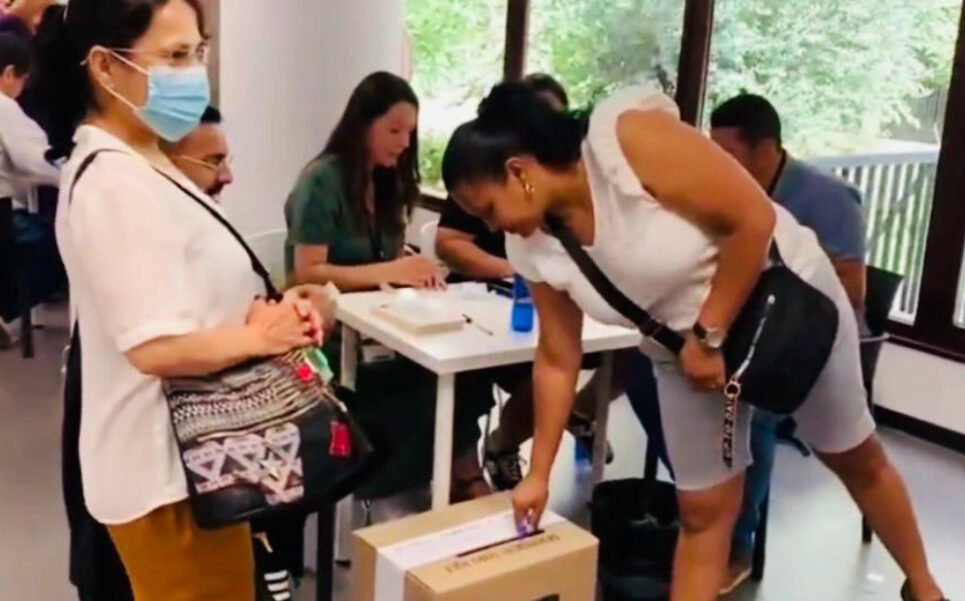
Put differently, when participation is low, public debate tends to become more fragmented and less inclusive. The distance between citizens and power grows, even if it is not always immediately visible.
That is why participation not only adds voices: it also balances the system.
But this participation does not begin on election day. It begins much earlier, in a less visible but equally decisive space: the way a society informs itself, converses, and builds judgment.
Voting does not begin at the ballot box. It begins in the way a society speaks to itself.
Knowing proposals, understanding contexts, comparing information, and listening to different voices are part of the same democratic act. It is not only about choosing, but about understanding what is being chosen.
In this sense, democracy does not happen only at the ballot box. It also happens in conversation, in doubt, and in the way citizens choose to look at their own country.
And it is there, in that space before the decision, where voting truly begins to exist.
The emotional map of the second round
It is important to keep in mind that what the first round left behind was not just a sum of votes. It was also an emotional portrait of the country at a very specific moment.
More than a clear left–right choice, the second round seems to have taken shape as a deeper question: what kind of fear best organizes citizens at this moment, and how those emotions influence the act of voting in Colombia.
On one side, there is the fear of the continuity of Gustavo Petro’s project. On the other hand, the fear of a sharp turn toward a right wing that part of the country perceives as unpredictable or excessive.
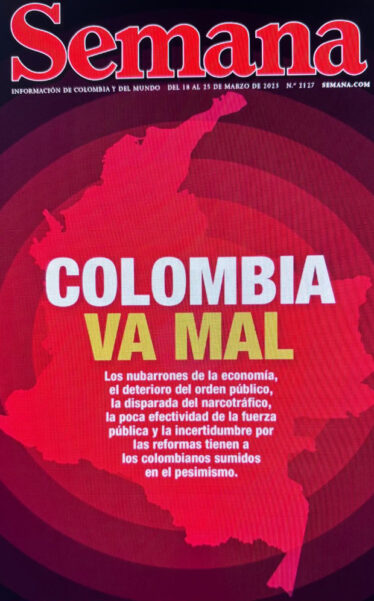
Between these two sensitivities lies the space where the election will be decided.
The preliminary count has only made this tension more visible. The race has stopped feeling like a broad scenario with multiple options.
It has gradually become a more direct duel between two ways of understanding the country. Not only two political projects, but two ways of reading the present.
At this point, public conversation shifts less toward programs and more toward perceptions of risk.
Laura Viera A.: Do you feel that voting can really change something in the current context?
Alejandro Villamil: Stay strong. For Colombia, we must unite to make our homeland great.
Simón: Yes, absolutely! An individual vote may seem small, but democracy is built precisely through millions of individual decisions. If people participate, it is possible to create change and send a clear message about the direction the population wants the country to take.
Constanza Vanegas Villa: Yes, at this moment, voting is the only option to free ourselves from tyranny.
Mariana Cortés: Yes, absolutely. History shows that electoral decisions have real consequences for the direction of countries.
Isabella: Yes, of course. Not in a magical or immediate way, but millions of votes from Colombians can certainly help determine the institutional, economic, and social direction of the country.
Elvira: I have absolute certainty that voting is the most powerful tool for transforming realities and correcting course. In the current context, each vote can be a decisive endorsement of order, stability, and legality. Underestimating its power is a serious mistake and reflects a profound lack of commitment to one’s civic role and to the country. A conscious vote safeguards the future.
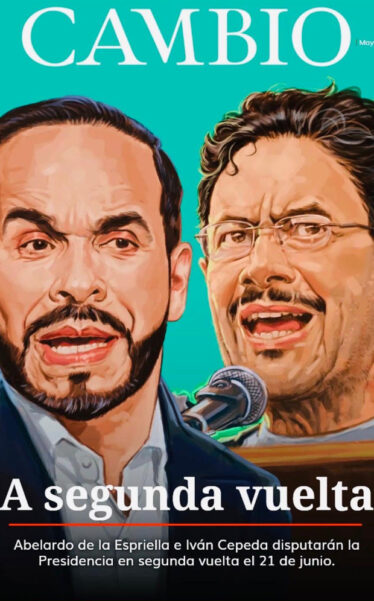
For some, Iván Cepeda represents continuity of the current project, with its focus on social reforms, total peace, and a possible constitutional discussion.
For others, Abelardo de la Espriella represents a turn toward order, authority, and a reconfiguration of institutional balances.
Both enter the second round not only as candidates, but as symbols—symbols around which expectations and fears are projected.
In their post–first round speeches, this interpretation became even more visible. On one side, there is concern about rolling back social progress. On the other hand, fear of power concentration and weakening of institutional checks and balances.
Voting in Colombia between the center, the margins, and uncertainty
In the current context, Iván Cepeda may seek to reinforce a more institutional image, aiming to build bridges with moderate sectors that are cautiously observing the current government. This would imply taking some distance from proposals such as a Constituent Assembly and emphasizing a path of broader agreements, without fully breaking with his political base.
Abelardo de la Espriella, on the other hand, faces the challenge of expanding his support base without losing the energy that brought him this far. His task is to sustain the mobilization of his supporters while also appearing more open to those who do not share his style, but do share his rejection of the current government.

Between the two, the campaign has been adjusting tone and strategy in response to an electorate that remains in constant motion, a dynamic that reflects the broader landscape of voting in Colombia.
But beyond the candidates, the election is also being shaped elsewhere.
A significant part of the country did not participate in the first round. What a major issue this is! That 42% abstention opens up a decisive space in such a close race, even if it is neither homogeneous nor easy to predict.
Traditional political structures, regional dynamics, and local mobilization networks also come into play, regaining importance in moments of high competition. In some territories, these forces can tilt the balance in ways that are not easily visible from the national conversation.
Taken together, what emerges is an election that cannot be explained solely through ideas, but also through the way political emotions circulate: trust, distrust, hope, and uncertainty.
Laura Viera A.: If you could say something to someone unsure whether to vote in this second round, what would you tell them?
Alejandro Villamil: Stay encouraged. For Colombia, we must come together to make our country great.
Constanza Vanegas Villa: I understand those who are tired of politics and feel that nothing changes. But even so, voting remains the only way to influence the direction the country will take.
Mariana Cortés: I would tell them to vote conscientiously. To stay informed, listen to different perspectives, and think about the country they want for the coming years.
Isabella: I would tell them that I understand their frustration and exhaustion because many citizens feel that politics in Colombia does not deliver on its promises. But that is precisely what should encourage us to participate.
Elvira: I would remind them that indifference has never built a great nation and that indecision weakens our freedoms. In this second round, indifference is not neutrality; it is, in effect, a vote for deepening crisis and institutional dismantling.
Laura Viera A.: What would you like people to understand about what it means to participate in an election today in Colombia?
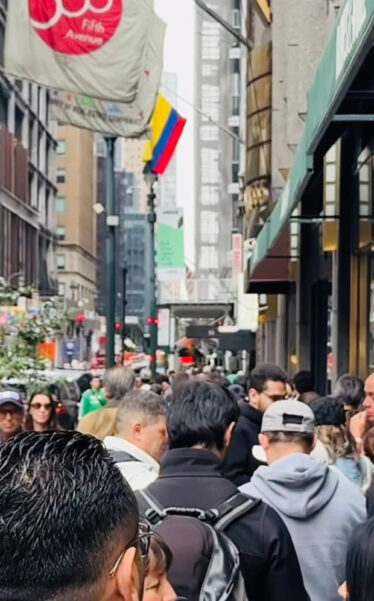
Alejandro Villamil: It is an opportunity to bring change to what used to be traditional politics marked by corruption and neglect, and to support a new era of social and economic growth.
Constanza Vanegas Villa: This is our opportunity to prevent a left that does not work (proven worldwide) from further corrupting our economy and to ensure future generations can have a better future.
Mariana Cortés: I would like people to understand that voting is not simply choosing a candidate. It is participating in the construction of the country’s future. Democracies do not sustain themselves; they require citizens who engage, demand results, and defend institutions when they are challenged.
Isabella: Participating in elections in Colombia is not just about casting a vote for the sake of voting. It is about defending democracy and exercising both the right and the responsibility that all Colombians share. Democracy does not take care of itself; it is protected through our votes, through participation, through staying informed, and through respecting one another.
Elvira: It means exercising active co-responsibility in restoring national stability. It is understanding that what is at stake is the right to undertake, to dissent, to self-manage, and to live in a democracy. Going out to vote is an essential and necessary action of a mature citizenry, tired of anarchy and unwilling to give up its freedoms. It is the democratic way to restore order, trust, economic and social development, eradicate poverty, and achieve development for all.
And in that more fluid space, each vote ultimately carries a weight that goes far beyond the individual.
Because, at its core, this is not only about an electoral contest, but about how the very idea of democratic participation is understood today.
Closing: democracy as a living practice
Democracy rarely fits the orderly image that is sometimes projected of it. We must understand (or try to) that it is not a system that “works” only when activated at the ballot box. Nor is it a balance sustained solely by institutional inertia. Rather, it is a permanently evolving process, made of tensions, disagreements, partial agreements, and decisions that never fully close.
Democracy is a living, fragile, and constant practice. And precisely for that reason, it depends on something that cannot be delegated: participation.
In Colombia, the second round is not only the moment when an electoral result is decided. It is also a reminder that democracy is not exhausted by the institutions that administer it, but exists to the extent that people exercise it, discuss it, and sustain it, even when it feels uncomfortable or uncertain.
Voting in Colombia is not only about choosing between options. It is about participating in a collective construction that does not end on election day, but continues afterward, in the way a society lives with its decisions, disagreements, and consequences.
Perhaps that is why voting is not fully understood through certainty or through the idea of a definitive answer. It is better understood through something more open: the decision to be present in a process that is always in motion.
It also implies a broader responsibility. Democracy is sustained not only through demands placed on institutions, but through coherence between what is expected of them and the decision to participate in their construction. Criticism, disagreement, and the demand for change carry more weight when accompanied by active presence in the process that makes them possible. One should not live as a spectator, but as part of what is being built, even when its final shape is still unclear.
Voting is an individual gesture with profoundly shared effects. A brief action in appearance, yet embedded in a broader network of history, memory, and shared future.
Voting is no longer just a gesture of personal preference or a way of reaffirming tastes or affinities. It implies taking on a civic mandate aimed at defending and rebuilding the country.
Civic participation is the foundation of any strong democracy. In Colombia, voting is not only a right but also a fundamental responsibility. Each vote is an expression of will, a concrete way of influencing the country’s direction and the living conditions of all citizens.