Some experiences can only be told through sensitivity. Not because they are impossible to explain, but because words alone are not enough. Migrant motherhood is one of them. Migration is too.
When both intersect, an emotional territory emerges that is difficult to name. A space where identity transforms while trying to preserve something intact. It becomes a kind of permanent translation between who we once were, what we left behind, and what we are learning to become.
I am one of the women who live migrant motherhood, and my conversation with Shirin Lausch, author of With Other Roots (original title: Mit anderen Wurzeln), was revealing and personal in many ways. This book, which brings together the voices of forty migrant mothers in Germany, does not function solely as an interview about parenting. Instead, what emerges is something else: an intimate archive about memory, belonging, and the invisible forms of care.
And perhaps that is why this story belongs to The Shutter. Because there are stories that are not observed through information, but through the emotional texture they leave behind.
Migrant Motherhood and Migration: The European Landscape
Before entering the conversation with Shirin, I felt it was important to look at the broader context. Behind every intimate story, there is also a social reality that transforms the way we raise children.
Migrant motherhood is no longer a peripheral experience in Europe. In fact, it forms part of the everyday fabric of many cities, schools, and homes.
In Germany, more than a quarter of the population has a migrant background, according to recent data from Destatis. Among young adults, the proportion is even higher. One in three people between the ages of 25 and 34 has a family history shaped by migration.
These figures reveal something deeper than a demographic change. Rather, they speak of an entire generation raising children between languages, memories, and multiple cultural references.
At the same time, Germany is once again going through a historic decline in the birth rate in 2025, reaching its lowest level since the postwar period.
The reasons are many: the rising cost of living, housing insecurity in many cities, the difficulty of reconciling work and parenting, delayed motherhood, and the economic uncertainty affecting a large part of the new generations.
But there is also another, less visible element: many women feel that raising children in Germany means sustaining extremely high expectations around motherhood. The pressure to balance economic stability, quality time, professional development, and conscious parenting ends up creating a constant feeling of exhaustion.
In that context, migrant families occupy an important place within Germany’s demographic landscape. In many cities, a significant share of births corresponds to households with migration histories. Consequently, that inevitably transforms the traditional idea of German identity, family, and cultural belonging.
However, behind the statistics, there is another, much more intimate reality.

Migrant motherhood is often experienced through a double adaptation: learning to be a mother while learning, at the same time, to inhabit another country.
New medical systems, cultural codes, and new ways of understanding childhood.
And, often, far from the emotional network that once sustained everyday life.
It was precisely from that reality that my conversation with Shirin began. It was there that figures stop being abstract and become deeply human experiences.
Migrant Motherhood as a Secret Language
Some experiences transform not only everyday life but also the way people relate to one another. Motherhood often does that. Migration does too. When both coincide, a particular sensitivity appears: a more urgent need to be understood, heard, and accompanied. In many cases, migrant motherhood even transforms the way women understand belonging and care.
Perhaps that is why many migrant women end up finding one another from a deeply intimate place, even before truly knowing each other. As if sharing the experience of raising children far from home created a kind of silent recognition that is impossible to fully explain.

Some conversations begin as an interview and end up feeling more like a shared confession.
Laura Viera A: What led you to bring these stories together?
Shirin smiles before answering. She remembers her pregnancy, the birth of her first child, and the urgent need to speak with other mothers.
Shirin Lausch: When I was pregnant with my first child… and also after giving birth, I felt a very strong need to talk to other mothers. To share what was happening, because the changes were very profound. And talking about it helped me understand myself better. And something very beautiful happened to me: when I met another mother, even if I had not known her for very long, we quickly began talking about very personal things. Birth, our partners, financial difficulties… very intimate subjects that we normally do not share with strangers.
Laura Viera A: There was a story that marked the beginning of the book, wasn’t there?
Shirin nods.
Shirin Lausch: Yes. I met a Brazilian woman who had just arrived in Germany shortly before giving birth. And she told me something I never forgot: “You cannot imagine how hard it has been.” She did not speak the language, and she did not have her family or her friends. And on top of that, she was going through pregnancy, childbirth, and loneliness.
Laura Viera A: Is there any experience close to you as a migrant mother?
Shirin remains silent for a few seconds before answering.
Shirin Lausch: And someone who had a similar experience is actually my own mother. Because when I was five years old, my family and I moved to Spain, where we lived for a couple of years. Although the experience was different, the memory of that displacement remains very present. The feeling of arriving somewhere else, hearing another language, and rebuilding everyday life from scratch is also part of her family memory.
Perhaps that is where Mit anderen Wurzeln was truly born: not from an editorial idea, but from an emotional question impossible to ignore. How does a mother hold herself together when everything familiar disappears?
Between foreign languages, paperwork, silences, and distances, many migrant women learn to raise children while also trying to rebuild themselves. And yet, in the midst of that fragility, something deeply human appears: the ability to recognize one another even before knowing each other’s full stories. As if motherhood, more than an individual experience, were a secret form of translation between women who at some point also felt alone.
Raising Children Between Two Worlds
There is something profoundly silent in the experience of raising children far from the place where one learned to be a daughter. Customs that once seemed natural begin to be seen from another perspective. Every day life becomes a constant negotiation between what was inherited and what has been learned. Little by little, motherhood stops being only a bond with one’s children and also becomes an ongoing conversation with one’s own identity.
As the conversation progressed, one idea kept appearing: many decisions we believe to be universal actually belong to the place where we grew up.
All the stories gathered by Shirin have something in common: they all speak of women who inhabit a kind of emotional borderland.
The truth is that raising children between cultures also means constantly negotiating with one’s own roots. The language spoken at home, the recipes that are preserved, the songs, the memories that are passed down, or the silences one decides to break.
Laura Viera A: What challenges appear when motherhood is lived in another country?
Shirin Lausch: Many mentioned language as the greatest challenge. Because it is not only about communicating… it is about being able to find information and, above all, to build a support network. And that is something that is often missing at the beginning. And it is not a coincidence. Because one of the main difficulties for migrant mothers is precisely that: building a network from zero.
Raising children between cultures is also translating the world: choosing what remains and what changes. – Shirin Lausch –
Motherhood, even under the best circumstances, usually needs community. But when a woman migrates, she often also loses the invisible structures that sustained everyday life: nearby family, friendships, shared cultural codes, or simply someone who can help without needing everything to be explained.
As the conversation progressed, one idea kept appearing: many decisions we believe to be universal actually belong to the place where we grew up.
Laura Viera A: Are there cultural differences even in something as simple as daily routines?
Shirin laughs softly before answering.
Shirin Lausch: Yes, completely. For example… bedtime. In Germany, having a fixed routine is highly valued. A clear time… a steady rhythm. The idea is to give children security. For them to know what comes next, and for that to help them calm down. And it makes a lot of sense. Still, it does not work the same way in every context. I remember a story from the book. One family was traveling with another German family. And at one point, the mother said, “It is time to sleep now,” and went to put the baby to bed. But the baby would not fall asleep, cried, and the mother became increasingly stressed trying to follow the routine. Meanwhile, the other family continued talking calmly, with their baby there with them. And in the end, when they put the baby to bed, everything went fine. And that made me think of something important: there is not only one right way to do things. Many times, we believe that what is ours is “normal,” but in reality, everything depends on context. And perhaps motherhood —like many things in life— is not about doing it perfectly, but about finding what works for you. Without judging others.
As we spoke, Shirin made it clear that one of the most important observations she made during the project had to do with the way context completely transforms parenting.
Shirin explained that many of the cultural differences we have make a lot of sense, simply because of the different context.
For example, in Germany, children’s independence is highly valued. Parents often encourage them to do things on their own, learn at their own pace, or even use public transportation independently from a young age.
In contrast, in countries where the level of public safety is not the same as it is here in Germany, the situation is different.
Because, of course, in a context where it is not safe for a child to move around the city alone, the way children are raised changes completely.
Listening to Shirin speak about these small everyday differences inevitably changes the way we understand parenting. What represents order and stability for some families may feel rigid or impossible to sustain for others. And vice versa.
Perhaps one of the deepest lessons of migrant motherhood is precisely this: discovering that many ideas we considered universal were, in fact, cultural. Learning to look at other forms of care without automatically turning them into mistakes or threats.
Because raising children between two worlds also means living with different ways of understanding time, affection, closeness, and family. In that process, many mothers end up building their own language, made of adaptation, intuition, and memory.
Perhaps that is the most complex part: understanding that roots are not fixed structures, but living organisms capable of adapting without disappearing. Every day, decisions become a small balance between memory and the present. And in that process, many migrant mothers end up creating something new: a hybrid form of home where different ways of loving, caring, and inhabiting the world manage to coexist without having to cancel one another out.
Art as an Emotional Refuge
Some memories survive in words. Others need images, sounds, or gestures to remain alive. As the conversation progressed, it became clear that the stories gathered in Mit anderen Wurzeln could not exist solely through verbal narration. There were emotions too complex to be explained directly. Sensations that could only be suggested through art.
When the conversation seemed to be approaching its end, a different question appeared. No longer about parenting or migration, but about the need to create images and symbols capable of holding memory.
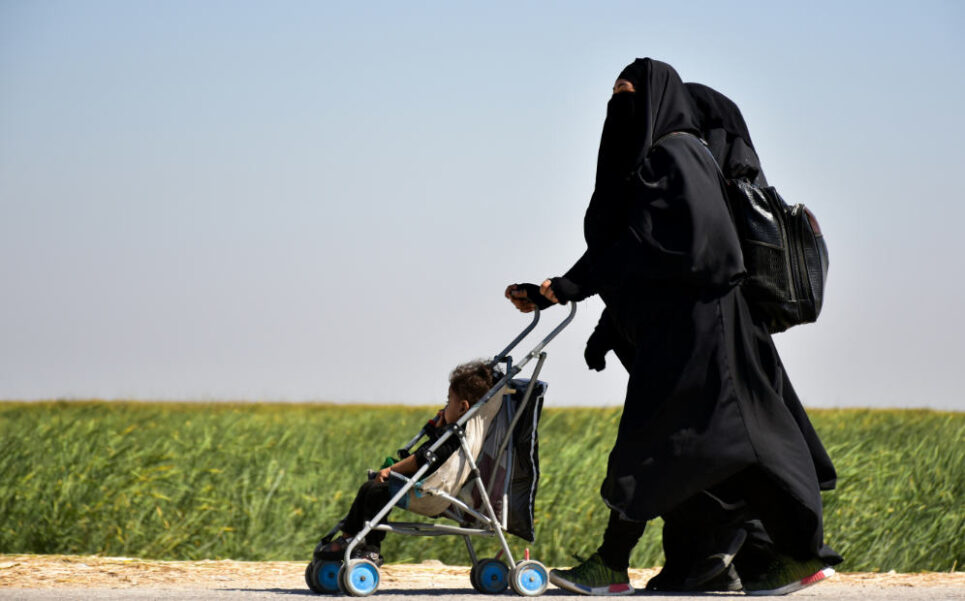
Toward the end of the interview, I shifted the tone slightly.
Laura Viera A: There is also art in the book. Why was it important to include it?
Shirin Lausch: I asked the women for songs, poems, films, and visual references that connected with their experiences. Not as an aesthetic decoration, but as a necessity. Because there are emotions that only find form through art.
Nostalgia, for example, can rarely be fully explained. Sometimes it appears more clearly in a melody heard during childhood. In a family photograph. In a poem read far from home.
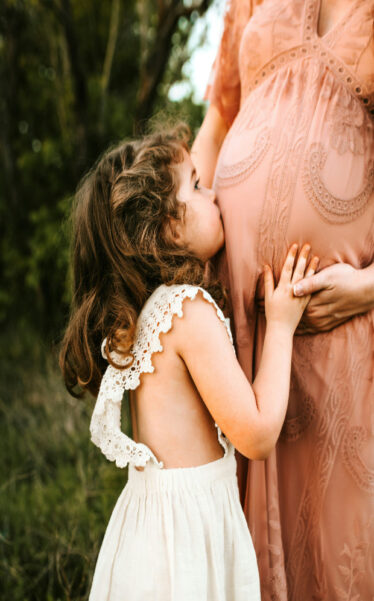
The artistic references included in the project function as small capsules of memory. Fragments capable of holding what words let slip away. And it is there that the book acquires another dimension.
This book does not merely document migrant experiences or diverse forms of motherhood. It builds an emotional landscape made of voices, images, and shared memories.
It is like an intimate album where each story illuminates a different way of belonging.
And perhaps that is why art occupies such an important place within the project: because some emotions only manage to survive when they find a sensitive form through which to be told.
Perhaps that is where the project’s most intimate strength resides. Not in offering closed answers about migration or motherhood, but in building a space where emotions can exist without needing to be fully translated. The songs, images, and poems do not function as decorative accompaniments; they are another way of narrating what rational language sometimes cannot reach. And in that gesture, the book also becomes a refuge: a place where memory finds sensitive ways to remain alive, even far from home.
What Remains
After listening to so many stories, a feeling remains that is difficult to leave behind. It is not only tenderness. Nor sadness. It is the deep awareness of everything involved in sustaining a life while trying to rebuild one’s own far from home.
Toward the end of the conversation, one final question appears.
Laura Viera A: What do you take from this project?
Shirin Lausch: That motherhood is much more diverse than I thought. And that listening to other stories… makes us more empathetic.

And perhaps there lies the true strength of Mit anderen Wurzeln. Not only in documenting experiences of migrant motherhood, but in forcing us to look at what usually remains invisible.
Throughout the entire conversation, one idea kept returning: there is no single correct way to mother. And that sentence, apparently simple, is far more radical than it seems.
Because listening to other experiences forces us to question what we often understand as “natural.” Routines, affection, rest, language, food, and the way we accompany a child. None of that is born in a vacuum. Everything belongs to a specific cultural, emotional, and social history.
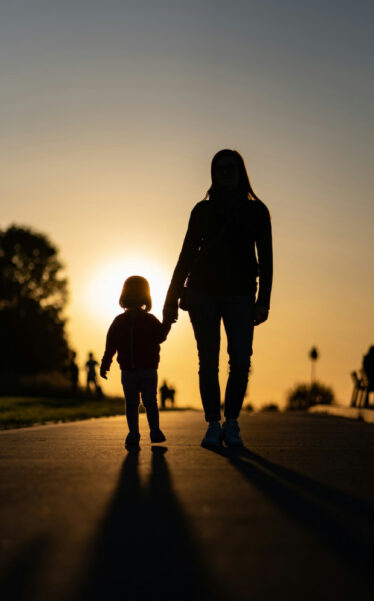
But this book does not speak only about cultural differences. Above all, it speaks about the invisible experience of migrant motherhood. About women who learn to build stability in the midst of distance. About mothers who sustain family memory while moving through bureaucracy, silences, grief, and adaptation processes that rarely find space in public conversation.
And perhaps there, something deeply universal appears.
Because even between different languages, opposing nostalgias, and contradictory ways of understanding the world, something remains intact: the human need to create refuge for others.
Perhaps that is the most powerful image left by Mit anderen Wurzeln. Not motherhood as idealized sacrifice, but as a silent act of creation. The ability to gather fragments —memories, accents, absences, customs— and turn them into a livable place for someone else. As if, in the end, migration and mothering shared the same question: how to continue belonging when everything around us has changed.