Motherhood is either a turning point in a woman’s life or simply the continuation of life itself. It begins with an inexplicable glow.
Comments about appearance: beautiful, radiant, glowing… The light in her eyes fades as fleetingly as a meteor shower. The extra weight becomes noticeable in her slowed movements.
“Water breaking”: a funny—or rather ironic—way to describe the moment when a baby and a mother are born.
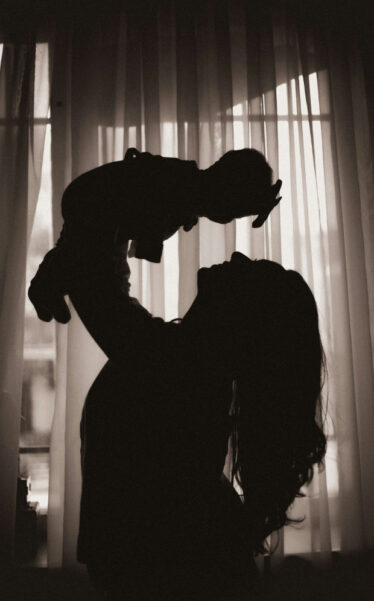
Because the woman truly looks like someone who has shattered a fountain with brute force.
That is childbirth. Labor. It does not matter whether it is assisted by surgery or done traditionally. The medication to ease the pain does not matter either.
All women look as though they have just defeated death. The smile while holding the newborn repairs the image; it is the glue holding that new mother together. It hides the cracks that are still waiting to appear.
In Lucía and Renata’s home, it is five-thirty in the morning, and Lucía is already awake. The alarm has not gone off yet, but her body learned long ago to wake up before it.
She walks silently to the kitchen, starts the coffee maker, and opens the refrigerator. She takes out the container she prepared the night before: a turkey sandwich, carrot sticks, and an apple.
She packs it into Renata’s lunchbox, her seven-year-old daughter’s. At six o’clock, she wakes Renata with a little song they invented together. She prepares her uniform, braids her hair, and puts on her shoes while the child still yawns. They have breakfast together, although Lucía barely manages two sips of coffee before having to leave.
Renata goes to school. Lucía goes to work.
At two in the afternoon, Lucía’s mother picks up the little girl; it is the arrangement they have had for years.
At six, Lucía picks up Renata, listens to the full recap of her day on the drive home, makes dinner, checks homework, bathes her daughter, and reads her a story.
At nine at night, when Renata finally falls asleep, Lucía sits on the couch and stares at the basket of unfolded laundry. She looks at it for a long moment. Not today, she thinks. Not anymore today.

The burden is there. It is always there. But Lucía learned to organize herself the way someone learns to breathe underwater: calmly, methodically, with a mental checklist that never ends.
She has no one to relieve her, but she has her coffee, she has her mother on Tuesdays and Thursdays, and she has the calendar stuck to the refrigerator with color codes for every activity.
And she has Renata, who hugs her from behind while she washes dishes and says, “Mommy, you’re the strongest in the world.”
Lucía smiles. For a moment, the cracks turn to gold.
In all of this, the father may or may not be there. But he only becomes a father at birth.
The mother has been a mother since the day she found out and decided to have the baby. It does not matter whether the pregnancy reaches full term or not.
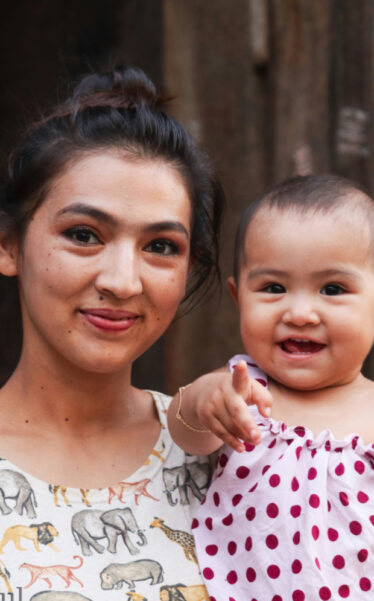
The mother has already created a connection with that being through the act of deciding.
For the father, it is something abstract.
A concept he may say he has learned, understood, and desired, but until the moment he meets that little one, the extra weight and the burden of protecting, caring for, and guiding a tiny human being do not yet exist.
I do not want to diminish fathers. Nowadays, many of them do a remarkable job, actively participate in their children’s lives, and take on the role of father in extraordinary ways. They carry the burden day after day.
But we must remember that historically their role was to provide, and there the burden ended; there was nothing more, and many times they did not even do that. Even today, we continue to find these examples.
In the home of Marisol, Sebastián, Emiliano, and Ricardo, Marisol has two sons: Sebastián, nine years old, and Emiliano, four.
Her husband Ricardo leaves the house at seven in the morning and returns at eight at night. He is a good man, she says. He works hard. He brings money home. He has never disrespected her. In her family, that already means a lot.
But Marisol wakes up at five-thirty. She prepares breakfast for the four of them, although Ricardo sometimes only drinks coffee. She gets the children ready, takes Sebastián to school, drops Emiliano at preschool, returns home, washes, hangs laundry, sweeps, irons Ricardo’s shirts, and prepares lunch. She picks Emiliano up at noon, feeds him, and puts him down for his nap. While he sleeps, she gets ahead on whatever she can. She picks up Sebastián, serves him reheated food, checks his homework, takes him to soccer on Tuesdays and Thursdays, and to English lessons on Wednesdays. When Ricardo arrives at eight, dinner is served, the children are bathed, and the house is tidy.
“How was your day, my love?” he asks as he sits at the table.
“Good,” she answers. She always answers well.
Ricardo eats dinner, plays with the children for a while, and watches the news. Sometimes he reads a story. Marisol loves those moments. They make her think that yes, he is a good father. But when Emiliano gets sick at three in the morning, it is Marisol who gets up.
When there is a parent-teacher meeting at school, Marisol goes. When Sebastián needs to go to the dentist, the pediatrician, or buy shoes, Marisol goes. When Emiliano has a nightmare, he cries out, “Mom.” When Sebastián has a problem at school, he tells Mom. Ricardo finds out later, during the dinner recap, if Marisol has the energy to tell him.
“But I work, Mari,” he says when, once every few months, she finally complains.

“You’re with them all day. You know better what to do.”
And Marisol stays silent. Because it is true that he works. Because she is indeed with them all day. And because saying “I work too, even if nobody pays me” would open a conversation she no longer has the energy to sustain.
Marisol’s cracks are fine, almost invisible. She covers them with foundation makeup, with a smile when Ricardo tells her, “You look beautiful today,” with the pride of seeing her children well-dressed at school. But they are there. And sometimes, when she steps into the shower, and no one can hear her, they cry. When the father carries this burden equally alongside the mother, the weight—which is the same for everyone—feels lighter.
In the home of Carmen, Andrés, and Mateo, there is a shared calendar on their phones. Mateo is five years old. Nothing is perfect. They have argued. They have had difficult periods, especially during the first year, when Carmen felt Andrés did not understand, and Andrés felt Carmen would not let him understand. But they talked. They talked a lot. And they still do.
On Mondays, Wednesdays, and Fridays, Andrés takes Mateo to school. Carmen picks him up. On Tuesdays and Thursdays, it is the other way around. They schedule pediatric appointments together during five-minute phone calls, checking whose week is less busy. They both attend school meetings whenever possible; if only one can go, they alternate.

Andrés knows Mateo’s shoe size. He knows he does not like broccoli, but he does like peas. He knows he is afraid of thunder and sleeps with a stuffed dog named Cookie. He does not know these things because Carmen told him; he knows them because he has been there.
They take turns putting Mateo to bed. Whoever cooks does not wash the dishes. Whoever got up early with the child on Saturday sleeps in on Sunday. It does not always balance perfectly. Sometimes Carmen does more, sometimes Andrés does more. But there is awareness, constant conversation, one recurring question: “How are we doing? Are you okay?”
Carmen has cracks, too. Of course she does. She is still the one who carries the guilt when Mateo falls at the park, the one who lies awake wondering whether they are raising him correctly, the one who looks in the mirror and wonders where the woman she used to be has gone.
But there are fewer cracks, and most importantly, she does not repair them alone. Sometimes Andrés tells her, “I’ll take care of everything this weekend, go see your friends.” Sometimes she tells him, “You look tired, I’ll handle things today.”
The burden is still there. For both of them. But shared, it weighs differently. Shared, it leaves room for Carmen to also be Carmen, not only “Mateo’s mom.”
I would like, however, for us to place a monocle over our eye and observe the mother’s burden. Yes, that burden that begins the moment pregnancy is discovered. And I know, not all pregnant women become mothers, because many decide to have abortions, many decide to give birth, and place the baby for adoption. But those decisions are not what I am discussing here.
Let us focus on women who discover they are pregnant and, through belief, conviction, or the twists of fate, decide they are going to become mothers to those little creatures, at that stage more similar to gummy bears. That, in my view, is where the extra weight falls upon the mother: eating healthy, giving up alcohol and cigarettes, changing for the better, even changing jobs depending on the type of work. Because this burden does not lessen, it grows as the child grows. The words “good mother,” “responsible mother,” “fit to be a mother”… many women, consciously or unconsciously, carry these words in their souls.
If only it ended there… But we must not forget: mothers must know everything, be experts at everything, with or without education, with or without help—how to care for the baby, feed the baby, put the baby to sleep, calm the baby, accompany the baby, correct the baby. The child grows, and we must not forget to keep them clean, well fed, not allow tantrums in public, not scold or challenge them in public, never lose our temper, look presentable, because we are an extension of the child.
By the way, we must also be beautiful and well-groomed. No laziness allowed. Every household task is included in motherhood, so cleaning, dusting, sweeping, washing, cooking, organizing… a spotless house is synonymous with being a good mother.
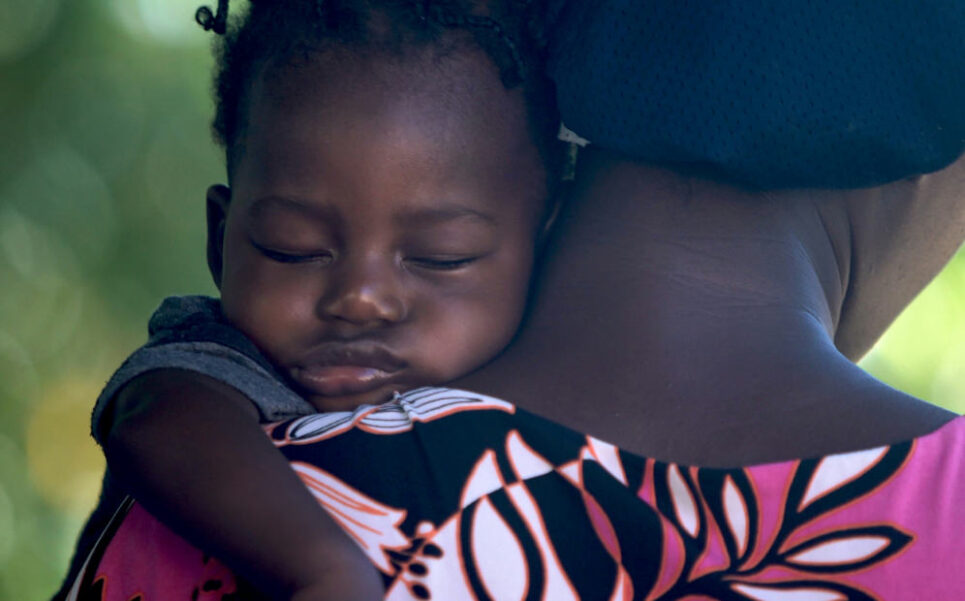
The groceries are always bought. The toys are carefully chosen: educational, but also technologically current; we cannot fall behind in anything—the child’s exercises, the crafts. Wait, how many hours are there in a day? We must take them to daycare to gain a little time, but wait, what are those hours for? If you do not work, you should not need a break. What a terrible mother! What is a good or bad mother? Nobody knows, yet everybody knows. Being a good mother means carrying the entire physical and mental burden from the moment the pregnancy is discovered, with a smile, always saying you are blessed. Never comment on how tired or overwhelmed you are. Never wanting a break from your child, because that would be an abomination.
As if Pudge, the fish from Lilo & Stitch, had eaten the sandwich—or even worse. Your child, on top of everything else, must be perfect: look good, never cry, have manners, never be noisy or inconvenience anyone, but not so perfect that they seem robotic, because that would also be strange.
All of this is what breaks mothers, but never completely. They are always small cracks hidden beneath makeup, skincare, and the morning cup of coffee.
Yes, most mothers are like cracked porcelain cups repaired with the little laughs and achievements of our children, like that Japanese technique of repairing pottery with gold. For every mother, the burden is different, and many mothers living in poverty do not have the luxury of worrying about the right toys or the most age-appropriate food; their concerns are how we will eat, no matter what, even where we will live, and how I can protect my child from cold and hunger.

These mothers also bear the burden of hearing, “If she cannot afford to live, why does she have children?” Our circumstances make the burden very different, but we all carry it. Privilege lightens certain burdens, but places others upon us.
I want to close with this small poem that summarizes a mother’s exhaustion.
Before the sun rises, I am already awake. Before the crying, I already heard it.
Before the question, I already have the answer on the tip of my tongue.
My water broke, and with it I broke my body, my calm, the hours that once belonged to me.
Now the hours have names, have hunger, have homework, have fevers at three in the morning.
They say I am blessed. I say it too, because that is what one says. After all, that is how one smiles. After all, a tired mother is not a mother; she is a complaint wearing an apron.
But I am tired, yes. Tired in the way one becomes tired from something that never ends: the laundry that gets dirty again, the plate that fills up again, the question that gets asked again,
“Mom, mom, mom,” like a prayer that will not let me pray for myself.
I look in the mirror and see a porcelain cup with a chipped rim.
I put on foundation, I put on mascara, I put on coffee, I put on a smile, and walk out into the world whole, as if nothing, as if everything, as if I could.
The cracks are fine. Nobody sees them. Not even me, sometimes, until night falls and I sit on the couch with the basket of laundry in front of me and my eyes full of something that is not sleep, nor sadness, nor anger, but all three mixed with love, which is worse, because love does not let me put anything down.
And yet, tomorrow again: I will rise before the sun. I will make the coffee. I will braid the hair. I will smile.
Because cracks, too, are filled with gold. And my son, my daughter, my little gummy bear who has grown through the strength of my bones, will hug me from behind and say something, anything, one of those phrases that hang from your chest like medals, and for a moment I will be all gold, all light, all whole mother. Until the next crack.