Tuesday, May 8, 1945, will be remembered forever. It marked the official end of World War II in Europe on the Eastern Front. As a result, it became VE Day.
The Tragic History
Although it is called Victory Day, this celebration has a tragic background.
Let’s start from the beginning. World War II was a global conflict that lasted from 1939 to 1945. The vast majority of countries in the world, including all major powers, fought on the side of two opposing military alliances: the Allies and the Axis.
In Europe, World War II is generally considered to have begun on September 1, 1939, with the German invasion of Poland. Shortly afterward, the United Kingdom and France declared war on Germany two days later, on September 3, 1939.
As the end of the war approached, Adolf Hitler, the Nazi leader, committed suicide on April 30 during the Battle of Berlin.
The Battle of Berlin was one of the final and most significant confrontations of World War II, culminating in the defeat of Nazi Germany and the end of the war in Europe. Specifically, it took place between April 16 and May 2, 1945, and was a fierce struggle for control of the German capital.
As a consequence, this war reshaped the political alignment and social structure of the world. In fact, it established the global order of the 20th and 21st centuries.
The United Nations was founded to promote international cooperation and prevent conflicts.
World War II marked the decline of traditional European powers such as Great Britain and France, and the rise of two superpowers: the United States and the Soviet Union. Consequently, these two nations emerged from the war as dominant global powers, shaping international affairs through their political, economic, and military influence.
VE Day Across Different Countries
Once the war ended, it was time to regroup, celebrate, and rebuild. VE Day is celebrated in more than a dozen European countries in May. However, it is not celebrated on the same date or under the same name everywhere.
The reason for these different dates is political. After Adolf Hitler’s suicide on April 30, it was clear that the fighting would not last much longer. Meanwhile, Joseph Stalin, the leader of the Soviet Union, was advancing from the east and wanted only a full, unconditional, and immediate surrender.

The Western Allies, however, were less eager to rush. Winston Churchill was deeply relieved by the Allied victory in World War II, which had been a central part of his leadership during the conflict. At the same time, he was also deeply concerned about the growing influence of the Soviet Union in Eastern Europe and the onset of the Cold War.
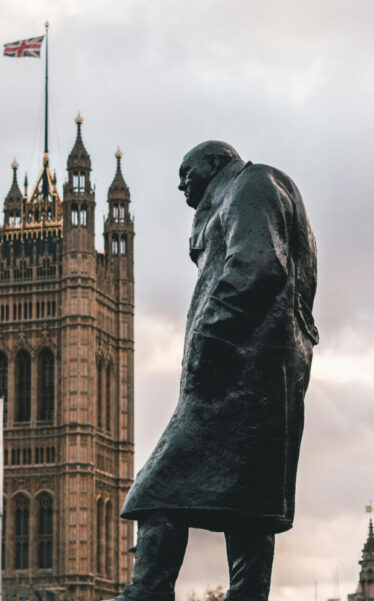
The Prime Minister of the United Kingdom, Winston Churchill, viewed the Soviet army’s advance as an effort to gain more territory, which was seen as a disregard for the boundaries established at the Yalta Conference.
By the way, the Yalta Conference was a crucial meeting between the leaders of the United States, the United Kingdom, and the Soviet Union. It took place from February 4 to 11, 1945. More specifically, its primary goal was to discuss the post-war reorganization of Europe and plan the establishment of a new world order following Nazi Germany’s defeat.
When Karl Dönitz, who became head of state after Hitler’s death, offered a partial surrender (in northwest Germany, Denmark, and the Netherlands), Churchill immediately accepted. As a result, this resulted in an initial surrender on May 4, 1945, which came into effect the next day.
Stalin was furious, not only because of the partial surrender but also because German forces continued to fight against the Soviets in the east while surrendering en masse to their Western allies.
Stalin’s behavior during VE Day celebrations was complex and often characterized by mixed emotions. On the one hand, he understood the significance of the Soviet Union’s victory over Nazi Germany and the immense sacrifices made by the Soviet people, including millions of lives lost. On the other hand, his reactions during the events were not always consistent.
The Soviet leader’s anger increased when he learned that General Eisenhower had accepted the unconditional surrender of all German forces on May 7 in Reims, France.
Despite the Soviet Union’s crucial role in defeating Nazi Germany, Stalin remained cautious of potential threats, both internal and external. In addition, he was known for his distrust of others, including his military commanders and political allies, and often saw conspiracies where none existed.
VE Day Celebrations
The celebration takes place at different times in different countries. For example, in France, May 8 is known as VE Day and is a national holiday. The United Kingdom observes the same date, abbreviating it as VE Day, while May 9 is Liberation Day in Jersey.
In Germany, all celebrations take place on May 8. For instance, in 2020, the 75th anniversary of the surrender was celebrated.
In Austria, they celebrate the Festival of Joy. In particular, it is an event honoring VE Day. The Mauthausen Committee of Austria (MKÖ) has organized the Festival of Joy since 2013, in cooperation with the Austrian government and the City of Vienna. Each year, the festival is held annually in Heldenplatz.
In Poland, May 8 is known as “Narodowy Dzień Zwycięstwa” (National Victory Day). Poland officially recognized May 9 from 1945 until 2014, and on April 24, 2015, Poland officially recognized May 8 as National Victory Day.
However, from 1946 to 1989, this celebration was very different. At that time, it was celebrated according to Russian traditions, as Poland was a socialist state. Major celebrations took place in Plac Zwycięstwa or Plac Defilad in Warsaw (especially in 1985).
After 1990 and the fall of the Soviet Union, no official ceremonies were held; however, many cities and military units, along with local governments, organized their own festivities.
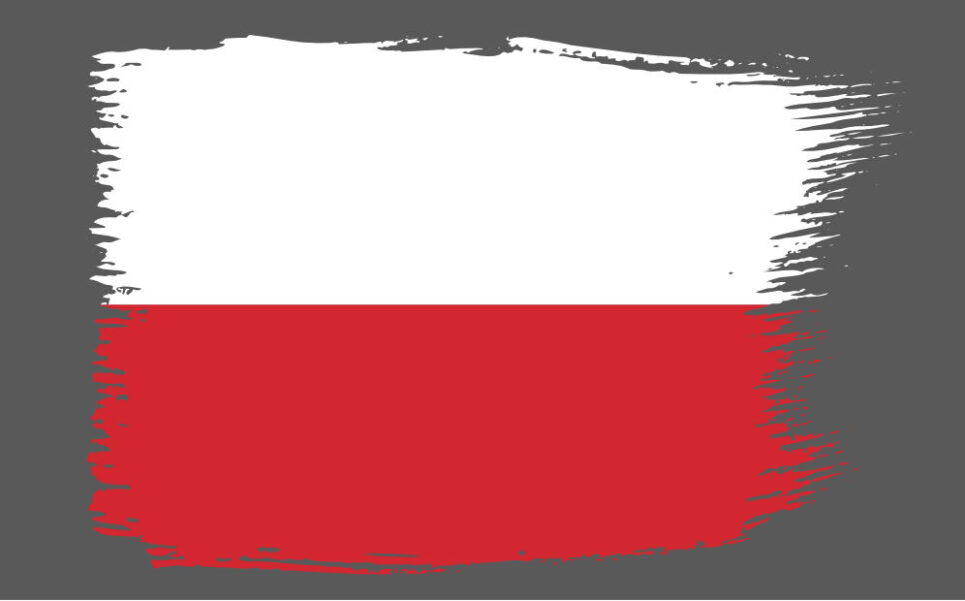
Poland recently changed the celebration date from May 9 to May 8, so it has been observing National Victory Day since 2015. Before this change, it followed the tradition of other socialist states and Russia.
Russia has celebrated Victory Day on May 9 every year except the first, and it has since become one of the most important holidays in the country.
Some European countries never celebrated the end of the war because their suffering did not end there.
For many Eastern European countries, the end of the war marked the beginning of a new era under Soviet influence. As a result, most of these countries only saw the Soviets leave decades later, when the USSR was on the verge of collapse, bringing another regime change without violence.
The end of the armed conflict also paved the way for what came next: the collapse of alliances and the distrust that fermented between Western and Soviet leaders.
For this reason, some European countries do not celebrate the end of World War II or even hold ceremonies to recognize the day that ended the conflict on the continent. Therefore, this also explains why Poland felt it was important to change the date of its celebration to align with Western countries rather than Russia.
Not Everyone Was Aware of VE Day
As weapons fell silent and the dust of battle settled, World War II was coming to an end, leaving behind a continent scarred by devastation and loss. However, not everyone was informed of the surrender.
The news of the surrender did not reach all German forces. For example, some continued fighting in Norway and Denmark, but the most extreme case involved a team at a weather station that officially surrendered several weeks after the Japanese had formally ceased fighting.
It took time for the Allies to liberate every corner of Europe, such as Alderney, which was recovered by soldiers of the United Kingdom’s Task Force 135 on May 16.
The most “dedicated” German unit was the crew of a weather station in Nordaustlandet, one of the most remote islands in northern Svalbard, Norway.
Established in September 1944 with a crew of 11 under the name Operation Haudegen, their task was to transmit encrypted weather reports five times a day to the German naval command in Tromsø. They received a message on May 8, 1945, from their commanders stating that Germany had surrendered and the war was over. However, they were told to destroy secret documents, but little else. Afterward, after unsuccessfully trying to contact their base, they attempted to transmit their coordinates to the Allies to avoid being left alone in the cold.
Finally, they received a response at the end of August when the Norwegian Navy sent a seal-hunting ship that arrived at the station on the night of September 3.

The Norwegians and Germans, happy to finally surrender, shared a meal during which the German officer in command handed over his service pistol to the captain of the seal-hunting ship. These 11-man unit spent three months together in Tromsø, but were eventually separated when some were sent to East Germany and others to the West.
The first Russian Victory Parade took place on June 24, 1945. During this event, Stalin gave the starring role to Marshal Zhukov, who accepted the parade in Red Square, arriving on a white horse instead of in a vehicle. The parade ended with 200 soldiers carrying Nazi flags and banners, throwing them to the ground at Lenin’s Mausoleum and destroying them.
This symbolic gesture demonstrated that, for the Soviets, the day not only marked the end of the war but also their victory over Nazism. Because of this, there is so much speculation about what President Vladimir Putin will do for this year’s parade, as the Kremlin has justified its so-called “military operation” in Ukraine as an attempt to eliminate alleged neo-Nazis in the country.
For the main Allied powers—Great Britain, the United States, and the Soviet Union—the end of World War II was a carefully coordinated affair. At that point, diplomatic channels were abuzz with activity as surrender messages were transmitted, peace terms negotiated, and victory declared.
The leaders of these nations, aware of the global scope of the war and their pivotal roles within it, ensured that the cessation of hostilities was communicated quickly and decisively. Thus, VE Day came into being.
In contrast, for many European nations occupied by Axis forces, the end of World War II was a darker affair. In these regions, isolation, censorship, and lack of communication created uncertainty and fear. For citizens living under Nazi occupation, the news of surrender often arrived as sudden and unexpected relief—a beacon of hope amid the darkness of oppression.
Celebrating Resilience
VE Day celebrations honor resilience in the face of adversity. Indeed, they remind us of humanity’s ability to overcome even the most formidable challenges, emerging stronger and more united in the post-conflict period.
Whether it is the perseverance of besieged nations or the indomitable spirit of individuals under oppression, VE Day highlights the resilience of the human spirit and the enduring power of hope.
VE Day pays tribute to countless individuals who made immense sacrifices in the pursuit of freedom and peace. From this perspective, soldiers who fought bravely on the battlefield and civilians who endured unimaginable hardships on the home front are equally remembered.
Perhaps most importantly, these celebrations serve as a reaffirmation of freedom and the values for which so many have fought and died. Ultimately, they remind us that freedom is not just an abstract concept but a hard-earned privilege that must be cherished, defended, and cultivated.
In commemorating VE Day around the world, it is essential to reflect on its enduring meaning and relevance in the modern era. Today, we live in an extremely volatile world, and the lessons of the past offer valuable insights for navigating present challenges and building a better future.
By honoring the sacrifices of those who came before us, celebrating resilience in the face of adversity, and reaffirming the timeless values of freedom and justice, we ensure that the legacy of VE Day endures for generations to come. In doing so, we reinforce its relevance.
Because in remembrance, we find strength; in celebration, we find unity; and in affirmation, we find hope for a brighter tomorrow.