Sebastián Valdivieso understands music as a living territory where silence, memory, and roots enter into dialogue with human transformation.
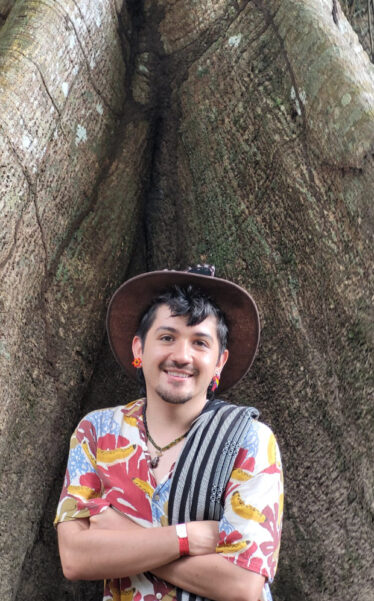
Speaking with Sebastián creates a feeling that is difficult to explain from the very first moment. Our conversation does not unfold like a conventional interview about composition or artistic trajectory. Instead, it moves like a journey through an inner landscape where migratory birds, roots, death, silence, community, and tradition begin to appear.
In the way he speaks, Sebastián Valdivieso makes music stop resembling an industry. It becomes an ecosystem.
Perhaps that is why many of his answers drift away from the logic of productivity that dominates much of today’s artistic world.
I realized that Sebastián does not speak about positioning, trends, or visibility. He speaks about silence as creative material. About Bambuco as a place of belonging. About art as a tool to confront fear rather than anesthetize it.
In his artistic vision, Sebastián Valdivieso transforms music into an emotional territory where silence and memory function as forms of cultural resistance.
And in the middle of an era obsessed with noise, that position feels almost radical.
Silence as Living Matter in Sebastián Valdivieso
Every conversation with Sebastián seems to begin before words appear. There is a preceding pause, a kind of slow breathing that organizes the meaning of everything that follows.
For that very reason, before speaking about songs, he needs to speak about silence. He does not understand it as an absence. Nor as emptiness. For him, silence functions as a living material upon which creation is sculpted.
The image completely transforms the way music is understood. Because within his creative universe, songs do not emerge to fill emptiness. They emerge after one has learned how to listen to it.
As he spoke, with a melodic, gentle, and intimate voice, it became impossible not to think about how strange it feels to defend silence in an era where everything constantly competes for attention. Social media, platforms, algorithms, and immediate content. Everything seems designed to accelerate emotional consumption.
And yet Sebastián composes from another place — one much slower, contemplative, and profoundly human. Perhaps that is why his songs do not seem to be trying to impress. They seem to be trying to tell the truth.
And precisely that search for honesty opens another inevitable question: how can authenticity survive in an era that demands constant speed?
The Emotional Speed of an Exhausted Era
In a present dominated by immediacy, speaking about contemplation can feel almost like an act of resistance. Sebastián, however, does not completely reject speed. What he questions is the superficiality with which we often associate it.
One of the most interesting moments of the conversation emerged when we spoke about Canciones instantáneas, a project built through improvisation and immediate creation.
The idea could seem contradictory within a body of work so deeply connected to contemplation. But Sebastián quickly dismantles that apparent opposition.
“Speed does not mean superficiality,” he explains. “An instant song does not take five minutes. What takes years is building the capacity to create it.”
Behind that agility exists a silent accumulation of experience, study, and emotional maturation. Immediacy does not emerge from nowhere. It emerges from a sensitivity trained over a long period of time.
Just as a sculptor looks at a block of marble and visualizes forms within it, our material as musicians is silence. – Sebastían Valdivieso –
At this point, something important about our contemporary relationship with art becomes visible. Today, we live in a culture that rewards rapid reaction, constant exposure, and endless production.
Very often, the value of a work seems to depend more on its ability to circulate than on its ability to remain in memory. The algorithm — absurd as it may be — demands constant presence, constant novelty, constant visibility. And within that logic, art runs the risk of becoming just another form of accelerated consumption.
But contemporary artistic experience has also begun to fragment. The reality is that we listen to songs while doing other things. We consume images in seconds, moving rapidly from one emotion to another without lingering too long in any of them. Amid this permanent speed, silence, contemplation, and deep listening begin to feel almost out of time.

Yet Sebastián insists on another idea: even what appears spontaneous must first pass through a long process of inner listening.
As if improvisation were not about accelerating thought, but about allowing the unconscious to finally find a way to speak.
And within that opening toward the unconscious, another much more uncomfortable dimension of the creative process appears as well: confrontation with oneself.
Art as Confrontation in Sebastián Valdivieso’s Work
As the conversation moves forward, it becomes evident that Sebastián does not understand art as light entertainment. In his vision, creating means entering emotionally uncomfortable territories.
Long before becoming an industry, content, or cultural product, art functioned as a way of interpreting the world.
It was a means of giving meaning to fear, death, desire, spirituality, and everything that could not be rationally explained.
We must remember that the earliest cave paintings, ritual songs, ceremonial dances, and oral traditions were not born merely to entertain.
They emerged so that people could connect with something deeper than themselves: collective memory, nature, loss, the sacred, or survival.
Perhaps that is why art remains one of the few places where human beings can still confront themselves emotionally without the need to immediately resolve everything.
There is something uncomfortable and deeply honest in the way Sebastián speaks about creation.
He never presents art as an easy refuge. Nor as a romantic escape route. For him, creating means confronting oneself.
Creating means confronting what we truly are.
That sentence runs through all of his work. Music appears, then, not as an emotional sedative, but as a tool for looking directly at what we usually try to avoid: fear, grief, transformation, and death.
In one of the most powerful moments of the conversation, Sebastián describes much of contemporary music as an “auditory paracetamol.” Something designed to accompany disconnection instead of provoking awareness.
The phrase lingers with me — and I love it. Because it points toward something we often intuit but rarely name: some music no longer seeks to move people emotionally or politically. It seeks to anesthetize them.
Against that, Sebastián proposes another possibility. A kind of music that does not evade pain, but sits in front of it. One that does not attempt to hide human discomfort, but to move through it.
This is where his work stops functioning solely as an aesthetic experience and begins to acquire a profoundly human and political dimension. The moment we confront fear, grief, and transformation, another human experience inevitably appears as well: displacement.
Migration Also Transforms Sonic Identity
Images of migratory birds constantly move through Sebastián’s creative universe. They do not appear merely as poetic symbols. They function as a way of understanding identity, movement, and human transformation.
In his songs, flights, journeys, mountains, and passages appear repeatedly. But movement in his work does not function solely as an aesthetic metaphor. It also speaks about something profoundly contemporary: the experience of migration.
And perhaps that experience occupies a central place within Latin American identity today.
Over recent decades, millions of people have left Latin America in search of economic stability, work opportunities, or simply a different possibility for the future.
Colombia forms a deep part of that migratory history. For years, violence, inequality, political instability, and economic crises pushed entire generations to rebuild their lives outside the country.
Spain became one of the principal destinations of that Colombian and Latin American diaspora. The shared language facilitated many processes, yet it never completely erased the feeling of displacement. Because migration does not consist solely of changing territory. It also means renegotiating identity, language, memory, and the way one relates to oneself.
In cities like Barcelona, different migratory layers coexist constantly: Latin Americans, Arab, African, and Asian communities, as well as Europeans displaced by other crises. The migrant experience ceases to be an exception and becomes part of the everyday European landscape.
Yet even within that diversity, there is something particularly complex about the experience of migrant artists.
How does one preserve one’s own voice far from the territory that shaped it? How does one transform a tradition without completely losing the connection to what gave birth to it?
These questions move silently through the entire conversation with Sebastián.

When the question arises about what he has had to leave behind to become the artist he is today, he answers something unexpected: “I think I have had to leave everything behind. And at the same time, I still have everything ahead of me.”
The response immediately recalls the logic of the migratory birds that repeatedly appear in his artistic imagination. They do not migrate on a whim. They migrate because something within them knows how to read an invisible direction.
And perhaps here appears one of the most powerful images in all his work: migration not as absolute rupture, but as another form of listening.
Sebastián seems to understand creation through that same intuition. Not as a completely controlled rational strategy, but as a constant listening toward what still has no name.
Because when a person migrates, the way they listen to the world changes as well. Territory ceases to be merely geography and begins to become sonic memory. A voice, a rhythm, and a cadence. An instrument that preserves something of a place that is no longer physically present.
But migration also forces people to look at their origins from another distance. And that distance often reveals cultural tensions that once seemed invisible.
In Sebastián’s case, living in Europe not only transformed his emotional relationship with Colombia and Andean music. It also deepened questions surrounding cultural legitimacy, coloniality, and artistic belonging.
Because for many Latin American artists, arriving in Europe inevitably means confronting an uncomfortable question: who historically decided which kinds of music deserve to be considered universal, and which are reduced to the realm of folklore?
Sebastián Valdivieso, Barcelona, and Cultural Disobedience
Speaking about Europe within the conversation with Sebastián does not lead toward the romantic idea of the “cultural center” that occupied the European imagination in Latin America for so long. Instead, what emerges is a much more complex reflection on power, cultural legitimacy, and historical memory.
Sebastián’s experience in Barcelona ultimately deepened questions that had already been silently accompanying his work long before he migrated.
Everything must be said clearly: for many Latin American artists, arriving in Europe does not simply mean changing countries.
It also means confronting a cultural history that, for centuries, decided which kinds of music deserved to be considered “universal,” which forms of knowledge merited academic recognition, and which traditions were relegated to the realm of the folkloric, the peripheral, or the exotic.
The conversation changes dimension once this subject appears.
Sebastián speaks from his experience within the musical academy and clearly describes something that still shapes much of artistic education in Latin America: the persistence of a deeply Eurocentric gaze.
For decades, conservatories, universities, and musical training institutions reproduced the idea that Western harmony represented the highest point of musical development. Beethoven, Mozart, Debussy, and Bach appeared as unavoidable references of sophistication, while Latin American music was often treated as secondary, popular, or merely a regional expression.
This hierarchy affects not only musical theory. It also transforms the way many artists perceive themselves.
Because growing up within educational systems where Europe constantly appears as the legitimate cultural center produces a silent consequence: the permanent need for validation.
Sebastián seems to have identified this tension with remarkable clarity.
That is why he speaks about the need to “decolonize composition, decolonize harmony, and decolonize singing.”
The phrase does not function only as a political stance. It also works as an existential search — a way of asking from where creation emerges and for whom it is created.
And perhaps this is where something especially interesting about his experience in Barcelona appears: the city is never romanticized.
Barcelona is not described as an idealized European postcard or as an automatic symbol of cultural sophistication. Instead, it appears as a deeply complex territory — a city where cultural richness, identity tensions, massive migration, and the historical wounds of colonization coexist.
“Barcelona breathes the West, but it also breathes the wound of the colony,” he explains.
The phrase is particularly powerful because it dismantles an idea that still remains deeply rooted within the Latin American imagination: the notion of Europe as a completely resolved or culturally homogeneous space.
Distance, Roots, and Bambuco as a Living Language
Barcelona, like so many other cities, is crossed by constant debates surrounding identity, language, historical memory, and belonging. Added to this is a profoundly diverse reality shaped by migrant communities from North Africa, the Middle East, Latin America, and different regions of Asia.
Within this complex fabric, Sebastián finds something especially valuable: another way of understanding cultural identity.
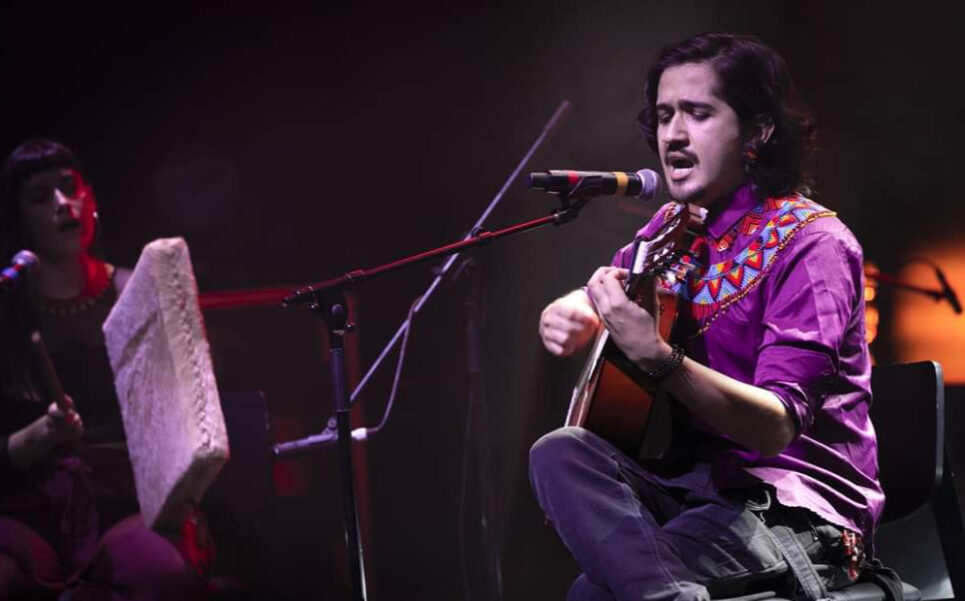
Not as something fixed or closed, nor as a rigid defense of one’s own culture, but rather as something alive, changing, shaped by mixtures, displacements, and new forms of coexistence.
Migrating to Europe did not distance him from Colombian music. It produced the opposite effect. Distance seemed to intensify his relationship with his roots.
But no longer from nostalgia.
Rather, from a much more conscious understanding of their political, symbolic, and emotional value.
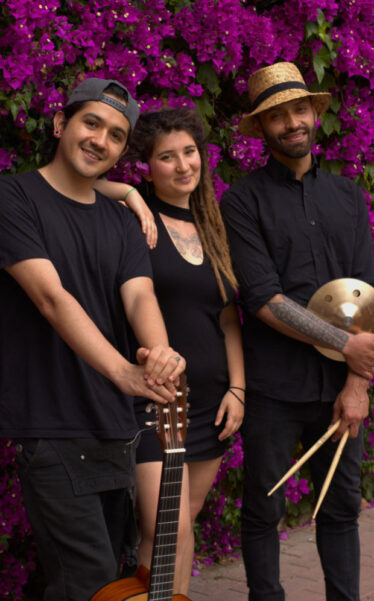
Because living far away also forces one to ask which parts of oneself remain intact when the territory around them changes.
And in Sebastián’s case, one of those constants seems to be Colombian Andean music.
Not as a folkloric object frozen in time. Not as a tourist symbol of national identity. But as a living language capable of transforming itself without completely losing its memory.
Perhaps that is why his work constantly avoids falling into the romantic idea of “preserving” traditions as though they were museum pieces.
What interests him is not conserving the past intact. It is keeping alive the human impulse that gave birth to it.
And within that cultural reaffirmation, bambuco occupies an especially intimate place.
Bambuco as a Place of Belonging for Sebastián Valdivieso
There is a particular moment in the conversation where music stops functioning solely as artistic expression and begins to resemble refuge, memory, and community all at once.
When Sebastián speaks about bambuco, it no longer feels as though he is describing merely a musical genre. He speaks about an emotional territory — a space where certain memories still find a way to remain alive.
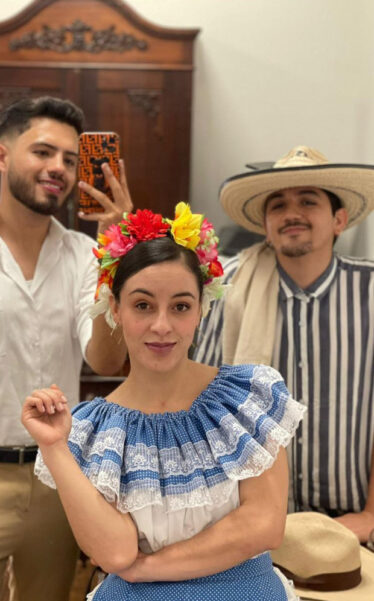
And this is no coincidence.
Bambuco occupies a deeply important place within Colombian cultural history.
It was born in the Andean region during the nineteenth century, and the genre emerged from the encounter between Indigenous traditions, African inheritances, and European musical structures.
That delightful fusion, so characteristic of Latin America, transformed bambuco into a hybrid expression from its very origins.
For decades, bambuco was one of Colombia’s most representative musical forms.
In Andean towns, family gatherings, and popular celebrations, it functioned as a kind of shared language. Its guitars, tiples, and bandolas accompanied stories of love, migration, landscape, and collective memory.
Beyond music itself, the genre helped construct an idea of national identity during moments when the country was still attempting to define itself culturally. As happened with many Latin American rhythms, bambuco eventually became a way of narrating territory, emotions, and the social tensions of an era.
Yet that tradition never remained still. Over time, bambuco underwent profound transformations. It moved from rural and popular interpretations into academic stages and institutional festivals. Later, new generations began blending it with jazz, contemporary music, and much broader sonic explorations.
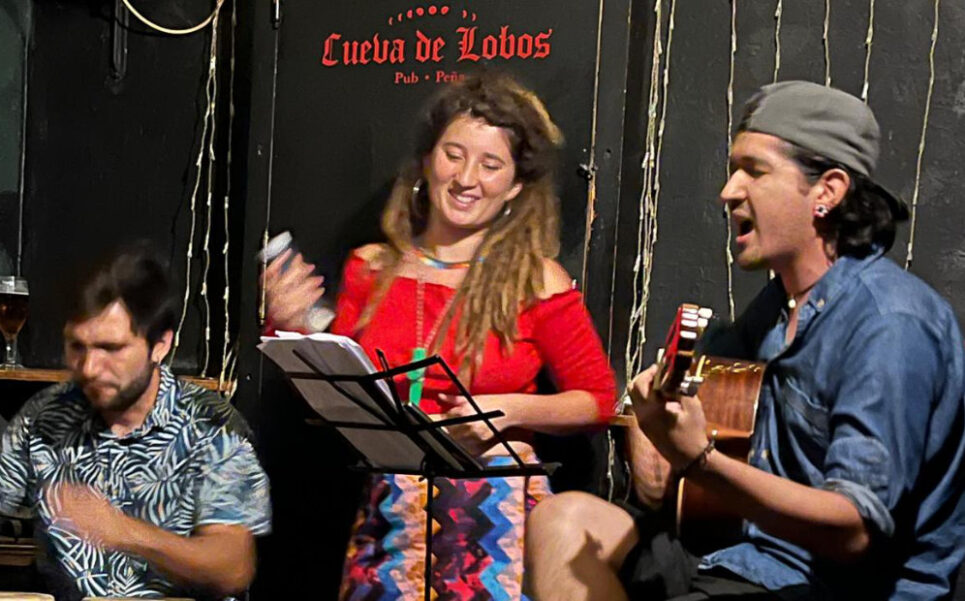
That evolution was not always comfortable. As happens with many traditional musical forms, debates emerged surrounding authenticity, preservation, and change. For some, transforming bambuco meant losing it. For others, it was precisely the only way to keep it alive.
And it is precisely there that one of the most important reflections of the conversation with Sebastián begins. Because bambuco survives not only because of its musical structures or historical value, but because of its continuing capacity to create belonging.
A Place Where Memory Continues to Breathe
All of that history of transformation eventually leads toward something much more intimate. Because behind the debates surrounding tradition, modernization, or cultural preservation, another much more human question appears: what is it that truly remains within a community when everything around it changes?

In the conversation with Sebastián, the answer never emerges from theory. It emerges from the emotional experience that still inhabits the music.
It stems from the sensation of belonging to something that continues breathing even through time, distance, and new generations.
During the interview, a fundamental question appears: how does one preserve a tradition without freezing it?
The answer emerges through a powerful image. Living roots do not remain motionless. They change, breathe, and expand toward other places.
For Sebastián, preserving tradition does not mean repeating the past exactly or reconstructing it through absolute obedience. It means keeping alive the emotional and human necessity that gave birth to that music — the collective force that transformed bambuco into a language of encounter, grief, celebration, and belonging.
For me, bambuco is a place where my community and I become unforgettable. -Sebastián Valdivieso-
The sentence completely transforms the conversation. Because it is no longer only about music or cultural identity understood through folklore. It becomes about permanence — about existing within a collective memory that still breathes even in the midst of displacement, migration, and the passing of time.
Laura Viera A.: Did migration transform your relationship with Colombia and with Andean music? How did it happen?
Sebastián Valdivieso: Migration changed my perspective profoundly because, in the end, I come from a migrant culture, and much of my country’s culture comes from migration. Our musical structure was born as a response to territory and to the process of colonization. Feeling like an outsider made me feel more deeply connected to my music — to how it emerged and why.
There is also something profoundly Latin American in that idea. Many traditional genres across the continent have historically functioned as spaces of emotional resistance — places where entire communities preserved ways of narrating themselves in the face of violence, modernization, or cultural erasure.
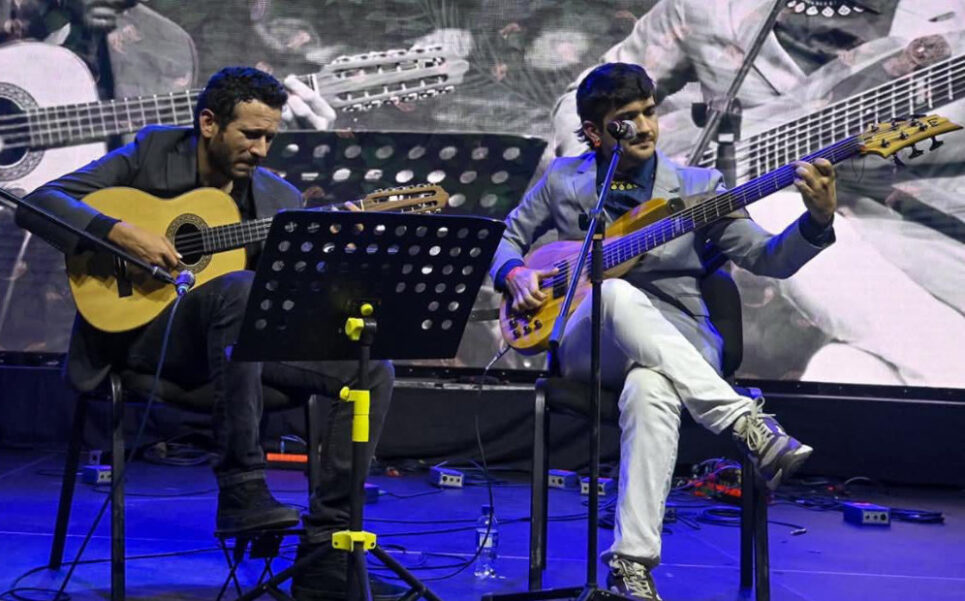
In that sense, the bambuco Sebastián describes does not belong only to Colombia’s past. It also belongs to the present of those who continue searching for ways to recognize themselves within an increasingly fragmented world.
That idea of living community also explains the way Sebastián observes the contemporary music industry. For him, the problem is not the transformation of music itself, but the speed with which certain cultural dynamics convert everything into immediate and forgettable consumption.
Against that, bambuco appears almost as an intimate gesture of resistance: a music that still demands listening, memory, and shared time.
A Native Forest Against Monoculture
When the conversation reaches the subject of the music industry, the tone shifts once again. Sebastián Valdivieso does not respond from resentment or nostalgia. He responds through an ecological metaphor.
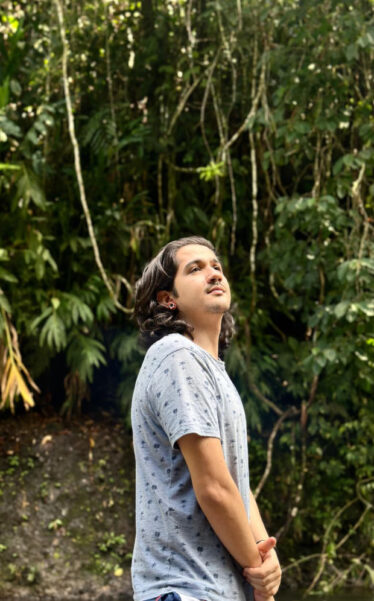
Toward the end of the conversation, one of the most powerful images in all of his work emerges when the topic of the music industry comes up.
At that moment, Sebastián Valdivieso explains that he has never felt he completely belonged to it. He prefers to think of his work as part of a native forest.
The difference, he says, is profound.
The industry often functions like a monoculture: constant productivity, repetition of formulas, speed, performance, and numbers.
A native forest, on the other hand, is sustained through diversity, interactions, and the balance between different forms of existence.
No species completely dominates the others. Everything coexists within a far more complex and organic network.
The metaphor does not appear solely as a critique of the contemporary music market. It also functions as a way of understanding what is happening today with certain traditional musical forms within the global industry.
For years, much of the Latin American industry privileged genres capable of circulating quickly within international commercial dynamics: Latin pop, reggaetón, urban music, and certain more globalized versions of tropical music.
In Colombia, this meant that many sounds associated with the Andean world, rural life, or folklore were relegated to institutional, academic, or heritage spaces, while more easily exportable music occupied the center of the cultural conversation.
And yet, Andean music was never a minor language. More than a single genre, it represents a deeply diverse sonic universe that extends across different countries and territories of Latin America.

In Colombia, expressions such as bambuco, pasillo, guabina, and torbellino accompanied everyday life, celebrations, journeys, and ways of inhabiting the Andean landscape for generations.
Their instruments — the tiple, bandola, and guitar — create an intimate and territorial sound. A music in which there still seems to be space for silence, contemplation, and shared memory.
But perhaps the most important aspect lies not only in the sound itself. These musical forms also preserved ways of understanding community, transmitting affection, and narrating collective experiences across time.
And although they were often presented as “traditional” expressions tied solely to the past, they never stopped transforming.
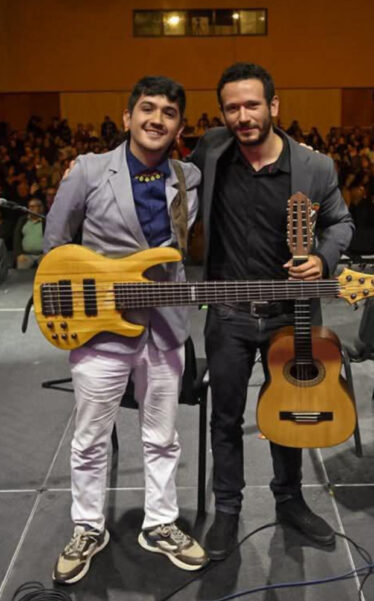
They currently evolve through new generations of artists who blend them with jazz, electronic music, improvisation, or contemporary music, without losing the emotional connection that gave rise to them.
The problem, however, is not merely commercial. It also has to do with the way the market conditions listen to itself.
The issue is that music ceases to be perceived as a shared experience and begins to be consumed through immediacy, algorithms, and the constant circulation of new releases.
As a result, musical forms like bambuco become trapped in an uncomfortable contradiction. On one hand, they are celebrated as an important part of Colombian cultural identity. On the other hand, they are often treated as static pieces, disconnected from contemporary sensibilities.
Sebastián Valdivieso seems to resist precisely that idea.
Laura Viera A: Why do you like competitions so much? What do they represent for artists?
Sebastián Valdivieso: I find competitions interesting because they create a space for circulation and also for connection, not only with musicians but with the cultural sector as a whole. There are many competitions — if I’m not mistaken, more than 20 dedicated to Colombian music are currently active. This allows for national circulation throughout almost the entire Colombian Andean region.
Laura Viera A: What do they represent for artists?
Sebastián Valdivieso: For artists, they represent an opportunity to showcase their work, to improve, and to receive feedback from highly respected masters who have studied this art form — Colombian Andean music — for a very long time.
In his view, to preserve its depth, Andean music doesn’t need to become a relic of sorts. Nor does it need to completely disguise itself as commercial music in order to survive.
What matters is allowing it to continue evolving without losing the communal and human dimension that gave rise to it.

That is why Sebastián Valdivieso’s work does not feel constructed through accumulation or through the logic of constant visibility that dominates much of today’s industry. I believe there is something far more patient in his way of creating. Something closer to care than to productivity.
The image of the native forest ultimately reorganizes the entire interview. Because it also explains the way Sebastián Valdivieso understands tradition, community, and artistic sensitivity.
In a forest, invisible connections matter just as much as what can be seen. Roots sustain one another beneath the ground.
Growth happens unevenly, slowly, and collectively. And perhaps that is where a fundamental difference from monoculture emerges: diversity is not an obstacle to survival, but precisely what makes survival possible.
That idea runs through the entire conversation with Sebastián Valdivieso. Even when speaking about the future, there is never the fantasy of completely breaking with the past. Nor is there a need to preserve traditions in an untouched state.
In his discourse, the future appears instead as an organic continuity. A slow transformation in which memory still finds new ways to breathe.
Friendship as an artistic disposition.
Sebastián Valdivieso and Resistance to the Logic of the Industry
There is a moment in the conversation when the subject stops being only Andean music and gradually expands into something larger: the way the contemporary industry shapes sensitivity, accelerates creative processes, and transforms the ways people listen.
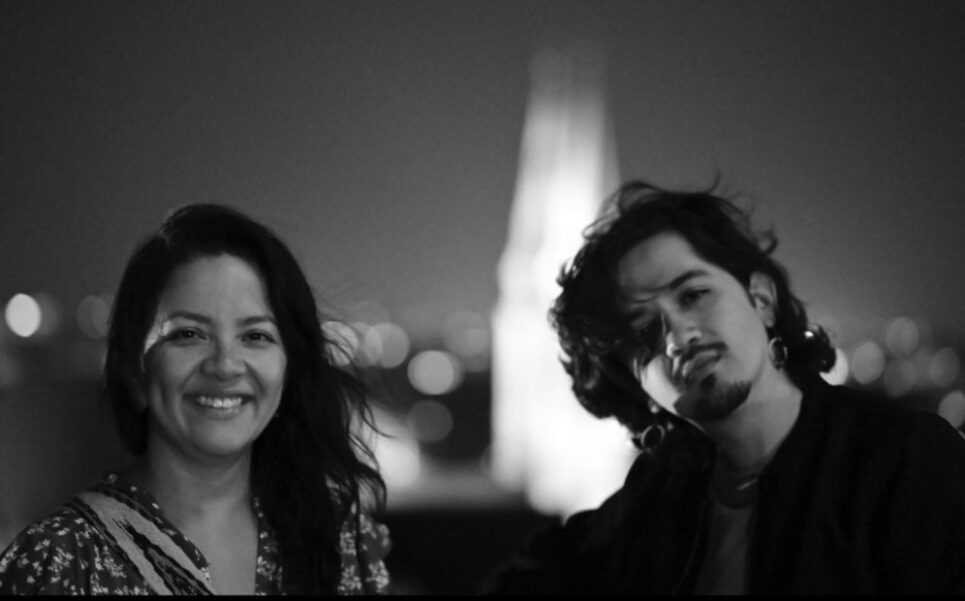
When I ask him about his artistic relationship with Catalina Mejía, the answer quickly shifts from music toward something much more intimate: friendship.
Laura Viera A: What is the experience of working with Catalina Mejía and with friends in general like?
Sebastián smiles before answering.
Sebastián Valdivieso: My case with Cata is very interesting because, first of all, we are friends. So there is already a much deeper artistic disposition than the things we happen to share in common. I feel that working with friends, working with people you love and trust, completely changes the artistic experience. For example, I invite Cata to my family’s Christmas novena gatherings. She’s here in Pereira, traveling across half the world, and even so, she still texts me to meet up. And for me, it’s a pleasure to play with her, talk with her, and make music with her because above all else, she is my friend.
As he spoke, it became evident that Sebastián understands collaboration through a logic very different from that of contemporary productivity. He does not speak about networking or about positioning. He speaks about human bonds.
Being friends is already a completely different kind of connection.
For him, artistic connection is not born solely from sharing musical references or cultural traditions. It is also born from everyday intimacy, from trust, and from the possibility of existing with another person beyond the stage.
And perhaps this is where the image of the forest that runs through his entire creative universe appears once again.
Because in a native forest, nothing exists in isolation. Everything grows through invisible relationships of care, exchange, and mutual support.
The Living Memory of Andean Music
And yet, Andean music was never a minor language. More than a single genre, it represents a deeply diverse sonic universe that stretches across different countries and territories throughout Latin America.

In Colombia, expressions such as bambuco, pasillo, guabina, and torbellino accompanied everyday life, celebrations, journeys, and ways of inhabiting the Andean landscape for generations.
Its instruments — the tiple, the bandola, and the guitar — create an intimate and territorial soundscape. A kind of music where there still seems to be room for silence, contemplation, and shared memory.
But perhaps the most important aspect lies not only in the sound itself. These musical traditions also preserved ways of understanding community, transmitting affection, and narrating collective experiences across time.
For years, much of the Latin American music industry prioritized genres capable of circulating quickly within international commercial dynamics: Latin pop, reggaeton, urban music, and certain more globalized versions of tropical music.
In Colombia, this meant that many sounds associated with the Andean world, rural life, or folklore were relegated to institutional, academic, or heritage spaces, while more easily exportable music occupied the center of the cultural conversation.
And although they were often presented as “traditional” expressions tied only to the past, they never stopped evolving. Today, they continue to transform through new generations of artists who blend them with jazz, electronic music, improvisation, or contemporary music, without losing the emotional connection that gave rise to them.
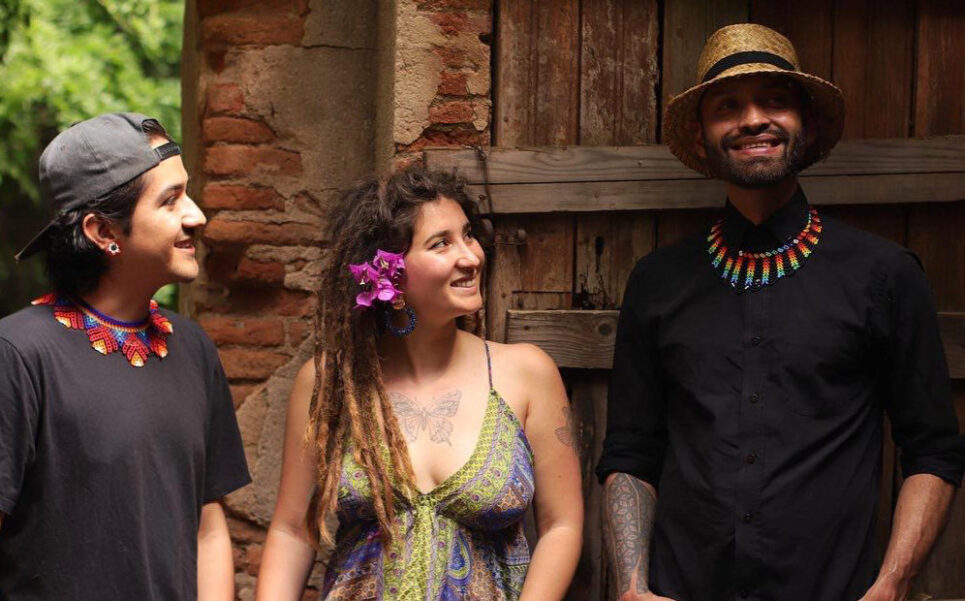
The image of the native forest ultimately reorganizes the entire interview. Because it also explains the way Sebastián Valdivieso understands tradition, community, and artistic sensitivity.
In a forest, invisible connections matter just as much as what can be seen. Roots sustain one another beneath the earth. Growth occurs unevenly, slowly, and collectively.
And perhaps this is where a fundamental difference from monoculture emerges: diversity is not an obstacle to survival, but precisely what makes survival possible.
That idea runs through the entire conversation with Sebastián Valdivieso. Even when he speaks about the future, the fantasy of completely breaking away from the past never appears. Nor does the need to preserve traditions in an untouched form.
In his discourse, the future appears instead as an organic continuity. A slow transformation in which memory still finds new ways to breathe.
What Still Grows Beneath the Surface
Near the end of the conversation, all the images that had appeared throughout it — roots, birds, forests, silence — seem to converge into a single idea: constant transformation.
There is one final moment that continues resonating long after the interview ends.
Laura Viera A.: When you think about the future, do you imagine yourself continuing to defend your roots, or do you believe you will eventually need to detach from them?
Sebastián smiles before answering.
Sebastián Valdivieso: I am not only rooted. I am also stem, flower, seed.
And perhaps that is the best way to understand his work. Not as an attempt to preserve the past intact. Nor as a complete rupture from it. But rather as a living form of transformation.
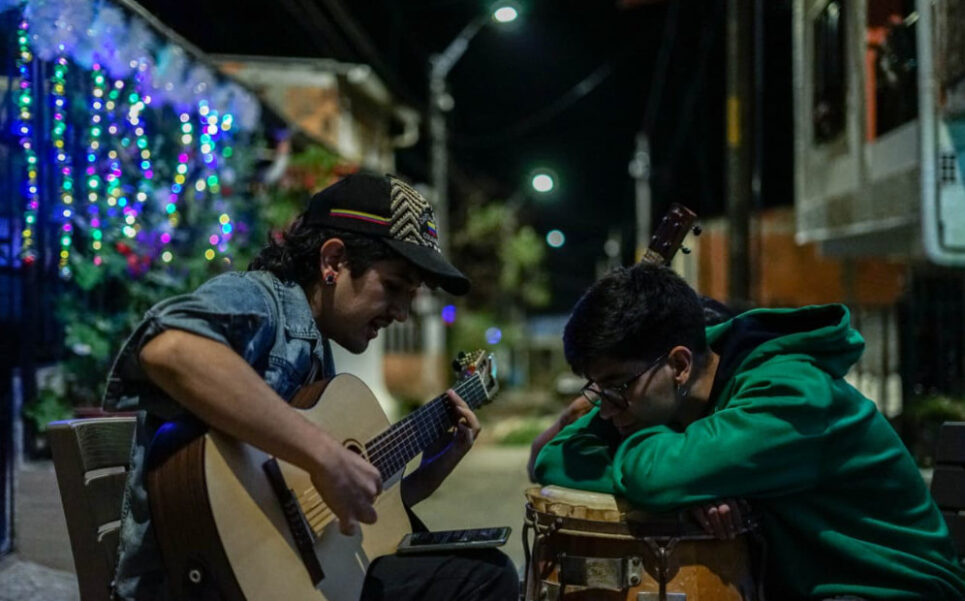
For Sebastián Valdivieso, roots do not function as anchors. They function as a nervous system — something that continues growing beneath the earth while the world above accelerates.
Perhaps that is why his music does not fully belong to the logic of the industry. It belongs to something more organic. Slower. More vulnerable.
Something resembling a native forest.
A place where memory still breathes.
Conclusion: Sebastián Valdivieso and the Art of Feeling Again
Listening to Sebastián Valdivieso forces us to rethink many assumptions about contemporary art.

In a cultural context dominated by speed, hypervisibility, and immediate consumption, his work insists on another direction — one that is much slower, more vulnerable, and profoundly human.
His music does not seem created to fill empty spaces or produce momentary distraction.
Instead, it is an open invitation to listen to what we usually avoid: silence, memory, fear, roots, and transformation.
Perhaps that is why it becomes difficult to speak about Sebastián merely as a musician. His work moves within a much larger territory, where creation functions as a form of existence, resistance, and belonging.
Sebastián Valdivieso’s work constantly insists on one idea: creating can also be a way of remaining human amid contemporary noise. And perhaps that is where the greatest strength of his work resides. In reminding us that there are still artists who do not create to anesthetize the world, but to help it feel again.