We are in the middle of the second decade of the 2020s, and the world is definitely not the same. Today, the AI Now Institute shows that we live in a world deeply influenced by artificial intelligence.
What do we really mean by artificial intelligence?
Before analyzing its impacts, risks, or promises, it is necessary to pause at something more basic: understanding what artificial intelligence really is.
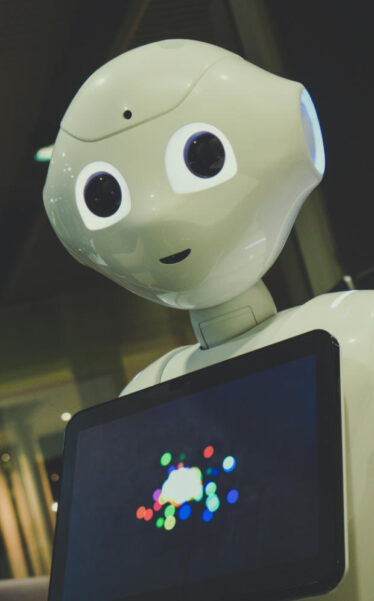
In general, people tend to think that AI is an almost autonomous entity, a superior intelligence capable of thinking, deciding, and, in a certain way, “understanding” the world. But that idea is profoundly misleading.
Beyond the headlines and futuristic narratives, artificial intelligence is neither a consciousness nor a replicated form of human thought. It is a set of systems designed to process large volumes of data, identify patterns, and make decisions based on those patterns.
However, a critical issue emerges: these data are not neutral.
They come from societies shaped by historical inequalities, structural biases, and power relations.
And when these data feed automated systems, they do not correct those inequalities; instead, they often reproduce them—and even amplify them—at scale.
That is why, when people speak of “objective” algorithms, what is actually being made invisible is the context in which they were created.
AI does not emerge in a vacuum
Artificial intelligence does not emerge in a vacuum.
It is designed within concrete companies, institutions, and cultural frameworks. It responds to economic interests, political decisions, and social priorities. All of this becomes embedded—although not always visibly—in how these systems function.

Understanding this changes everything, as it fundamentally shifts the conversation.
Instead of focusing on the fascination with what technology can do, attention shifts to responsibility for what it is doing.
From efficiency to justice. From innovation to power.
And it is precisely from there—from that need to look beyond the surface—that the work of organizations such as the AI Now Institute becomes meaningful.
Because before regulating artificial intelligence, even before developing it, there is a more urgent task: learning to see it clearly.
AI Now Institute: when technology decides who matters
Artificial intelligence is no longer a promise of the future. It is a structure of power in the present.
It is in the systems that filter who gets access to a job, in the algorithms that determine what information we see, in the tools that influence judicial, educational, and financial decisions.
AI does not only organize the world: it is beginning to rank it.
And that is where the central problem arises.

We are not facing a neutral technology distributed equitably. Instead, we are dealing with a system designed, financed, and controlled by a small number of actors.
The vast majority of them are large technology corporations that concentrate data, infrastructure, and decision-making capacity on an unprecedented scale.
Obviously, this has profound consequences.
When artificial intelligence makes decisions, it relies on historical data that carries embedded inequalities.
And once these decisions are automated, those inequalities do not disappear; they are amplified, normalized, and, most dangerously, made invisible.
To this is added another equally worrying dimension: dependence.
As AI becomes integrated into everyday life, it begins to occupy spaces that previously belonged exclusively to humans.
We not only make decisions with the help of AI, but we also begin to relate to it.
The convenience of an artificial intelligence available 24 hours a day, one that does not judge and continuously adapts to our needs, raises an uncomfortable question: what happens when we begin to trust emotionally in systems that cannot feel, but can influence?
In this context, the problem is no longer only technological. It is social. It is political. And, above all, it is human.
The central problem is not what artificial intelligence can do, but who defines what it should do and for whom.
An uncomfortable response: questioning power
Artificial intelligence is advancing faster than our questions about its consequences. While we celebrate breakthroughs and “intelligent” algorithms, we rarely stop to ask who is really deciding and with what interests.
In this context, AI is not neutral; neutrality is the most convenient illusion for technology corporations.
AI is no longer a promise of the future: it is a structure of power in the present.
Let us be clear: artificial intelligence filters access to employment, determines what information we see, and influences judicial, educational, and financial decisions.

The truth is that it does not organize the world neutrally; it ranks it. And it does so in favor of a few: large technology corporations that concentrate data, infrastructure, and decision-making capacity on an unprecedented scale.
Governance, data, and concentration of power
As the AI Now Institute reminds us: “The introduction of AI systems concentrates power in those who deploy them, leaving the most vulnerable people exposed and unable to challenge the decisions of the ‘intelligent machine’” (AI Now Institute, 2023).

Every automation based on historical data carries inequalities, amplifies them, and normalizes them, while at the same time, the emotional and functional dependence on these systems reshapes human relationships.
Founded in 2017 in collaboration with New York University, the AI Now Institute emerged from a symposium of the White House Office of Science and Technology Policy (2016).
This office was led by Meredith Whittaker and Kate Crawford. Its mission: to analyze the social implications of AI and develop public policies to address the concentration of power in the technology industry.
Since then, it has collaborated with organizations such as Distributed AI Research Institute, Data & Society, Ada Lovelace Institute, Partnership on AI, and the ACLU.
Its approach is clear: it is not enough to develop AI; it is necessary to understand who it benefits, who it harms, and under what conditions.
AI Now Institute: invisible data and hidden power
It is not enough to look at algorithms: the true power of AI lies in the invisible data it processes.
These include emails, messages, documents, and images—dispersed fragments that, when structured and analyzed, make it possible to predict behaviors, influence decisions, and shape societies.
The real power of AI lies not only in algorithms, but in the data it processes.

Whoever controls that data can anticipate behaviors, influence decisions, and redefine economic and social dynamics.
Without control mechanisms, massive risks emerge: security issues, lack of governance, loss of operational control, and exposure of sensitive information. AI does not just organize the visible world—it controls it.
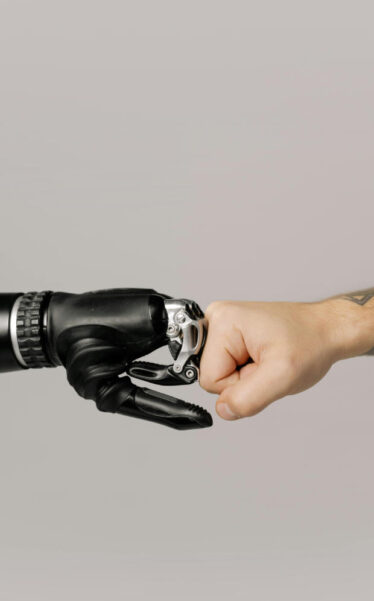
The debate about AI is not technological; it is political, social, and human.
AI intervenes in critical infrastructures, from criminal justice to education and healthcare, and in all cases, it concentrates power in the hands of those who are already powerful (AI Now Institute, 2023).
Cases such as the DOGE Power Grab or OpenAI’s strategy of integrating with Google show how Big Tech consolidates hegemony while marginalizing citizens.
The benefits of AI are not collective, but corporate. Public policies designed to foster the industry divert resources from workers toward companies that maximize profits through automation and surveillance.
To look at invisible data is to look at power itself. AI Now and the power of AI remind us that transparency and active oversight are indispensable: AI not only organizes, but also hierarchizes and decides who matters and who does not.
AI Now Institute: invisible labor and precarization
Artificial Intelligence not only transforms decisions—it transforms work. However, it does so in a subtle, almost invisible way. Meanwhile, while companies celebrate productivity gains, workers’ routines, autonomy, and security are being eroded.
AI transforms work: it makes it legible for machines, routine, hierarchical, and monitored.
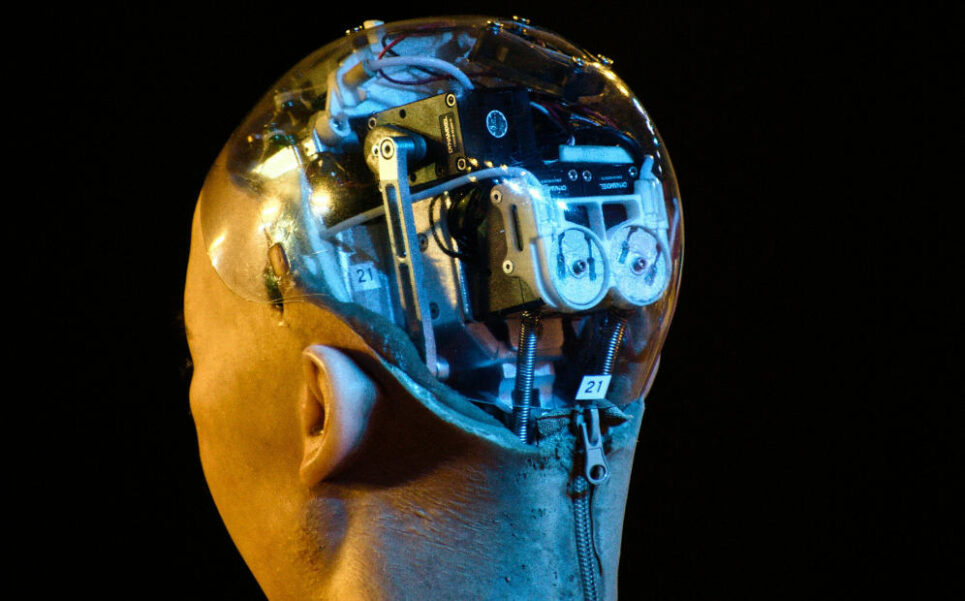
Every technological deployment decision redefines the working lives, safety, and autonomy of millions. As a result, the opportunity for a future in which AI supports stable, dignified, and meaningful jobs, fair wages, and social protection is being lost.
At the same time, algorithms that determine prices, wages, or job evaluations are invisible to those affected by them, and companies use them to justify decisions that were previously negotiated by humans.
The AI Now Institute proposes concrete actions in response to these challenges:
** Focus AI on power, not progress: analyze how the industry acts against the interests of the population.
** Strengthen labor organization: workers have the power to decide how AI is used and to recalibrate the tech industry.
**‘Zero trust’ policies: regulate the lifecycle of AI and prevent the industry from self-evaluating.
** Networks of expertise and narrative: connect research, policy, and activism to pressure the industry.
** Public-centered innovation: technologies that serve the collective interest without relying on AI as the central axis.
In this context, the invisible labor behind AI can only be challenged through visibility: understanding how and why these tools make decisions is essential to protecting the autonomy and rights of workers.
Therefore, AI should not be an instrument of precarization, but a tool that, under ethical regulation, supports human work rather than replacing it.
Conclusion
We all deserve to live in a world where our personal, political, and economic lives are free from coercion. However, the current trajectory of artificial intelligence is marked by opacity and concentration of power.
In practice, the companies that dominate AI have taken control over many aspects of our existence, imposing coercive practices designed to maximize their own benefits.
For example, these dynamics are evident in personalized pricing algorithms, which collect vast amounts of data to set individual rates.
Furthermore, AI, as a centralizing technology, is also deployed to sustain and benefit from surveillance systems, carceral logics, and military techniques, integrating corporate interests into state apparatuses and vice versa, making life more coercive and violent.
Even so, not everything is lost. AI could contribute to a future based on autonomy, transparency, and social justice.

For instance, it could support a robust ecosystem of public resources, services, and goods regulated by principles of fair competition and economic decisions that do not exploit changes in people’s lives.
In turn, a public life invested in freedom would move away from the proliferation of surveillance systems, punitive logics, and militarized state apparatuses, allowing people and communities to thrive.
Ultimately, they remind us that there is still a path to regain control and visibility over the technology that surrounds us. The struggle is not only against automation: it is for an AI that serves humanity rather than profit, that protects rights and dignity, and that allows us to collectively decide the world we want to build.