Drums and percussion are part of a musical universe filled with rhythm, technique, and creativity. After talking to some acquaintances, I discovered that among them were artists or people connected to the world of art. However, I was looking for someone with a different artistic profile from the people I had interviewed on previous occasions.
I had the opportunity to speak with a Colombian drummer, and I really enjoyed our conversation. Before meeting Miguel Cuevas, I felt it was important to learn more about the world of drums and percussion, as I did not know much about it. This search allowed me to discover a musical universe that goes far beyond simply playing an instrument.
Drums and Percussion: The Origins of an Instrument
Percussion is perhaps the oldest of all musical instruments. In prehistoric times, stones and pieces of wood were used to warn of the approach of dangerous animals or to scare away plagues, etc., with different tones or blows.
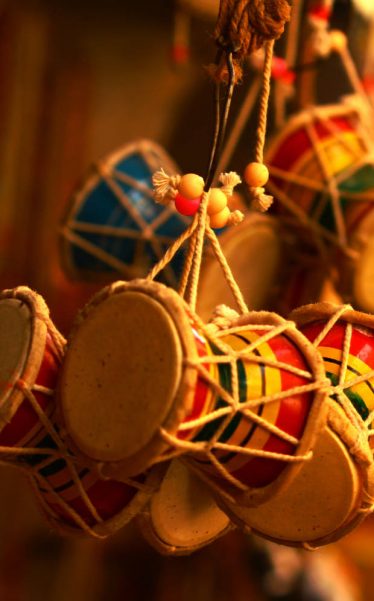
Many are the instruments that make up the great family of percussion, and in the last century, their number has increased even more.
In the beginning, they were classified into two types: of determining sound and of indeterminate sound, alluding to the possibility of being tuned or not.
Until not too long ago, and due to the materials they were made of, percussion instruments did not have the great possibilities they have today.
Thus, the membranes have been replaced by plastics that make it possible to tune more accurately and even turn into instruments susceptible to being tuned those that before were not, as for example the snare drum.
Drums and Percussion
As I learned, the drum set is a set of percussion musical instruments used by many musical ensembles.
The percussion instruments are considered the oldest of the musical instruments, next to the wind or harmonic instruments. The origin of the drums can be traced back to the United States at the end of the 19th century.
Until 1989, some instruments (the snare drum, bass drum, and cymbals) were played separately but were united. These three instruments were popularized by European music but were all of Turkish origin.

In the 19th century, romantic musicians began to use larger and larger drums.
Before all the instruments were united and as long as their union was not popular, they were played by several people, and they were in charge of one of the percussion instruments. But during the First World War, they were forced to reduce the number of musicians, and in many cases, these, especially the percussionists, learned to play several instruments at the same time.
The term drummer refers to the musician who plays these instruments.
Miguel Cuevas: Between Drums and Percussion
This conversation was quite relaxed. I, as always, had a thousand questions and my interviewee was ready to answer them.
Miguel Cuevas is a musician, professional drummer, and session drummer. He started playing when he was 12 years old and professionally 14 years ago.

It is important to know that a session drummer is a professional who is able to perform in any style of music, in addition to being prepared to interpret most of the musical works with a few minutes of analyzing the master score or a drum sheet.
He started playing drums at home. He saved a lot of money to be able to buy his first drum set. He started playing, got into lessons with the drummer of his brother’s band at the time, and in high school he formed his first band.
After high school, he started playing with other artists like Santiago Parra, Mauricio, and Palo de Agua for a while, and then he went to live outside the country.
Laura Viera A: Why the drums?
Miguel Cuevas: I don’t know why. It was the instrument that caught my attention the most.
He entered the university to study music. And he studied with great teachers like Fran Alsadilla and Jorge Sepulveda. They taught him about two worlds. Frank Alsadilla is Cuban then, with him he studied and learned everything related to Latin music and Latin jazz. With Jorge, he learned a lot about jazz, jazz style, swing, and improvisation. Both helped him a lot to develop what he is now as a musician.
Laura Viera A: What don’t people know about you?

Miguel Cuevas: I think people don’t know that I have another passion, and that is cooking. At some point when I was studying in college, I got bored with music and went to live in NYC and studied cooking, and graduated as a chef. I cook at home, for friends, I cook for events, for people; it’s something I’m very passionate about.
Although he recognizes that he is not much of a reader, he does like to be very involved in music. He has many favorite artists and bands. But perhaps the one he never tires of listening to is the Beatles. At least once a week he has to listen to them.
Laura Viera A: What are you passionate about?
Miguel Cuevas: I’m passionate about the drums, to be able to play better every day. It’s a very difficult instrument; to be able to play it well, with groove; to make others like the way you play and to make it suitable for certain songs or for a recording. I’m passionate about that, to be better for the recordings. I’m passionate about the instrument and the new technologies they bring out for the instrument every year.
He has been inspired by drummers like Dave Fueckel, Winnie Colayutta, and Phil Collins. At the moment, I am inspired by drummers like Arm Sterling and Steve Jordan. Depending on the genre of music I am inspired by different drummers.
I’m inspired by music too; I’m inspired by being able to create drums in songs that don’t have drums.
Since the pandemic started, things have changed a bit for Miguel. Perhaps the biggest change was that for many months he couldn’t play live.
But he used that time to practice a lot, which has made him very happy because he has been able to make progress on songs he had been practicing and also started working with his wife in the music academy: Ximena Abello Music World.
Drums and Percussion Around the World
Obviously, the music scene in Colombia had to be one of the points to touch upon during our conversation. And that’s exactly what happened.

We shall start by saying that the Colombian independent music scene is going through a good moment.
We have bands that tour all over the world and that have taken music made in Colombia to other levels of production and commercialization.
Every day there are more spaces to make and experience live music. There is also more diffusion and visibility.
But before reaching this cultural explosion, we have to talk about the fact that in the late 80’s and early 90’s, the development of the independent music scene was strengthened in terms of its evolution and sound production.
At that time, a generation emerged, both of artists (Aterciopelados and Poligamia, to name a few), as well as festivals that took over our capital, Bogotá.
Laura Viera A: How are the Colombian artists seen?
Miguel Cuevas: In my experience, people see Colombian musicians and relate them to Latin music, especially reguetton. I believe that Colombian musicians on the outside still do not have that recognition, that name of being musicians with a sufficient level to attend to the needs of music in the world. Few represent us in the world; I am talking about session musicians, jazz musicians. I think we still lack recognition. We are not a reference of virtuoso musicians, as for example the Brazilians or Indians. However, at this moment there are many groups that represent us; it is not my kind of music, but I think it is going well. People appreciate art more; it pays better, and parents are more willing to put their children in music class than my nonos were to pursue that career.

Laura Viera A: What has been the most difficult thing so far?
Miguel Cuevas: The most difficult thing that I find and still find difficult is to maintain social relationships with colleagues. In music, that is very important: to have an active social life with different musicians.
Laura Viera A: What has been the easiest thing so far?
Miguel Cuevas: I find my career easy. I think I have the gift to do it, and it has never been hard for me to get up to practice, to learn the songs for a concert; it’s what I’m passionate about. I think that musicians who live off the dirt are very privileged to do what we like to do. I find that easy and delightful.
Laura Viera A: How was your artistic life in the UK?
Miguel Cuevas: My development in England was incredible. The truth is that playing in bars, weddings, events, fairs, the development was amazing. People think about music in a very different way. The level is very high so you have to be very good to be called back.
Concluding
As we have learned, musicians are individuals who typically play an instrument, but numerous musicians may also compose, direct ensembles, or teach.
Musicians need continuous training to maintain skills, knowledge, and the ability to interpret music. Finally, music can be expressive, creative, therapeutic, and passionate, but to create music on any instrument.

The art world in Colombia is growing more and more. It is an evolution; it is a process. We are a country that still has a lot to solve in social issues before the artistic issues. Once those problems are solved, there will be time for art to evolve.