The afternoon sun crashes down like a golden hammer onto the zinc rooftops that crown Comuna 13 in Medellín. From the elevated walkway beside the famous outdoor escalators, the view explodes with color, defying gravity itself: colossal murals climbing exposed brick walls, young dancers spinning on their heads in breakdance performances on the warm pavement, and streams of international visitors, smartphones in hand, trying to capture the “authentic experience” of resilience in high definition.
The Memory of Comuna 13 in Medellín: From Bullets to Street Art
To understand today’s Comuna 13 in Medellín, you have to listen beyond the reggaeton rhythms and hip-hop beats echoing through its streets. Beneath the footsteps of thousands of visitors lies a history marked by exclusion, drug trafficking, and Colombia’s armed conflict.
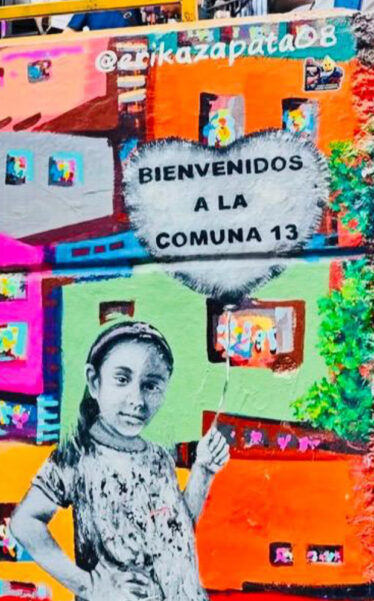
Throughout the 1990s and the early 2000s, these steep hillsides became one of the main battlegrounds of Colombia’s urban war. Guerrilla groups, paramilitary organizations, and state security forces fought for control of the territory, while civilians found themselves trapped in the crossfire.
“Here, death never announced itself—it was just another neighbor sitting at the table uninvited,” recalls Doña Elena, a longtime resident who prefers not to reveal her last name. From the balcony of her home, she now watches an endless tide of tourists.
“We had to lie under our beds to avoid the bullets that pierced our walls. We lived for years under an invisible curfew. Now we watch young people from Germany or the United States drinking coffee where our children once fell.”
More than two decades after the military operations that forever scarred this corner of Medellín—especially Operation Orion in 2002, the deepest and most enduring wound—Comuna 13 in Medellín now finds itself at the center of a fascinating, fast-moving, and deeply contradictory transformation.
It has become the epicenter of an unprecedented urban and social metamorphosis that turned the chronic pain of armed conflict into a global economic engine. Yet this remarkable change raises an uncomfortable but essential question for contemporary journalism: more than twenty years after the tragedy, who is shaping the narrative of this neighborhood?
Art and Memory in Comuna 13 in Medellín
The resilience of Comuna 13 in Medellín did not emerge from a marketing campaign or a government decree.
It was born within the community itself. Residents refused to let violence define their neighborhood forever.
Collective pain gradually transformed into art.
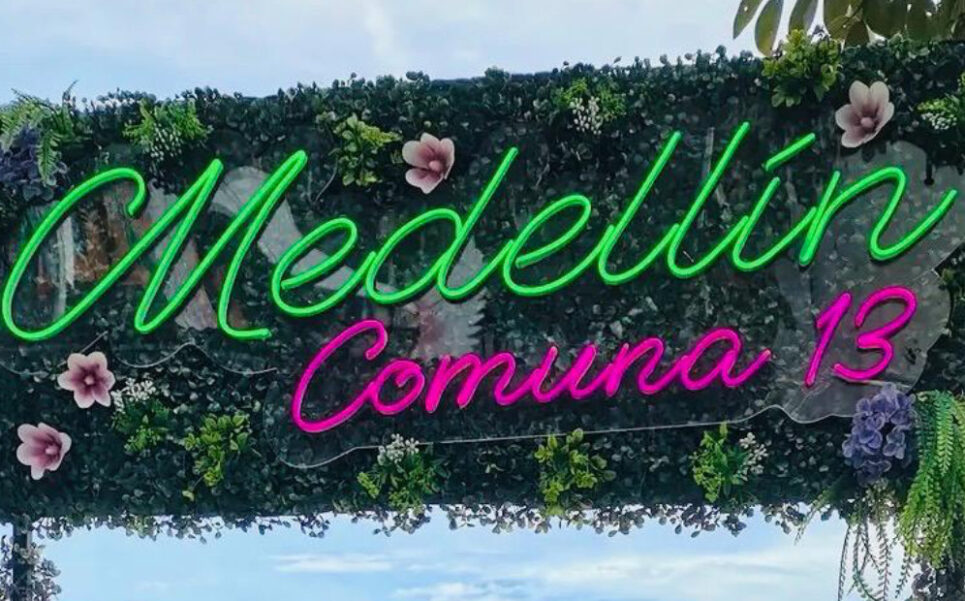
Walls once scarred by bullet holes began telling stories.
The first murals were never meant as decoration. They were acts of remembrance, mourning, and protest.
Each piece of graffiti sought to expose the forced disappearances linked to La Escombrera, considered Colombia’s largest urban mass grave.
They also honored the victims and demanded that their stories never be forgotten.
The streets now crowded with visitors were once frontlines.
Young People and the Transformation of Comuna 13 in Medellín
If Comuna 13 in Medellín ultimately broke free from the grip of gangs, criminal groups, and invisible territorial boundaries, it was because of its young people.
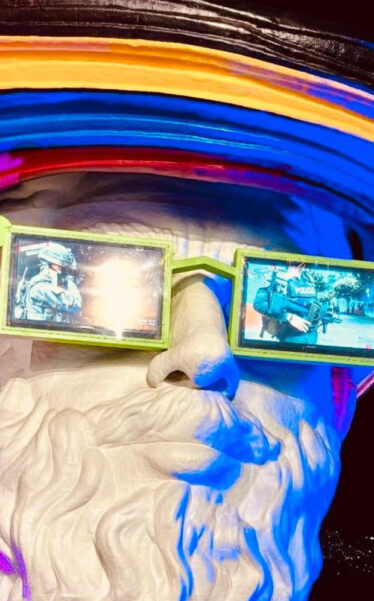
Many of them had once been destined to become victims—or participants—in the conflict. Instead, they consciously chose to become the architects of their own social transformation.
Today, these same young men and women, born and raised in the neighborhood, wear headsets and lead the now-famous Graffiti Tours.
They are not traditional tour guides reciting memorized scripts.
They are barefoot historians and oral storytellers who either inherited or personally experienced the horrors of war and have chosen—with remarkable maturity—to tell a different story: one of change.
Through hip-hop’s four pillars—graffiti, breakdancing, rap, and DJing—the improvised rhymes performed on neighborhood street corners became a new social language for the community.
Together, they built an organic, community-led model of peace that successfully reclaimed young people from criminal organizations.
Exchanging guns for microphones or spray paint was never an easy or risk-free decision. It was—and continues to be—an extraordinary act of peaceful rebellion.
In a place where speaking out could once cost your life, watching young people reclaim the streets to tell their own stories became a cultural revolution. It is the triumph of a generation that understood historical memory is preserved not only in classrooms or courtrooms, but also through rap lyrics and vibrant murals painted across gray concrete.
Tourism in Comuna 13 in Medellín: A Driver of Transformation
The tourism boom in Comuna 13 in Medellín cannot be understood without its infrastructure. The neighborhood’s iconic outdoor escalators, inaugurated in 2011 as an international landmark of social urbanism, became the red carpet that opened a once-isolated community to millions of visitors from around the world.
What followed was an unprecedented economic transformation.
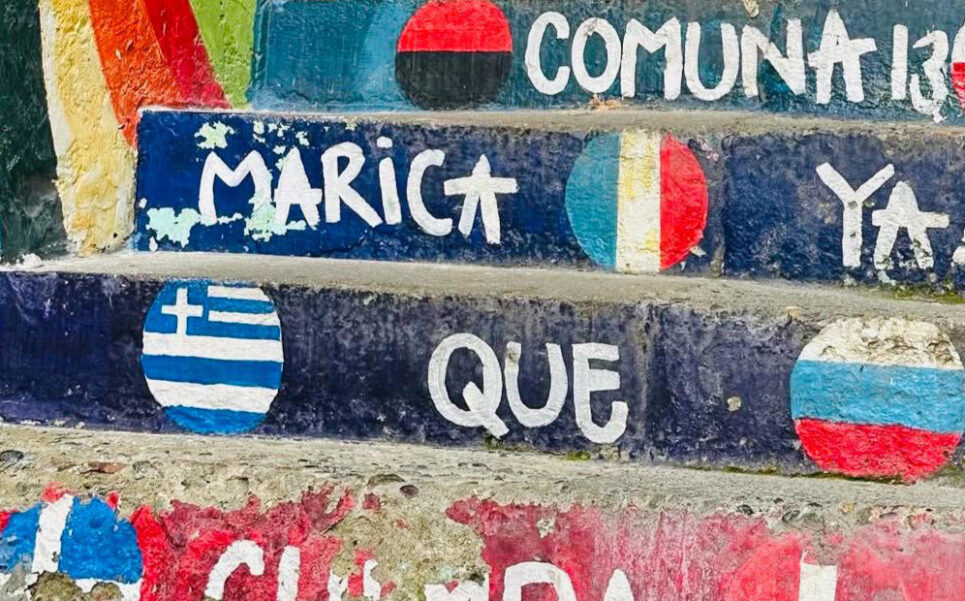
Tourism has reshaped the neighborhood’s socioeconomic landscape in three fundamental ways.
Financial inclusion and economic reinvention. Families that once survived through unemployment or informal work now operate thriving small businesses. Former self-built homes have become local art galleries, backpacker hostels, artisanal ice cream shops—famous for their mango biche popsicles—and rooftop restaurants where traditional Antioquian cuisine coexists with international flavors.
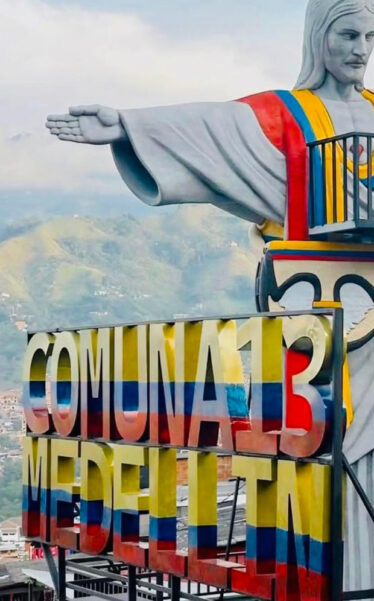
Revitalization of public space. Streets once emptied by fear have become lively public spaces. Tourism attracted investment in lighting, community safety, and connectivity. Today, public areas serve as vibrant stages where commerce, cultural industries, and local entrepreneurship create opportunities for hundreds of families.
Changing the neighborhood’s global image. Perhaps tourism’s greatest impact has been symbolic. Once labeled one of the world’s most dangerous neighborhoods, Comuna 13 in Medellín is now featured as a must-visit destination in international travel guides.
Its name is no longer associated solely with violence, but also with resilience and social transformation.
The Challenges of Tourism in Comuna 13 in Medellín
Yet this extraordinary success is unfolding at such speed that it risks consuming the very essence visitors come to experience.
Pain became resilience.
Resilience became a global attraction.
And that attraction now flirts dangerously with gentrification and the commercialization of suffering.
The continued growth of tourism raises difficult questions.
How can historical memory remain alive when the streets fill with visitors?
How can economic benefits stay within the community instead of displacing the very residents who made this transformation possible?
The greatest challenge facing Comuna 13 in Medellín is no longer attracting tourists, but ensuring that economic development coexists with memory, identity, and the dignity of its people.
Authenticity in the Age of Mass Tourism
More than twenty years after its darkest chapter, Comuna 13 in Medellín has become one of Latin America’s most vibrant open-air museums and one of its most visited destinations.
Yet its greatest challenge is no longer surviving armed violence—it is surviving the overwhelming success of its own economic transformation.
The story of this remarkable metamorphosis cannot simply become a celebration of the free market.
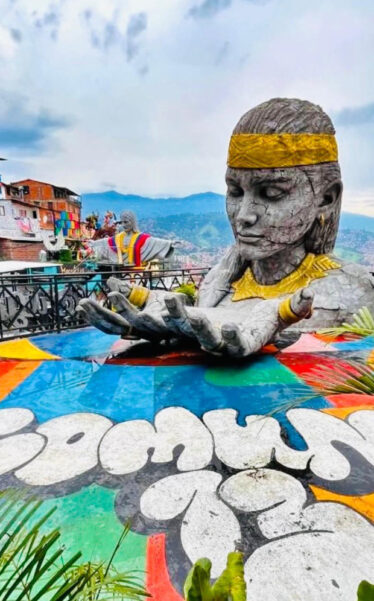
The rapid growth of specialty coffee shops, rooftop restaurants, and smiling selfies in front of colorful murals risks numbing the past, transforming a historical tragedy into a theme park of resilience.
If the neighborhood’s story becomes depoliticized to satisfy the quick consumption of international tourism, there is a danger of forgetting that those colorful walls cover bullet holes and conceal stories of injustice that remain unresolved.
For tourism to become genuinely transformative rather than merely financially successful, economic development must always remain subordinate to the dignity of memory.
The enduring lesson of Comuna 13 in Medellín is that art and tourism can become extraordinary tools for social progress and poverty reduction—but only if local residents remain the authors of their own story.
The glow of tourism and the money it brings should never drown out the voices of the victims.
In the end, the true value of Comuna 13 in Medellín does not lie in the outdoor escalators climbing the hillside, but in the resilience of a community that, step by step and rhyme by rhyme, found the strength to stand again.