Colombian pride has a date that we carry in our hearts: July 20. For many people, this day brings to mind the first man landing on the Moon. For us Colombians, it means much more than that. It is our national holiday, our Independence Day, and an opportunity to remember where we come from.
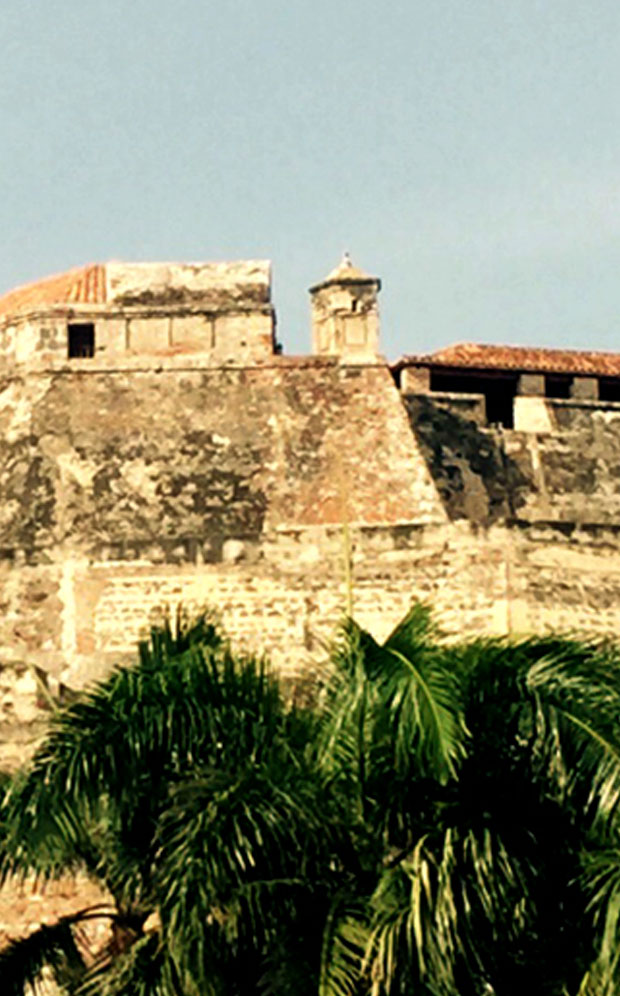
It all began with a small disagreement between some criollos and a Spaniard who claimed to own a flower vase. That argument became the perfect excuse to call for a new government. One that would replace the viceroyalty and break the ties with the Spanish monarchy.
July 20, 1810, was the day people took to the streets, shouting and proclaiming their freedom. Since then, this date has been part of our collective memory and identity.
For me, everything about Colombia is beautiful. Years ago, I left the country behind, along with the land of three mountain ranges and two oceans. Today, I only return to the country where I was born and raised for vacations. But being far away does not mean forgetting. On the contrary, distance has made me love that land even more. It is a place I always carry with me.
Being Colombian is passion. It is blood boiling at dawn and moving through your body with the pounding of the waves.
Like me, there are hundreds of Colombians living beyond the country’s borders. This is our way of paying tribute to this wonderful land, to our beloved Colombia.
The moment you leave your country and decide to live somewhere else in the world, life changes. For better or worse, it changes.
And it is very common that, once you no longer live in the land where you were born, your sense of belonging and your pride in your homeland become deeply ingrained. My heart is tricolor! That is simply how it is. There is no other way to put it.
Colombian Pride: Colombia Always in the Heart
Colombian pride also lives in those small details that connect us to our homeland. There is nothing like the snare drum, guacharaca, and trumpet of a papayera band. There is nothing like the majestic green of the mountains on the Bogotá savanna.
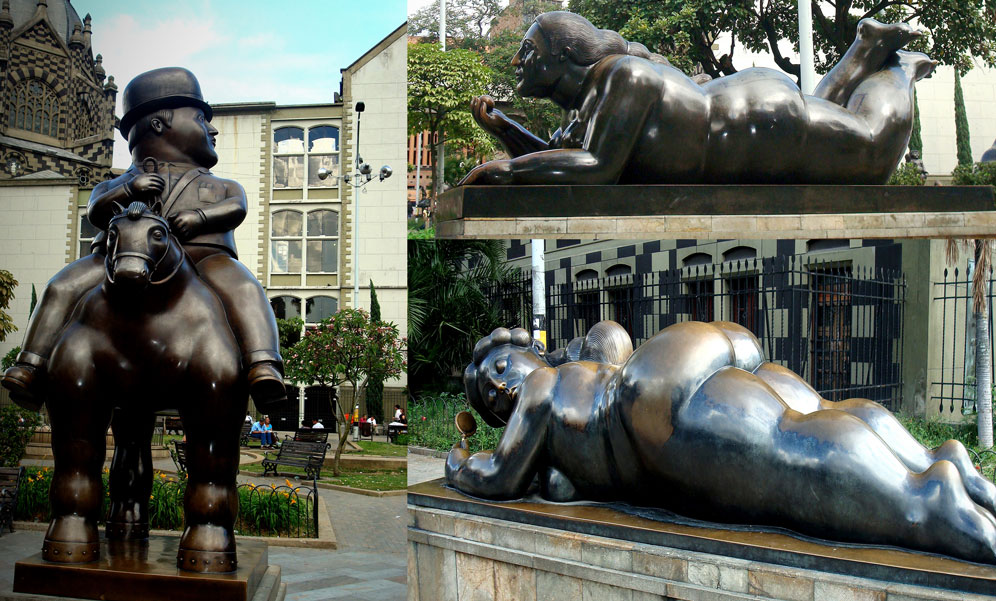
The combination of its landscapes, food, and beautiful small towns awakens an emotion that is difficult to explain. Its streets are decorated with majestic works by [**Maestro Botero**](https://solkes.com/el-obturador/2024/03/tributo-a-fernando-botero/). His works can also be found on postcards and posters all over the world.
All of this is part of an identity that we carry with us. It is that Colombian pride that remains intact, even when we are far from home.
A Colombian makes you feel important. They lift your spirits in a way you will not find anywhere else.
A gastronomic paradise par excellence, and no one can convince me otherwise. From ajiaco santafereño to pandebonos, aborrajados, marranitas and arroz atollado.
There is mamona and tamal. Pipián empanadas and bandeja paisa. Papitas criollas and arroz con pega. Fruits that do not exist elsewhere and are available every day of the year. The seasons simply do not affect us.
Nothing compares to a lulada sliding down your throat. Mango biche, blackberries, grapes, and passion fruit.
Colombia Also Faces Major Challenges
There are situations that hurt us and tear our souls apart. Social injustice breaks us into a thousand pieces. It hurts to see children on the streets asking for money. It hurts to see mothers raising their children alone. It also hurts to live with an absurd war that many generations have inherited.
Some have been kidnapped and are victims of landmines. There are families who wait for years for some kind of news. There is the desperation of those searching for a loved one. There is also the anguish of helplessness.
For decades, Colombia has lived with the consequences of a conflict that seems never to end. Many families have been forced to abandon their land. Others have watched their homes and life projects disappear.
Forced displacement has also left deep wounds. Thousands of people arrived in cities without resources. They had to start over, often in conditions of extreme poverty.

On top of this, inequality remains painfully evident. Not everyone has the same opportunities. Access to education, healthcare, employment, and decent housing continues to be a challenge for many communities.
There are also politicians who steal everything. Corruption diverts resources that should reach those who need them most. There is a lack of political resolve. There is too much eagerness to start things and too little willingness to finish them.
There are promises that remain nothing more than speeches. Projects begin and are never completed. Decisions arrive too late, when the damage has already been done.
And yet, Colombia cannot be reduced to its problems.
Because there are also the people who get up every day to work. There are those who build their businesses through hard work. There are teachers who continue teaching in difficult places. There are doctors, farmers, artists, and workers who keep the country going.
What I love about Colombia is the smell of freshness, its cultural and gastronomic diversity. Every department has a different accent and different customs… But above all, I love the energy and the smiles of its people. We think that is normal, but it isn’t. It is unique!!
There are those who help without expecting anything in return. Those who welcome newcomers. Those who open the doors of their homes. Those who understand that solidarity can also become a form of resistance.
Colombia has deep wounds. But it also has an enormous ability to rise again.
For this reason, when we talk about our neighbors and the differences between brother nations, we must also look inward. We cannot point only to the difficulties of other countries while ignoring our own.
Colombia has problems too. Many of them, and they are very complex.
But as someone told me recently, “Colombia has problems, but the good people outnumber them.”
Perhaps that is one of our greatest strengths. We are a society that, despite its wounds, continues to find reasons to move forward.
Colombian Pride Beyond the Borders
Colombian pride beyond the country’s borders becomes especially visible when an important date like July 20 arrives. Many Colombians living abroad gather to celebrate with music, good food, and the joy of being Colombian.
As expected, July 20, our national holiday, is no exception.
In Berlin, the ambassador of cumbia and ancestral music, the one and only Totó la Momposina, performed. A proudly Colombian woman and fourth-generation member of a family devoted to music, she learned to dance and sing before she learned to walk and talk.
In Toronto, one of the most important moments of the celebration was led by the group ChocQuibTown.
Spain was an unbeatable destination for Colombians. In Barcelona, “Un canto para la paz” took place. The event featured Gustavo Rodríguez, former singer of Grupo Niche; Ingrid Braum, a salsa singer from Cali living in Barcelona; and Jey Cadenas, former singer of Grupo Niche and participant in La Voz Colombia, among other artists.
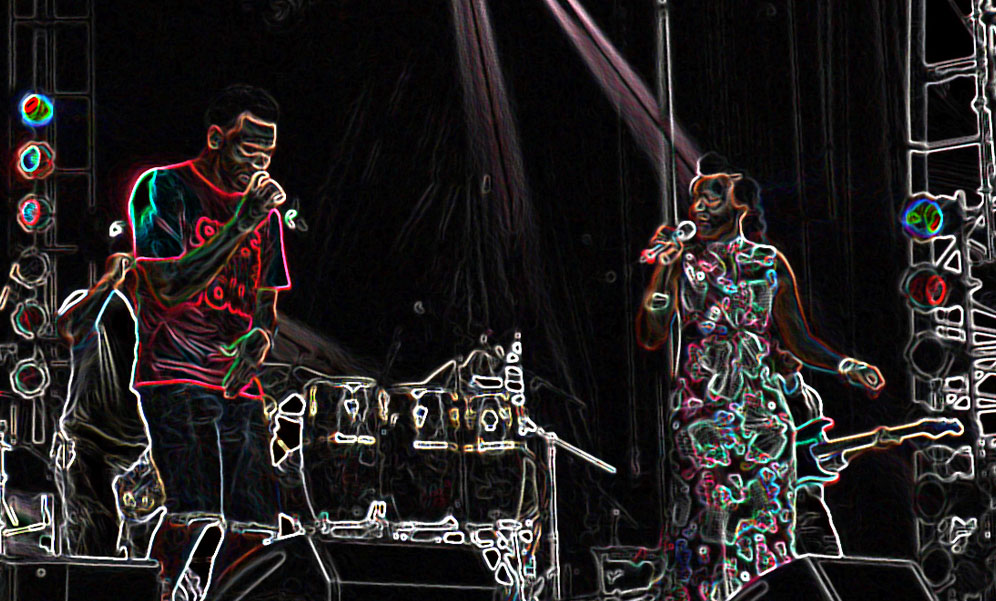
Madrid has always been an example of variety. The Colombian ballet NATIVOS DE MACONDO performed at the Teatro Arlequín Gran Vía. Colombian composer Gusi presented his debut solo album, “Al Son de mi Corazón.”
Music as an Expression of Identity
But what I really wanted to know was what a Colombian would say to someone who knows nothing about our country. The answers varied, but they always shared a common thread.
From the beautiful Pacific coast to the Amazon, music is always with us. The variety of rhythms and sounds is immense. Currulao, Mapalé, Porro, Salsa, Vallenato, Cumbia… the list is endless.
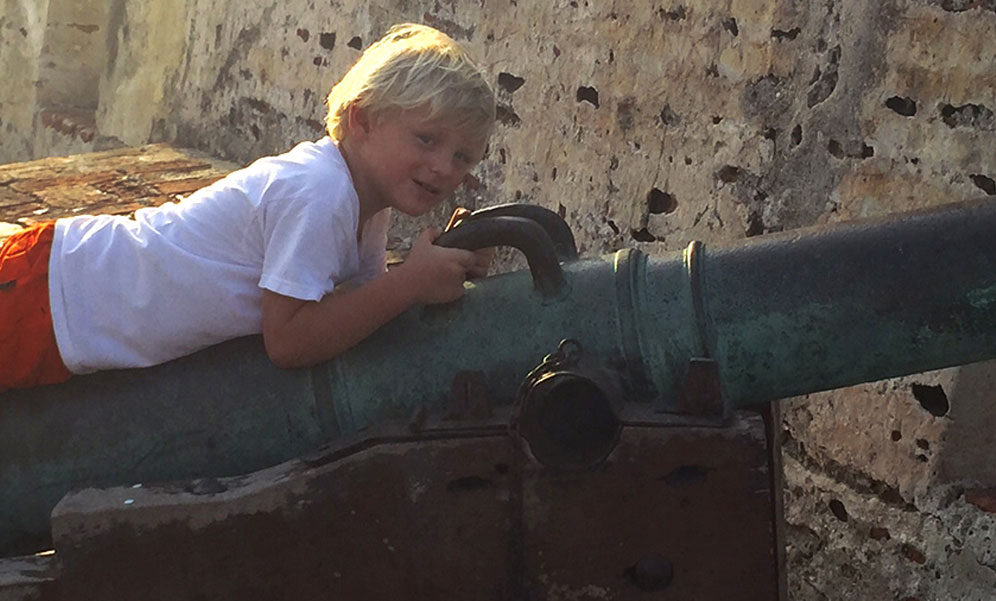
That there are more good people than bad, and that they should give Colombia a chance to let themselves fall in love. Once they get to know it, they will never want to leave!!!
That is why I asked: What do you feel when you hear Cumbia or Vallenato? “My heart skips a beat, and I start dancing and singing. It is identity, regardless of your region.” “Nostalgia and the urge to dance.” “Emotion and belonging.”
One thing we have in common is that our people are unique. No matter how many problems we have, no matter what situations push us to the limits of reason, and regardless of the pain, there is always a smile waiting for us at the end of the day.
A Joy That Refuses to Give Up
We never hang our heads. We always look ahead. We are joyful, helpful, and persevering.

We do not have seasons. We do not experience winters with temperatures below zero. We do not know what it means to be short on vitamin D because we always have sunshine.
Perhaps that is why there is always something to celebrate, no matter the time of year.
The Barranquilla Carnival, the Festival of Blacks and Whites, the Manizales Fair or the Cali Fair, the Carnival of the Devil, the Vallenato Legend Festival, the Feast of the Candelaria or the Fire Carnival.
We learn to dance before we learn to walk. For us, everything is life. Many Colombians put on a Vallenato song to sing away their sorrows.
And what about the athletes who make us cry with emotion? They all deserve unique recognition.
I wish I had more space in the universe to say thank you. A thousand times thank you for allowing us to raise our flag and hear the most beautiful national anthem.
Thank you to Nairo Quintana, Mariana Pajón, Catherine Ibargüen, and Rigoberto Irán, and to the Colombian Women’s National Football Team and the Colombian skating team.
Thank you to Falcao, James, Yepes, Cuadrado, and that entire national team that gave us our soul back after so many years.

“When we were at the World Cup a year ago, I thought I was going to jump out of my body because of all the excitement. What incredible pride. I think I cried from the emotion.”
Thank you to all the athletes I have not mentioned, who have always fought for themselves and for us.
I am very proud to be Colombian because that is where I was born, where I grew up, where I learned to fight, where I learned not to leave things unfinished, where I learned that difficulties pass and new opportunities come, where I learned that everything is easier with solidarity. That is where my people are, and that is where I will grow old.
Colombian Identity in the Small Details
Colombians are a very special kind of animal.
For some reason, we say we are going to “give” someone a coffee or “treat” them to a coffee. We speak in diminutives: a little glass of water, a little piece of fruit, how sweet, what a little shame.
Colombian identity is an intangible territory. Understanding who we are and how we interpret ourselves is difficult, almost impossible.
We are natural challengers. The good, the ordinary, and the bad all run through our veins.
No matter what has happened, the moment someone speaks badly about our country, we defend it to the death. We may admit that certain things are true, but we will still defend it fiercely. The subject of drug traffickers and cocaine drives us crazy and provokes absolute outrage.
Being Colombian means being born and raised with the aroma of freshly brewed coffee or a ripe guava surrounding you. It means learning to speak while repeating *Ángel de mi guarda, mi dulce compañía…*
It means feeling every achievement by a Colombian abroad deep in your heart, or feeling your heart tighten when you hear the national anthem.
Every time you watch a video and see the flag waving in the background, the *sombrero volteao* or the mochila, your skin tingles. A knot forms in your throat. Your eyes fill with tears… tears of love. My heart is, and always will be, tricolor.