I came from Caracas, where we call buses “furgonetas” or “cochecitos,” and the subway is something to fear during rush hour. On my travels through [**Europe**](https://solkes.com/x-el-mundo/2021/02/viajando-barato-por-europa/), I discovered that public transportation in Europe can also be a way to get to know cities and their inhabitants.
It doesn’t matter which means of transportation you choose. You will always come across the typical street vendors selling questionable merchandise or beggars asking for help and telling the same stories about their needs and difficulties making a living.
Motorcycles represent anarchy in my city and are a constant presence in our mornings. And our afternoons, too. But nowhere else in the world do you have the privilege of being accompanied by groups of macaws that also want to cross the capital.
The Change
The plane was the first means of transportation on this journey, and Heathrow Airport in London was the first stop. When people talk about the English capital, the red double-decker buses are probably the first thing that comes to mind.

But this means of transportation is much more than a symbol of the city. Countless times, it allowed me to meet unforgettable people.
There was the man who commented on the news like a journalist, even though he was simply reading it from his newspaper. Or the bus driver who would open the door wide for you and gradually get used to you, just as you got used to him, until you were no longer strangers.
There was also the melancholic musician who decided to tell me his story one evening after leaving his band. And a man who approached me, flirted with me, and stole a kiss before saying goodbye.
Thousands of lives could be observed through the window. Alongside them were millions of small details on the streets that could be seen from the upper deck of the bus.
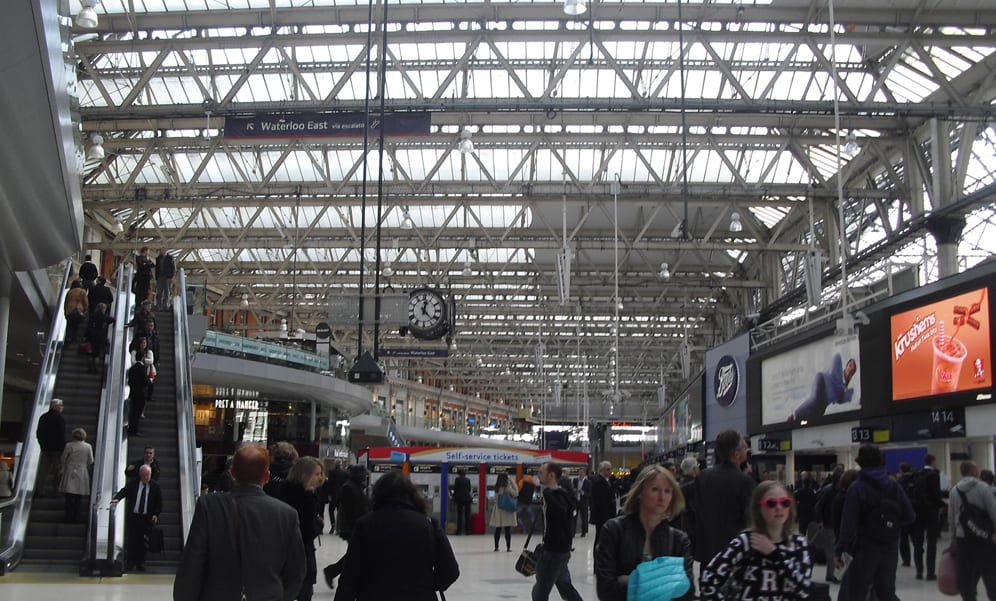
The Tube: Traveling on the London Underground
Entering the “Tube,” as the English call the subway, was like descending into a kind of dry sauna with a strange smell.

Over time, I got used to it. Because of its temperature, in winter it was the first place I wanted to be, and in summer, the last.
The carriages had a vintage style that you eventually got used to and even grew fond of. The tracks, on the other hand, were home to numerous families of rats.
Mind the gap stole a piece of my heart and my auditory memory. The famous round London Underground logo was like a light at the end of the tunnel whenever I got lost while exploring the city.
Spotting a tourist was fairly easy. You only had to look for the person who stopped to study the colorful map of eleven lines, confused and trying to find the best route to their destination.
Locals moved as if they had been programmed to do so. To distract them and, at the same time, annoy them, there was only one option: stand on the left side of the escalators. Tourists were particularly good at doing that.
When I left the platforms, especially the central ones, I would always encounter some form of artistic expression: musicians, mimes, dancers, or painters created a cheerful and unique atmosphere amid the city’s rather sober surroundings.
When the sun set in Harwich, in eastern England, I set off by ferry toward Hoek van Holland. After a few minutes, all I could see were the harbor lights as we moved farther and farther into the darkness of the night.
From Ferry to Train: Public Transportation in Europe on the Way to the Netherlands
At sunrise, we arrived in the Netherlands. We had slept in the middle of the sea and had a quick breakfast on board. Now came the next step: taking a train to Amsterdam.
A train like any other, but with a dreamlike view. The grass seemed greener than anywhere else. The windmills moved slowly in the fresh summer breeze. In the distance, a rainbow welcomed us.

When we arrived at the central station, it was still far too early to check into the hotel. Luckily, I was traveling with a movie lover. He remembered seeing in a film that there were lockers at the station.
We could leave our backpacks there and kill some time. We explored the small city in my favorite way: on foot.
And what better way to do it? I am an avid walker. A sort of guide who asks for nothing more than the chance to show what she knows: the city’s most famous and, at the same time, most curious places.
After the tour, we were very hungry. We ventured onto the tram and boarded at stations where we couldn’t understand a single word. With a bit of luck, we managed to recognize the name of our stop.
Little by little, we began to understand the language and recognize most of the stations.
From Amsterdam to Paris: Different Forms of Public Transportation in Europe
By the fourth day, we were already feeling quite comfortable and decided to use Amsterdam’s most typical means of transportation: the bicycle!
It must be said that Londoners cannot stand tourists who stand on the left side of escalators. The Dutch can also be quite persistent when you are not moving at their pace and accidentally cross their path.
My experience on two wheels was therefore accompanied by countless bicycle bells, constantly reminding me to get out of the way. Even so, I never lost that incredible feeling of freedom.
The next day, we took a bus to Brussels. I didn’t find anything particularly special or extraordinary about the transportation there. Still, it was a lovely two-day stop before continuing our journey by another bus to Paris.

The Paris Metro was a complete contrast to the glamour of this fashion capital. The walls were marked with damp stains, and the seats in the carriages were hardly inviting. On top of that, there was a simply unpleasant smell.
The unfriendly attitude of the ticket sellers and some other passengers didn’t help either. Despite everything, it is worth immersing yourself in this underworld. The reward is waiting above ground.
Barcelona and Public Transportation in Europe
Barcelona was the last destination of our overland journey. We then flew there.
Because of a small oversight, we took a flight that landed in Reus. As a result, we had to travel for another hour to reach our actual destination.

When I arrived in Barcelona, I was surprised by how similar the city’s streets and buildings were to those of Caracas.
At the terminal, I asked the driver how we could get to the address of our hotel. At first, we didn’t know how to react to his friendly response.
The journey took 40 minutes by metro. Our hotel was on the outskirts of Barcelona, in another city called Badalona.
We were very tired and only had a basic knowledge of Catalan. After wrestling with the ticket machine, we boarded an almost empty carriage. All we wanted was to sleep.
When we arrived at the hotel, it was already midnight. Luckily, the staff was still there to welcome us.
The next day, after getting some rest and with the sun already shining, we headed into Barcelona.
The metro was completely different: crowded, noisy, and full of people dressed in summer clothes. Some seemed as though they had never heard of deodorant. That was probably why I memorized the Catalan word “sortida,” meaning “exit,” so quickly.
Public Transportation in Europe as a Way to Get to Know a City
Barcelona was the final destination of this journey. Today, I realize just how different the means of transportation are in each country and how each one has its own advantages and disadvantages.
A city’s public transportation is an important part of its identity. It allows you to discover its culture, its different ways of life, and even a little of its language.
That is why my advice to any traveler is to step outside your comfort zone. Forget about taxis and rental cars. Explore public transportation and discover the true culture of a place in the process.
You never know what might be waiting for you along the way.