We live in a unique moment in the history of human creativity. Technology has never before penetrated such intimate territories of thought and aesthetic expression. In this context, artificial intelligence and art are redefining how we understand creativity.
Today, from algorithm-generated paintings to compositions created by neural networks, artificial intelligence and art challenge traditional notions of authenticity and authorship. This transformation invites us to rethink what it means to be an artist.
Moreover, this evolution affects not only the creative process but also how we interpret art and its cultural value in an increasingly complex digital society.
What Is Art and What Makes an Artist in the Age of Artificial Intelligence and Art?
Before evaluating technological impact, it is essential to understand the nature of art. Art has always been a form of communication expressing human experiences and emotions.
Art is an expression of our creativity, manifesting in different forms and spaces.

The definition of art is controversial and always subject to debate. Every society, era, and individual perspective differs, and art is approached from many angles, each offering a unique viewpoint.
Creativity is defined as the ability to generate original ideas with value. It is deeply connected to experience, emotion, and cultural context. Many experts argue that the human dimension remains essential.
However, in the debate around artificial intelligence and art, a key difference emerges: AI generates content based on patterns and data, while the artist creates from lived experience. Consequently, the machine produces without truly living.
Recent history offers examples illustrating the impact of this technology. In 2022, for instance, an image created with MidJourney won an art competition, sparking controversy over authorship.
Artists such as Refik Anadol have brought artificial intelligence and art into institutional spaces, showing how AI can amplify human vision without replacing it.
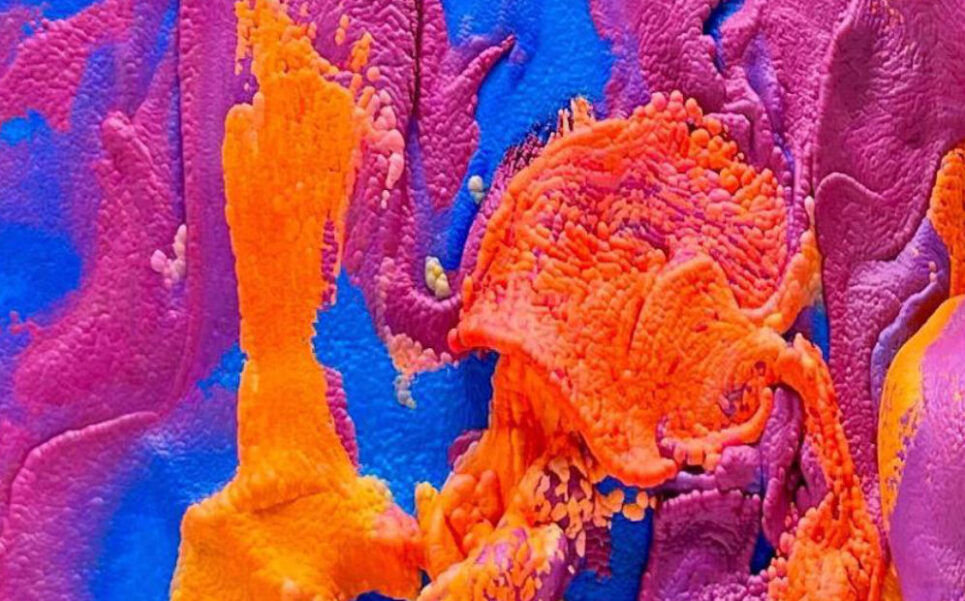
Similarly, creators like Sofía Crespo explore organic forms through generative systems, and Mario Klingemann investigates human-machine collaboration.
Together, these examples show that artificial intelligence and art can produce impactful works, yet the artist remains key in conceptualization.
Global Perspectives on Artificial Intelligence and Art
The truth is that AI-generated images have multiplied and become increasingly sophisticated in recent years. This has led to the creation of works that are rich in detail and imagination.
People create art from the things around us. Likewise, AI uses information to generate visual material based on user inputs.
This debate is not unfolding uniformly around the world.
Each region views artificial intelligence and art through its own cultural context.
This means that brushes, musical instruments, and cameras are no longer the artist’s only tools.
Algorithms and language models have become new creative partners, opening up a universe of possibilities that connects the human and the digital.
Regional Approaches and Cultural Contexts
In Latin America, for example, artists use AI to reinterpret hybrid identities. At the same time, concerns about cultural appropriation are emerging.
In Mexico, Miguel Ángel Rojas uses AI to merge pre-Columbian iconography with contemporary urban scenes. The result is a series of digital murals exhibited in galleries and urban art festivals.
In Brazil, artists such as Camila Oliveira transform traditional dances into interactive visualizations, allowing audiences to alter movements in real time through sensors.
By contrast, cultural institutions in Europe adopt a critical approach, reflecting on the relationship between technology and art from historical and ethical perspectives. There, the interaction between technology and art is analyzed through the lenses of history and ethics.
The Musée d’Art Moderne in Paris organizes workshops in which students use AI to explore the styles of classical painters such as Cézanne and Klimt, assessing how machines interpret the human brushstroke.
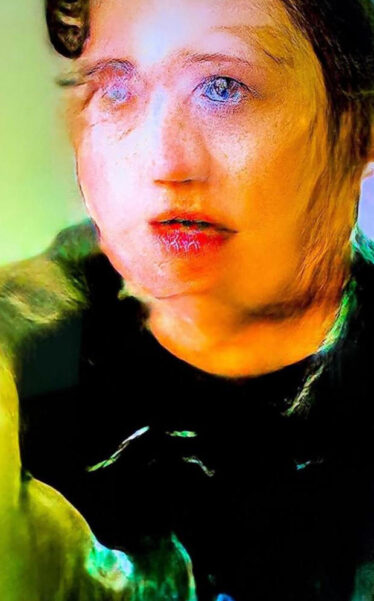
In Berlin, artist Anna Schmitz works with AI to question the authenticity and authorship of artworks, creating interactive exhibitions in which visitors can modify images in real time.
Institutions such as the Digital Art Center in London promote lectures on algorithms, copyright, and ethics, fostering an informed public debate about the limits of automated creativity.
In Europe, therefore, AI is not only used but also critically examined: how it redefines art history and cultural values.
In the United States, the debate focuses on legal and economic issues. Protests over the use of works without consent have emerged as a consequence.
Companies in Silicon Valley are launching platforms that allow anyone to create AI-generated images, sparking debates about copyright and compensation for original artists.
Protests by groups such as “Artists for Copyright” have led to lawsuits against platforms that use protected works without permission, highlighting the tensions between innovation, creativity, and regulation.
Asia and Africa
In Asia, aesthetic traditions are combined with technological innovation.
This has led to new forms of artistic expression that connect the past and the future.
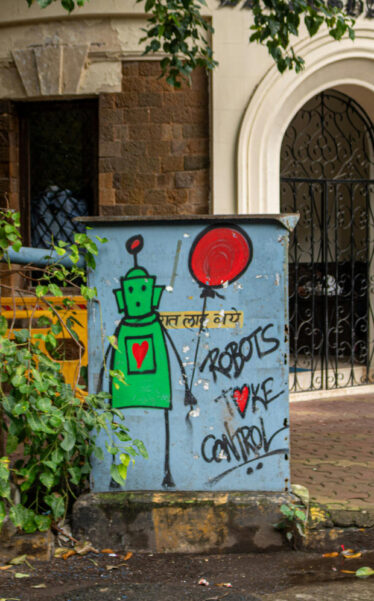
In India, the Siddharth Rao collective uses AI to digitize miniature painting techniques and blend them with interactive light projections.
The Siddharth Rao Collective is a community-driven initiative dedicated to ecological restoration, environmental stewardship, and sustainable development.
They believe that healthy ecosystems and thriving communities are deeply interconnected.
In this way, artistic heritage is preserved while innovation is encouraged.
At the same time, a different focus is emerging in Africa.
In the African continent, AI is being used to preserve stories, although access remains uneven.
In South Africa, the African Digital Arts Initiative project is digitizing oral narratives into educational animations.
Furthermore, emerging artists in Nigeria use AI to create textile patterns inspired by Yoruba culture, combining traditional craftsmanship with algorithmic processes.
Authorship and Ethics
We know very well that AI has the potential to provide enormous benefits for humanity.
However, we need to ensure that the advantages outweigh the risks, and we also need to set limits. In other words, to regulate and to respect.
In fact, computers have been producing works of art since the 1970s.
At that time, most generated works relied heavily on the programmer’s creativity. In other words, the machine was an instrument or a tool, very much like a brush or a canvas.
Today, however, the reality is different.
One of the most complex issues is authorship. When a work emerges from an algorithm, a key question arises: Who is the creator?
In many countries, the law also requires a human author to recognize rights.
Therefore, works generated by AI present legal challenges.
There is also concern about the use of training data without consent. Consequently, many artists demand greater transparency and regulation.
These issues affect not only recognition but also the creative economy and the value of artistic work.
Beyond the technical aspects, there is also an emotional dimension. What does this mean?
Many people (myself included) consider that AI lacks lived experience and subjectivity. As a result, even if AI produces impressive works, they do not emerge from a need to express a feeling or convey a thought or emotion.
Therefore, while AI can generate complex works, it cannot experience emotions. In turn, the creative process remains fundamentally human.
Furthermore, art is tied to memory, context, and symbolic interpretation. These elements cannot be fully replicated by algorithms.
Finally, another major issue is that some AI platforms use artworks to train models without compensating creators, while other companies are beginning to establish mechanisms for remuneration.
Collaboration, Risks, and the Future
Despite its limitations, AI is transforming the creative process. Indeed, many artists use it as a collaborative tool.
For example, some creators describe a human-machine relationship. In this context, artificial intelligence and art complement each other rather than compete.
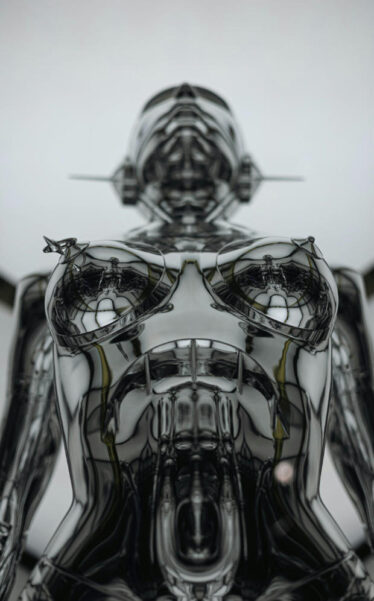
AI is also used in art education to expand creative possibilities. In this way, it does not replace the artist but enhances their capacity.
However, significant risks remain. On the one hand, technological dependence can homogenize styles. On the other hand, biased data can reinforce prejudices.
Moreover, some researchers warn about “cultural extractivism.” This phenomenon can trivialize traditions without understanding their meaning.
One might argue that copyright issues are not that important. However, this is not true—there can be far-reaching commercial implications.
Looking ahead, it is likely that in the not-so-distant future, when AI is used by nearly all artists, the situation will become even more complex.
Consequently, the development of artificial intelligence and art requires regulation and critical awareness. Only under these conditions can cultural diversity be preserved.
Conclusion: Artificial Intelligence and Art, an Evolving Relationship
So, can artificial intelligence and art replace the human artist? The evidence suggests not entirely.
At the same time, AI is transforming contemporary art in ways that just a few years ago seemed impossible.
Importantly, AI in art is a tool that goes beyond technical efficiency.
With this in mind, it is clear that artists now have access to tools that optimize basic tasks.
Although AI can generate impressive works, it cannot replace the human experience. After all, emotion, memory, and context remain fundamental.
Therefore, the future of art is not a competition. Rather, it is a collaboration between humans and machines.
Ultimately, art will remain human. In other words, AI can accompany the creative process, but it cannot live it.