Since I was a child, I have always heard about the Nobel Prize. I am not sure how others remember this subject, but I always had the idea that this award was a kind of great recognition given to a very intelligent, eloquent, and dedicated person. In fact, for most of my childhood, I thought it was only intended for scientists. It is not. Behind these prestigious awards is the Nobel Foundation, an institution created from Alfred Nobel’s legacy to support and manage the Nobel Prizes.
The Nobel Prize and How Does It Work?
Let me begin by saying that there are actually five different prizes which, according to Alfred Nobel’s will of 1895, are awarded to “those who, during the preceding year, have conferred the greatest benefit to humankind.”

They are awarded in the fields of Physics, Chemistry, Physiology or Medicine, Literature and Peace.
These prizes are considered by many to be the most prestigious awards in their respective fields.
The ceremony takes place every year in December.
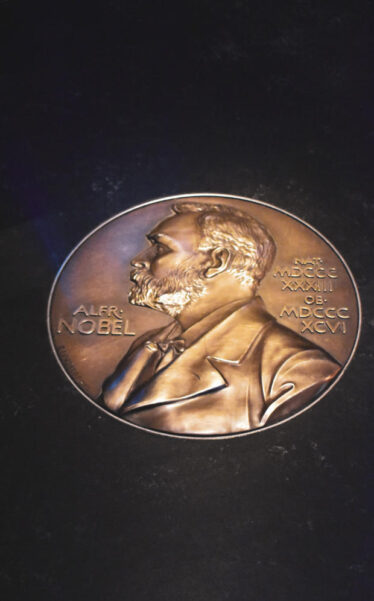
Each recipient, known as a “laureate,” receives a gold medal, a diploma and a monetary award.
Each year, different organizations award the prize in each category. Five of the six prizes are awarded in Sweden, while the Nobel Peace Prize is awarded in Norway.
Academics, university professors, scientists, previous laureates, and other people submit nominations.
One important fact is that if no one deserves the prize in a particular category, it is not awarded and the prize money is kept for the following year.
Alfred Nobel and the Origins of the Nobel Foundation
Alfred Nobel was born on October 21, 1833, in Stockholm, Sweden, into a family of engineers. Members of the Nobel family were known not only for their interest in the arts, but also for their inventive abilities, sometimes referred to as the Rudbeckian trait, inherited from their ancestor Olaus Rudbeck the Elder.
The family achieved many accomplishments that changed the course of history. For example, Immanuel Nobel pioneered the development of underwater mines, designed some of the first steam engines used to power Russian ships, installed the first central heating systems in Russian homes and was the first to develop modern plywood, cut using a rotary lathe.

One of his sons, Ludvig Nobel, was the founder of the Ludvig Nobel machinery factory, a major arms company, and the inventor of the Nobel wheel. Ludvig was also the founder of Branobel, the leading Russian oil industry of his time. He launched the world’s first diesel-powered tugboats and oil tankers and built the first European oil pipeline.
But returning to the Nobel who has captured our attention in this article, in 1894 Nobel purchased the Bofors ironworks, which he transformed into a major arms manufacturer.
Nobel also invented ballistite, a precursor to many smokeless military explosives, particularly British smokeless powder and cordite. Nobel became involved in a patent infringement lawsuit concerning cordite.

Nobel amassed a fortune during his lifetime, and most of his wealth came from his 355 inventions, of which dynamite is the most famous.
In 1888, when his brother Ludvig died, a French newspaper published an obituary titled “The Merchant of Death Is Dead.” Of course, they had used the wrong name. Nevertheless, the experience deeply affected him and made him fear how he would be remembered. As a result, he changed his will.
Eight years later, on December 10, 1896, Alfred Nobel died at his villa in San Remo, Italy, from a cerebral hemorrhage. He was 63 years old.
Nobel’s final will specified that his fortune should be used to create a series of prizes for those who conferred the “greatest benefit to humankind” in physics, chemistry, physiology or medicine, literature and peace. Nobel left 94% of his total assets, 31 million Swedish kronor, to establish the five Nobel Prizes. Due to skepticism surrounding the will, it was not approved by the Norwegian Storting until April 26, 1897. The executors of the will, Ragnar Sohlman and Rudolf Lilljequist, established the Nobel Foundation to manage the fortune and organize the awarding of the prizes.
What Do the Winners Receive?
The recipient of each prize receives three things.
A Nobel diploma, each of which is a unique work of art; a Nobel medal, which comes in several different designs; and a cash prize of 10 million Swedish kronor, divided among the winners when there is more than one.
Laureates have used their prize money in different ways.
Marie and Pierre Curie used their prize money to expand their research. Marie Salomea Skłodowska-Curie was a Polish and naturalized French physicist and chemist who conducted pioneering research on radioactivity. Her husband, Pierre Curie, was one of the recipients of her first Nobel Prize. Together, they became the first married couple to win a Nobel Prize and established the legacy of the Curie family, which would eventually include five Nobel Prizes.
The 2006 Nobel Prize in Literature laureate, Orhan Pamuk, created a museum in Istanbul.
Interesting Facts About the Nobel Foundation
The Nobel family is also represented at the Nobel Prize award ceremony, which takes place every year in Stockholm.
In 2007, the Nobel family archives preserved in the Lund Archives were included in UNESCO’s Memory of the World Register. Alfred Nobel was a chemist, engineer, and inventor.
Some interesting facts are that, since 1901, the Nobel Prizes, and since 1969 the Sveriges Riksbank Prize in Economic Sciences in Memory of Alfred Nobel, have been awarded 609 times to 975 individuals and 25 organizations. Five individuals and two organizations have received more than one Nobel Prize.
Since the awards began in 1901, there have been some years in which the Nobel Prizes were not awarded. This has happened 49 times, mostly during the First World War (1914–1918) and the Second World War (1939–1945).
The statutes of the Nobel Foundation state: “If none of the works under consideration is found to be of the importance indicated in the first paragraph, the prize money shall be reserved until the following year. If, even then, the prize cannot be awarded, the amount shall be added to the Foundation’s restricted funds.”
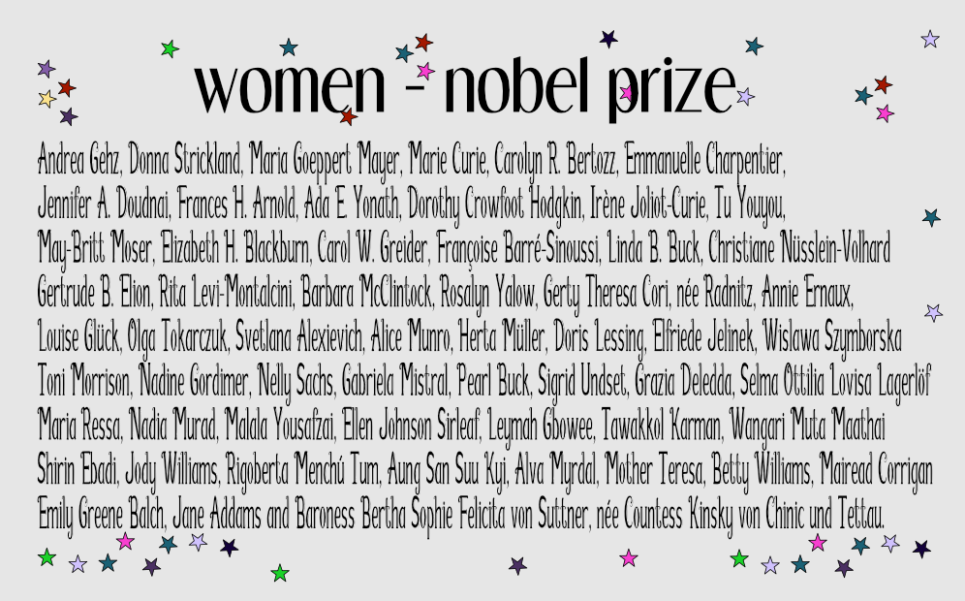
A total of 61 Nobel Prizes and prizes in Economic Sciences have been awarded to women.
In 1964, Jean-Paul Sartre received the Nobel Prize in Literature. He rejected the award because he had always refused all official honors.
Lê Đức Thọ received the Nobel Peace Prize in 1973 together with U.S. Secretary of State Henry Kissinger. They were awarded the prize for negotiating the Vietnam peace agreement. Lê Đức Thọ said that he was unable to accept the Nobel Peace Prize because of the situation in Vietnam.
It is worth noting that four Nobel laureates were forced by authorities to reject the award. Adolf Hitler prohibited German Nobel laureates Richard Kuhn, Adolf Butenandt and Gerhard Domagk from accepting their Nobel Prizes. They were later able to receive their Nobel diplomas and medals, but not the prize money.
Boris Pasternak, the 1958 Nobel Prize in Literature laureate, initially accepted the Nobel Prize but was later pressured by the authorities of the Soviet Union, his home country, to decline it.
In addition, three Nobel laureates were imprisoned when the Nobel Prize was awarded to them. All three were Nobel Peace Prize laureates: German pacifist and journalist Carl von Ossietzky, Burmese politician Aung San Suu Kyi, Chinese human rights activist Liu Xiaobo and Belarusian human rights defender Ales Bialiatski.
Linus Pauling is the only person to have received two unshared Nobel Prizes: the 1954 Nobel Prize in Chemistry and the 1962 Nobel Peace Prize.
Interestingly, a prize cannot be shared by more than three individuals. However, the Nobel Peace Prize can be awarded to organizations with more than three members. Although Nobel Prizes are not awarded posthumously, if a person is awarded a prize and dies before receiving it, the prize is still presented.
The Legacy of the Nobel Foundation
There is no other prize in the intellectual sphere with the prestige of the Nobel Prizes. Their visibility is also difficult to compare with that of any other award.
But why are they important? What do they contribute to society? These are fascinating and important questions.
At a time when we are gradually losing an entire set of fundamentally humanistic values, the Nobel Prizes remain one of our last strongholds.
We look to them as a reference, not only for excellence, but also for honesty, enthusiasm and commitment to ideals.
Many laureates were recognized by their peers as unique individuals long before they received the award.