2026 has been an intense year that we, as Colombians, will not soon forget. With the arrival of a new government, the country is entering a new phase, one that will be shaped by major challenges and the consequences of a particularly close presidential election.
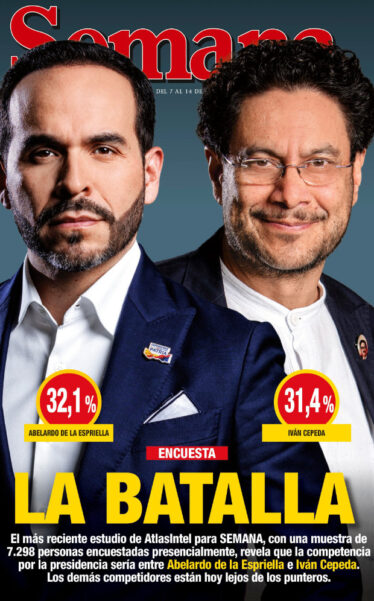
The presidential election ended on June 21, 2026, when millions of citizens once again went to the polls to choose between Iván Cepeda and Abelardo de la Espriella.
After an intense campaign marked by deep disagreements over the country’s direction and an increasingly heated political debate, the runoff produced a remarkably close result. De la Espriella received 12,960,166 votes, just over 250,000 more than Cepeda, who received 12,708,312.
Abelardo de la Espriella was elected president, but the election left behind an image that is difficult to ignore. Colombia has a new president, but it remains a divided country.
That division is not found only in Congress or in political speeches. It also appears in family conversations, on social media, and in the way many citizens look at those who voted differently.
A different chapter now begins. The voters have spoken. The challenge is to understand what the country will do with the differences that remained once the ballots had been counted.
An Election That Revealed the Country’s Divisions
Elections also act as a mirror. Beyond who wins or loses, they reveal the concerns, disagreements, and tensions running through a society.
In Colombia, the 2026 presidential campaign left a picture deeply marked by those differences. The country went to the polls after years of debate over security, peace, inequality, the economy, and the role of the State. This time, many of those discussions took on an especially confrontational tone.
Some elections end when the votes are counted. Others leave questions that remain long after the polls have closed.
In Colombia, the 2026 presidential campaign left one such question behind: how far apart are we from one another?
It is important to make one thing clear: polarization did not begin with this election.
However, during the campaign, it became visible not only in political speeches, but also in the way citizens spoke, argued, and reacted to those who thought differently.
Political positions were no longer simply disagreements over government programs. In many cases, the opposing side began to be portrayed as a threat to the country.
And when that confrontation moves beyond politics and enters our everyday conversations, it also changes the way we experience our differences.
When Polarization Enters Everyday Life
The Electoral Observation Mission (MOE), an independent platform made up of social and civil society organizations, monitored political discourse throughout the electoral process. In one of its reports, it found that 94.4% of the posts selected for analysis contained insults, polarization, ridicule, or humiliation.
The figure helps illustrate just how far the confrontation went. Social media amplified a debate that could also emerge within families, among friends, in workplaces, and in everyday conversations.
When politics begins to occupy these spaces, division stops being something we see on the news and becomes part of the way we relate to one another.
Perhaps that is one of the challenges this election leaves behind. Colombia does not need to stop having differences. It needs to find ways to live with them without turning every disagreement into a rupture.
When Disagreement Turns into Confrontation
Thinking differently should not be a problem. On the contrary, democracy needs citizens who can defend different ideas, question decisions, and propose alternative paths.
The difficulty begins when we stop debating ideas and start judging the people behind them.
In a democracy, different positions are normal. In fact, that diversity is part of how democracy works. The problem arises when political differences stop being understood as differences and begin to be interpreted as threats.
Various studies use the concept of affective polarization to describe this dynamic. It is not simply about people holding different political views, but about developing increasingly negative feelings toward those who support the other side.

In that scenario, the political opponent stops being someone with a different opinion and becomes someone who must be rejected.
This dynamic makes it harder to build agreements. It can also mean that every government decision is immediately interpreted through the political lens from which it is viewed. The same measure can be understood as a solution by some and as a threat by others.
The new government of Colombia is beginning precisely in this environment.
And perhaps one of the greatest challenges of the coming years will be to recover something that sounds simple, but can be difficult in times of such intense confrontation: being able to say, “I disagree with you,” without it meaning, “I am against you.”
Social Media Changed the Conversation
Believe it or not, much of the campaign did not take place in public squares or on television debates. It happened on our phones.
During the election, social media became one of the main spaces for getting information, persuading others, debating, and, at times, confronting one another. Proposals and arguments circulated there, but so did insults, false information, and manipulated content.
The MOE and the United Nations Development Programme analyzed online conversations during the runoff and found very high levels of hostility. Their monitoring identified insults, polarizing messages, and degrading language.
But while everything was happening online and all kinds of information were available almost instantly, misinformation also became part of the campaign.
The National Civil Registry issued public calls to prevent the spread of false information related to the electoral process. The phenomenon highlights one of the new challenges facing elections: it is no longer enough to guarantee that people can vote. They must also have access to reliable information before they do.
Technology has made it easier to produce and share information. It has also made it harder to distinguish quickly between news, interpretation, manipulation, and falsehood.
And this is where a responsibility emerges that no longer belongs only to journalists, politicians, or institutions. It belongs to all of us. Before sharing a post, creating a video, or forwarding a message, taking a few seconds to pause may seem insignificant. In such a polarized public conversation, it can make an enormous difference.
Because what happens on social media does not necessarily stay on the screen. What we share also helps shape the environment in which other people live.
The First Steps of the New Government
Abelardo de la Espriella took office as president on August 7. Two weeks later, he presented an initial assessment of the decisions made during his first days in office.
On August 22, the government highlighted measures involving foreign trade, chambers of commerce, ProColombia, and the management of public resources. The president himself summed up his approach with a phrase: “I came into government saying and doing.”
One of the most visible decisions was to once again authorize Colombian coal exports to Israel. The measure reverses a restriction imposed under Gustavo Petro’s government in 2024.
The government also argued that the previous restrictions had affected the economy, legal certainty, and international confidence.

The decision on coal exports has a clear economic dimension.
According to figures cited by the coal industry, the suspension had reduced Colombian exports to that market. Regaining that market will not necessarily happen overnight. During the suspension, Israel found other suppliers.
The decision shows how a single government measure can lead to very different conversations.
For the government, it represents the restoration of a commercial relationship. For the coal sector, it offers the possibility of recovering a market. Last but not least, for those who oppose these exports, it raises broader questions about Colombian foreign policy and the conflict in the Middle East.
A government decision can simultaneously affect the economy, international relations, and the debates a society has about its own priorities.
A New Relationship with the Productive Sector
The shift in direction also reached the chambers of commerce.
The government announced that representatives appointed under the previous administration would be removed from the boards of these institutions and replaced with new representatives. De la Espriella said the new appointments were intended to guarantee transparency, rigor, and a stronger institutional relationship with the productive sector.
The move shows that a change in administration is not only about introducing new policies. It also involves reshaping the way the State interacts with business institutions.
For the Executive, the changes are part of a broader institutional reorganization. At the same time, the new appointments may raise questions about the criteria used and the scope of the relationship between the government and organizations linked to the private sector.
These are debates that will likely continue as the administration moves forward. They will also help define the relationship between Colombia’s new government and the productive sector.
ProColombia Also Changes Direction
Another of the first transformations announced concerns ProColombia, the organization responsible for promoting exports, attracting foreign investment, and supporting international tourism.
The government launched an emergency plan to reduce administrative procedures, eliminate duplication, and make more efficient use of public resources. It also announced plans to integrate ProColombia’s international offices with the network of Colombian embassies and consulates.
According to the Executive, the goal is for diplomats to play a more active role in promoting Colombian trade and attracting new markets and investment.
The president even spoke of turning them into “sales ambassadors” for Colombia.
The idea is to make use of existing structures to reduce costs and focus efforts. But any reorganization also has to demonstrate what it achieves.
Reducing offices or integrating structures can generate savings. It also raises the challenge of maintaining Colombia’s ability to promote its products, attract investment, and open markets abroad.
That will be an important part of the debate: not only how much money is saved, but what is achieved with those resources.
The New Government’s Promise to Spend Less
The new government took control of a country facing serious social and economic challenges.
For that reason, controlling public spending has become another central pillar of its agenda.
De la Espriella has emphasized three priorities: cutting unnecessary spending, fighting corruption, and maintaining fiscal discipline.

In his assessment of the first 15 days, he summarized that position as “zero waste, a full-scale fight against corruption, and absolute fiscal discipline.”
The promise comes at a time when public finances are one of the country’s main economic challenges.
Here, a question arises that is often harder than the promise itself: where should the cuts be made?
Reducing spending can help ease pressure on public finances.
But the State also has responsibilities that require resources, from security and infrastructure to education, healthcare, social investment, and emergency response.
The debate, then, will not only be about how much the government wants to spend.
It will also be about where it chooses to spend it.
The State’s Finances Are Also on the Table
There is a conversation that may seem reserved for economists and ministers, but eventually reaches every household: how much money does the State have, and how does it choose to spend it?
The government asked the International Monetary Fund to begin an Article IV Consultation. This is an independent assessment of the country’s economic situation and the Executive’s macroeconomic plans.
The request came after a visit to Colombia by Nigel Clarke, Deputy Managing Director of the IMF. During the meetings, officials examined growth prospects, economic initiatives, and efforts to stabilize public finances.
Finance Minister Miguel Gómez Martínez said the government had inherited a “very serious” fiscal situation. According to figures presented by the Finance Ministry, the State spends around 40 trillion pesos a month and receives approximately 29 trillion.
It is important to note that this is the assessment presented by the current administration.
The Article IV Consultation will allow the fiscal plan to be reviewed and will also examine growth, employment, inflation, the financial system, and economic risks.
Behind these figures lies a much simpler reality. Public money is not infinite, while needs can be.
Every peso collected has to be distributed among competing priorities. Every spending decision ultimately has consequences somewhere.
Behind every trillion pesos are decisions. And behind those decisions are people.
When Politics Becomes Employment
Some figures seem distant until we experience them ourselves. Unemployment is one of them.
After several months of improvement, Colombia’s labor market changed course in August. The unemployment rate reached 9.4%, compared with 8.6% in August 2025. A total of 23.685 million people were employed, 126,000 fewer than a year earlier.
The figure may seem small when viewed as a national statistic. But behind those 126,000 jobs are people who stopped receiving a salary, families that had to rethink their spending, and businesses that reduced their activity.

The situation was not the same in every city.
In Cali, the unemployment rate reached 9.2% between June and August, compared with 7.8% during the same period in 2025. The city had 1.13 million employed people and 114,000 unemployed, around 19,000 more than a year earlier.
Cali’s industrial sector also lost jobs. During that period, employment fell from around 183,000 positions in 2025 to 172,000 in 2026.
The earthquake that struck in August particularly affected Cali and may have influenced some indicators of economic activity and employment. The coming months will need to be monitored to determine how much reflects a temporary effect and how much points to a broader trend.
For Colombia’s new government, employment trends will be another indicator of how economic decisions translate into everyday life.
Employment is not simply a monthly statistic. It is also the ability to pay rent, buy food, and look toward the following month with a little more peace of mind.
The Economy Is Also Entering a Difficult Phase
As expected, the country’s economy is central to any discussion about politics.
It is no secret that, during Petro’s administration, the country witnessed persistent tension between the Executive and other key institutions, including the Central Bank.
Economic management was marked by uncertainty surrounding public finances.
Although inflation and unemployment improved, economic growth fell sharply.
The decline in GDP was linked to stagnation in strategic sectors such as construction, whose share of GDP fell from 7% to less than 5%. Annual exports also declined from USD 57 billion to USD 50 billion, while Foreign Direct Investment (FDI) fell from USD 17 billion in 2022 to USD 11 billion.
So while politics occupies much of the public conversation, there is another concern that people feel every day: how much does it cost to live? That question should be central to Colombia’s new government.
In August 2026, annual inflation reached 6.24%, while the Central Bank’s target is 3%. Overall prices continued to rise at a rate above the central bank’s target.
At the same time, the economy continues to grow. GDP increased 3.5% year-on-year during the second quarter of 2026, according to DANE.
Both things can happen at the same time.
The economy can grow while prices continue to rise. For a family, that difference is easier to understand at the supermarket checkout than on an economic graph.
The government will also have to manage pressure on public finances and decide how to finance its priorities.
That is why promises of austerity and fiscal discipline will have to coexist with the needs of a country that continues to demand investment, employment, and opportunities.
Healthcare and the New Government’s Challenges
Some problems cannot wait for major legislative debates to end. Healthcare is one of them.
In September, the government launched an emergency plan to assist 1,069,196 people with pending medications or medical procedures. The strategy will be monitored between September and December 2026 and will cover every department in the country.
The first phase includes more than 700,000 people waiting for medications and more than 300,000 waiting for procedures. Consequently, the system will track each case from the moment a problem is identified until the medication is delivered or the procedure is completed.
The government also announced a debt-purchasing mechanism for healthcare providers and institutions. The measure includes zero-interest financing and a one-year grace period for the EPS, with the aim of injecting liquidity into the healthcare system.

Monitoring will be carried out by a Technical Oversight Committee made up of the Ministry of Health, the National Health Superintendency, and ADRES.
For someone waiting for medication or a medical procedure, all these administrative structures ultimately come down to one simple question: when will I receive the care I need?
For the new government, this will be one of the areas where administrative decisions have to translate into concrete results for citizens.
This is where public policy stops being an announcement and becomes a real-life experience.
Security: The Problem Still Waiting for Answers
As the new Executive reorganizes some areas of the State, one of the country’s most difficult problems remains: security. With Abelardo de la Espriella taking office, Colombia is also entering a new phase in its security policy and in the dialogue processes inherited from Gustavo Petro’s administration.
To understand this change in direction, it is first necessary to remember what was known as “total peace.” During Petro’s administration, the strategy became a state policy aimed at advancing peace through different mechanisms, including negotiations with armed groups, processes for submitting to justice, and greater participation by communities affected by violence.
The new government represents a shift in that approach. De la Espriella’s administration has questioned the results of some of these processes and decided to place greater emphasis on the actions of the security forces and the recovery of territorial control.

On August 30, the government announced the end of three dialogue processes with armed groups, arguing that there was no verifiable willingness to pursue peace. The decision represents one of the first major changes to the security policy inherited from the previous administration.
At the same time, the government has highlighted operations carried out by the security forces. During its first 15 days, it reported more than 12 tons of cocaine seized and 1,574 arrests linked to operations against drug-trafficking organizations.
These figures were reported by the government itself and refer to operational results. Their broader significance will have to be assessed over time and alongside other security indicators.
But security is not only a military issue.
In different regions of the country, the presence of armed groups affects mobility, economic activity, education, and everyday life. For a rural community, talking about security can mean something as concrete as being able to travel between two municipalities or send children to school without restrictions.
The challenge for Colombia’s new government will be to ensure that this change in strategy has concrete effects on the ground. Because security is not measured only by arrests or seizures. It is also measured by the ability to live, work, study, and move around without fear.
Governing Also Means Listening
Without a doubt, one of the first challenges for Colombia’s new government will be turning the electoral result into effective governing capacity.
That means working with a fragmented Congress, negotiating with different political sectors, and building agreements around projects that affect the entire population.
It also means rebuilding trust. A huge task.

Distrust in institutions does not belong exclusively to one political sector. During the campaign, different actors questioned institutions, the media, and electoral authorities.
The MOE also documented the circulation of misinformation and called on citizens to verify the content shared during the electoral process.
Democracy needs elections. But it needs more than that.
Democracy needs citizens who can trust that results will be processed institutionally. It needs media capable of reporting rigorously. It also needs politicians who can defend their positions without dehumanizing their opponents. And it needs citizens willing to verify information before sharing it.
None of these tasks belongs exclusively to the government. Governing also means listening, recognizing differences, and finding spaces where agreements can be built.
Winning an election allows someone to reach power. But governing a country means ensuring that those who voted for you and those who did not can continue to feel that they are part of it too.
Can We Live with Our Differences?
Perhaps this is one of the most important questions left after the election.
A democratic society does not need to agree on everything. Colombia does not need to stop debating security, peace, taxes, education, healthcare, or the economy.
What it needs is to find ways of having those debates without turning every difference into a battle.
Institutions have a fundamental role to play. So do universities, the media, social organizations, and digital platforms.
But there is another, much smaller and more everyday space where this debate also takes place: our own conversations.
The way we speak to people who think differently matters. It matters deeply because being able to tolerate those differences is what will allow us to move toward a calmer society, one that wants change and is prepared for it.
A democracy needs differences to be expressed, challenged, and, whenever possible, brought together around common ground.
Colombia’s political debate is not going to disappear. Nor should its differences.
What remains to be decided is what we do with them and how Colombia’s new government will
After the Election, a New Chapter Begins
The election is over, but the problems that brought Colombians to the polls remain.
Security continues to be a concern. The economy needs answers. Employment is showing signals that will need to be monitored. Healthcare is facing thousands of pending cases. Public finances require decisions.
And Colombians, both those of us living abroad and those currently in the country, need to find spaces to talk to one another again.

The first steps of Colombia’s new government already point to a change in direction: new trade relationships, changes in state representation on chambers of commerce, a reorganization of ProColombia, an austerity policy, and new decisions on security and healthcare.
But a few weeks are not enough to know what results these decisions will produce. Colombia’s new government has four years ahead to show how these first measures translate into concrete decisions and results.
That will become part of the story Colombia will have to tell over the next four years. For now, one thing seems clear. The voters have spoken. Now comes the hardest part: learning to listen to one another.