Youth leadership in Colombia is creating new ways of imagining and transforming the country. Colombia is a territory marked by deep contrasts, inequalities, and social challenges. Thousands of young people refuse to remain on the sidelines. They want to participate, propose ideas, and be part of the decisions that affect their communities and cities.
Colombia is a young country. A country of contrasts, of deeply different territories, and of generations that have grown up surrounded by enormous possibilities. A place where challenges seem to repeat themselves for decades.
The Problem
For many young Colombians, talking about the future is not always easy.
Thinking about the future means talking about educational opportunities, employment, mental health, safety, and participation. It also means asking whether there is a place in the city for their ideas and whether their voices really matter when decisions are made.
They do not always find a positive answer.
Statistics help us understand part of this context. But, on their own, they do not tell the whole story. Behind every number are people, experiences, and life projects.
Some young people are looking for opportunities. Others face economic difficulties or live in territories marked by violence and inequality. There are also those struggling to protect their emotional well-being.
And despite everything, many continue to believe that things can change.
Young people do not want to simply observe the problems affecting their communities. They want to participate, propose, create, and transform.
That is the story that has been taking shape in Envigado and Cartagena over the past few years through the global S²Cities (Safe & Sound Cities) programme, together with Fundación Mi Sangre.
The process is based on a simple but profound idea: when young people find trust, tools, and real opportunities to participate, they can move from feeling excluded from decisions about their city to becoming protagonists in its transformation.
Youth Leadership in Colombia: A Generation That Refuses to Accept the Inevitable
There is something younger generations do particularly well: questioning what others have eventually come to accept as normal.
Is it inevitable to feel afraid when walking through certain parts of your own city? Do we have to accept anxiety and emotional distress as an unavoidable part of growing up? Can educational and employment opportunities not be created differently? And when decisions are made about a city, shouldn’t those who also live there have a voice?
Critical thinking often begins there: with refusing to accept that something must remain a certain way simply because it has always been that way.
It also emerges when someone dares to ask about the causes, identifies contradictions, and looks for other possibilities.
After two decades of working with young people in different parts of the country, Fundación Mi Sangre continues to learn from this ability.
Young people see realities that others have learned to ignore. They question what seems inevitable and, many times, imagine solutions that do not yet exist.
Learning to Lead Also Means Looking Within
Critical thinking can become the first step toward social transformation. Before changing a reality, someone has to dare to believe that reality can be different.
And so, questioning the world also means looking at ourselves.
For an idea to become action, it is necessary to develop confidence, recognize our own abilities, and learn how to relate to others.
For us, leadership develops through two simultaneous dimensions: the individual and the relational. Added to this is a systemic perspective that understands that public problems cannot be transformed by a single actor.
This perspective on leadership and transformation lies at the heart of the work Fundación Mi Sangre has developed over the past 20 years.
For the organization, strengthening leadership does not simply mean teaching tools. It also means accompanying people as they recognize their ability to participate, connect with others, and act upon the realities they want to transform.
Fundación Mi Sangre: Twenty Years of Believing in the Power of People
Social transformation does not begin only when a community organizes itself or when an initiative reaches an institution.
Many times, it begins much earlier: when a person discovers that they have the ability to participate, influence, and build something together with others.
Two decades ago, Fundación Mi Sangre was founded on a clear conviction: a better world is possible, and building it is in our hands.
Since then, it has worked to strengthen and connect leaders capable of contributing to the construction of more peaceful, democratic, and regenerative societies.
Over these 20 years, the Foundation has directly trained more than 179,000 leaders and reached nearly 2 million people through its programmes and the initiatives led by those who have taken part in them.
Leadership as a Process
For the Foundation, leadership is not an individual characteristic reserved for a select few. It is a process, a construction that begins long before someone takes the stage or leads an organization.
Knowing yourself, recognizing your own strengths and limitations, developing an ethical compass, and learning to listen are all part of that journey. It also means accepting that different perspectives exist and building relationships based on trust.
The Foundation understands leadership through two dimensions that need each other.
The first is individual. It involves self-awareness, socio-emotional skills, and the way a person recognizes themselves as an active part of their surroundings.
The second is relational. No one transforms a territory completely alone. Personal abilities make it possible to build networks, generate trust, and establish relationships with different people and sectors.
And it is precisely at this point that individual leadership begins to connect with broader transformation.
From Individual Leadership to Systemic Change
We must remember that leadership does not end with personal development or the creation of relationships. Transformation must also reach systems: the structures, decisions, rules, and narratives that allow certain problems to continue existing.
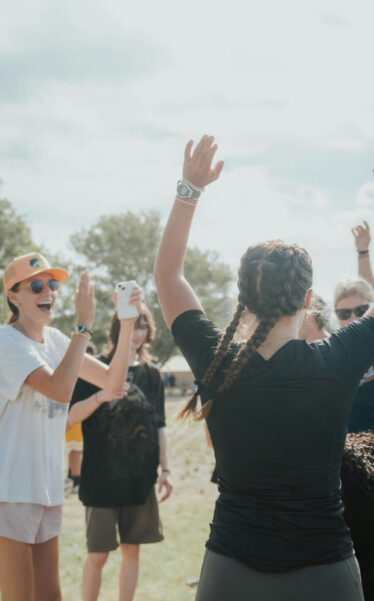
That is why one of the Foundation’s central principles is to bring together, in the same conversation, actors who often work separately: the public and private sectors, academia, social organizations, the media, and, of course, communities.
And we all know that complex challenges do not have individual solutions.
They require collaboration, interdependence, and shared responsibility. As the philosophy behind this work explains, no one weaves alone.
This understanding of leadership and social change helps explain why the Foundation found in S²Cities an approach close to its own experience.
It was not simply about participating in an international programme, but about recognizing a shared vision of how to build lasting transformations.
When Fundación Mi Sangre Found a Shared Vision
Partnerships capable of generating profound change often begin with a shared purpose.
In the case of Fundación Mi Sangre and S²Cities, the encounter began through an open call, but its strength came from a similar understanding of social transformation.
Solkes: How did Fundación Mi Sangre become S²Cities’ Colombian partner, and what led you to participate in the programme?
Fundación Mi Sangre: We came to S²Cities through an open call. What we found was a deep alignment between the programme’s theory of change and the path the Foundation had built over many years. We also found an important thematic connection. The Foundation had identified safety and peaceful coexistence, diversity and inclusion, mental health, and our relationship with nature as strategic priorities. S²Cities was precisely at that intersection. That is why the partnership emerged very organically.
S²Cities started from an idea that was very close to the Foundation’s vision: recognizing young people as protagonists of change.
To achieve this, it sought to strengthen their capacities, connect them with other actors, and create real spaces for participation in decisions affecting their territories.
At the same time, the programme proposed a process that went beyond individual work. It began with people, strengthened relationships, activated collaborative networks, and moved toward transformations capable of influencing the structures and decisions that shape community life.
Four Points of Connection
When Fundación Mi Sangre became more familiar with S²Cities’ work, it found several points of connection with its own approach to social transformation.
It was not simply about working with young people, but about creating the conditions for them to develop capacities, participate in spaces where real decisions are made, and turn their ideas into initiatives capable of mobilizing others.
Technical and financial support were also part of the equation. Youth initiatives needed more than enthusiasm to move forward.
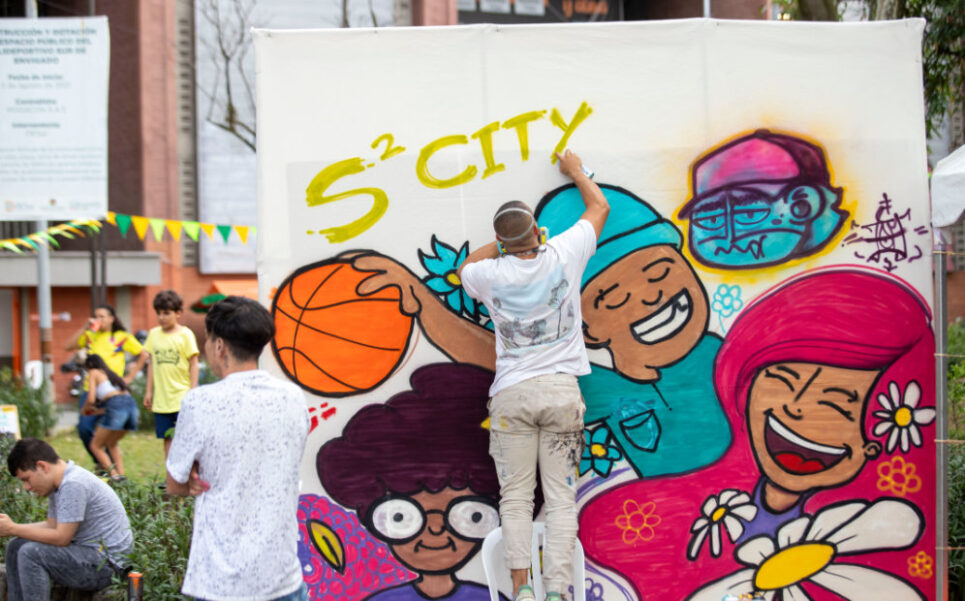
They needed tools, resources, and people capable of accompanying the process. At the same time, S²Cities wanted these experiences to move beyond individual projects and influence instruments, decisions, and dynamics with a broader reach.
There was also a shared understanding of how solutions are built. Changes that affect a city can hardly emerge from the isolated work of a single organization.
It is necessary to strengthen connections between different sectors and create spaces where young people can occupy a central place. In other words, to make it possible for different actors to sit around the same table and find ways to move forward together.
The common ground also involved something less visible, but fundamental: the need to understand what actually changes after an intervention.
S²Cities developed a measurement system that makes it possible to observe transformations at different levels, from individual changes to relationships between actors and structures that can shift as a result of the process. Some indicators are even reviewed 12 months after the support has ended.
What Does It Mean to Build Safer Cities for Young People?
Talking about safety often quickly leads us to think about the absence of violence, protection from risks, or the possibility of walking through a city without fear. But for a young person, feeling safe in their own territory means something much broader.
It also means being able to express themselves without fear, finding places to meet others, building relationships, and having the conditions needed to imagine and develop a life project.
From Fundación Mi Sangre’s perspective, a city that is safe for young people is not simply one that manages to protect them from violence. It is one where they can live, participate, and express themselves freely. A city that offers spaces for connection, opportunities, and support networks, but also conditions that allow people to care for their emotional well-being.
And there is something else: the possibility of genuinely participating in the decisions that affect their lives.
No single actor can transform a systemic problem on their own. Interdependence and shared responsibility are not just nice words; they are a technical condition for change. That is why we work by bringing the public and private sectors, the media, academia, and the social sector to the same table.
This is where a fundamental part of the process begins. Young people know their territory from a perspective that can hardly be replaced by an external view.
They know which spaces make them feel afraid, which ones feel like their own, and which ones they have stopped inhabiting. They recognize the problems that shape their everyday lives, but also the opportunities that exist around them.
Listening to them, then, does not simply mean asking what is wrong. It means recognizing that they also have ideas about what could work better and that they can imagine responses rooted in their own experiences and communities.
A city begins to transform differently when the people who inhabit it have the opportunity to participate in that transformation.
Listening to Transform
A sense of belonging plays an important role in this process. When a person feels that they are part of a place, their relationship with that space can change. It is no longer simply somewhere they pass through. There is also a desire to care for it, question what could be different, and participate in decisions that determine what life there looks like.
But that connection does not emerge automatically. It needs spaces where people can be heard, where their ideas are taken seriously, and where there is an opportunity to turn them into action.
That is why, for both S²Cities and Fundación Mi Sangre, young people occupy a role different from that of simple programme beneficiaries. They are part of building the responses and protagonists of the changes they want to see in their cities.
This perspective became especially important when the project arrived in Envigado.
Youth Leadership in Colombia: Four Years of Transformation in Envigado
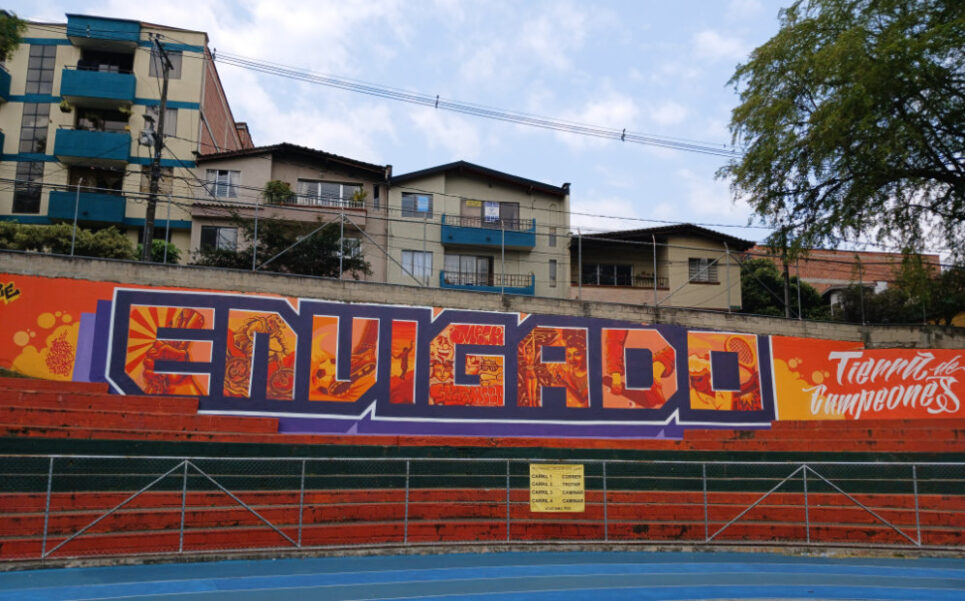
The story of S²Cities in Colombia began in Envigado, a municipality located in the southern part of the Aburrá Valley, in the department of Antioquia.
At first glance, the territory offers many of the spaces a city needs to encourage connection. There are parks, green areas, cultural spaces, and places dedicated to recreation. Parque Principal Marceliano Vélez, Parque Cultural Débora Arango, La Heliodora, and Parque Ecoturístico El Salado are part of an urban geography where culture, nature, and community life have an important place.
Envigado also has a cultural tradition connected to disciplines such as music, theatre, literature, and the visual arts.
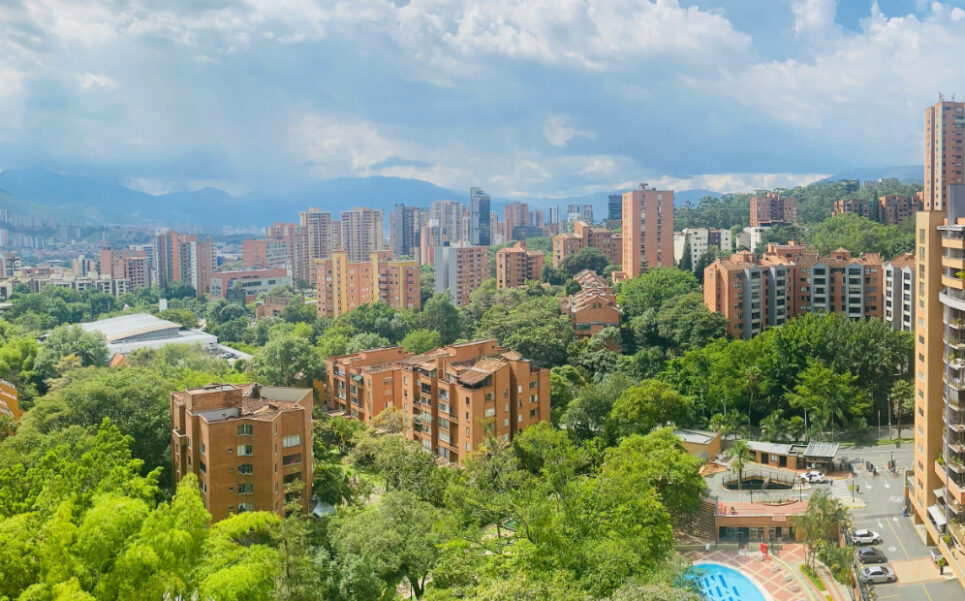
But having spaces does not necessarily mean that everyone can inhabit them in the same way.
When S²Cities arrived in the territory, it did so after a period marked by the isolation caused by the pandemic. For many young people, being able to meet again was not a minor detail. It meant recovering a part of everyday life that had been suspended.
Reclaiming the City
There was a desire to go back out into the streets. To move through the city. To meet other people and reclaim spaces that had remained empty for months.
But there were also questions.
How did they want to experience their city? What did they need to feel that they belonged to it? What needed to change for public spaces to truly become places of connection?
In that context, S²Cities found young people willing not only to talk about the problems in their territory, but also to question them and think about alternatives.
The process opened conversations that would hardly have taken place in other spaces. Young people, organizations, institutions, and other actors began meeting around a shared concern: how to build a healthier and safer city for the people who live there.
And in the middle of those conversations, a word emerged that may seem simple but acquired a different meaning throughout the process: hope.
The possibility of different people sitting together, listening to one another, and working on shared problems also opened the possibility of imagining that transformation did not have to come from a single place.
It could be built by many.
Four Years of Turning Ideas into Action
Over four years, more than 90 young people took part in a process of training, reflection, and action.
Throughout the journey, they strengthened their capacities, built networks, and connected with other actors in their territories.
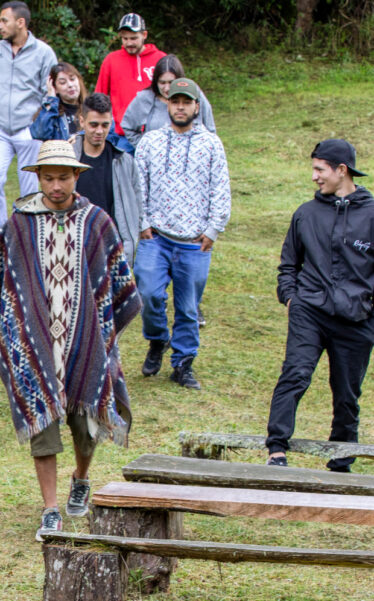
They also developed 47 initiatives for change related to different social and community challenges.
Among the most significant results was an 85.6% improvement in critical thinking, leadership, and communication skills among participating young people.
But one of the most important changes cannot be summarized by a percentage.
Solkes: What has been the biggest change you have seen over these years?
Fundación Mi Sangre: The biggest change has been moving from discourse to action. Seeing young people stop being merely participants and become leaders.
Several initiatives grew and became established as formally constituted social organizations.
This process allowed some proposals to move beyond the programme and find new ways to continue.
The projects that emerged along the way include Galería a Pie, Flow & Bars, Sí Paz, Veo Veo Lab, and Barrios Vivos.
Behind every initiative, there was a concern, an idea, and, of course, a community.
There were also young people willing to turn their proposals into real action.
From Personal Leadership to Collective Transformation
One of the principles that guided the process in Envigado was the idea that inner change can become outward change.
Solkes: Why is it so important to work on young people’s inner transformation first?
Fundación Mi Sangre: Because sustainable social change begins with people. To transform a reality, we need people who recognize themselves as agents capable of acting on it. Personal development helps strengthen agency, confidence, critical thinking, and the skills needed to build relationships with others. It also creates space to question our own perspectives. This process lays the foundation for identifying challenges, building solutions with others, and participating in decision-making spaces. The young people worked on initiatives related to issues such as the environment, art, sports, mental health, community engagement with public space, and civic participation.
Personal development is not the end of the journey. It is the starting point. At S²Cities, learning was directly connected to action.
For Fundación Mi Sangre, the key is making sure that what young people learn quickly finds a place in real life. At S²Cities, they had the opportunity to turn their ideas into initiatives within their own communities, addressing issues that affected them closely, such as the environment, public space, art, sports, mental health, and civic participation.
They also had the opportunity to connect with other actors through spaces such as Unir para Construir, expanding their networks and discovering new possibilities for collaboration.
In this way, the process did not end when a workshop was over. What began in a learning space could continue in a neighborhood, a conversation, an initiative, or an alliance.
A City Cannot Be Transformed from a Single Table
The major problems facing a city cannot be solved by a single institution. Nor by one organization. Nor by a group of young people working in isolation.
This was one of the major commitments of S²Cities in Envigado.
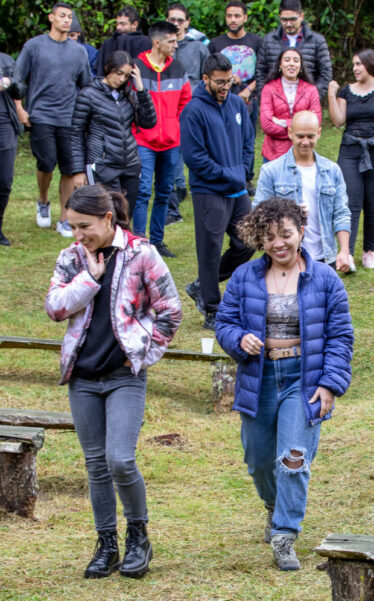
The municipality faces several challenges. At present, uncontrolled construction is exceeding the capacity of infrastructure and creating a significant deficit in public spaces, limiting the municipality’s quality of life and environmental sustainability.
Another challenge is related to culture. There is currently a weak and fragmented understanding of culture across sectors, accompanied by insufficient and poorly coordinated cultural management.
Throughout the process, 81 partnerships were built with local government, businesses, social organizations, and academic institutions.
Building trust was not immediate.
Many sectors were not accustomed to working together.
Solkes: How did you build bridges in a context where there was distrust between young people and institutions?
Fundación Mi Sangre: Through a process we called Unir para Construir. The idea was to bring together young people, social organizations, and public and private actors so they could listen to one another and think about solutions collaboratively. We also created meetings between young people and different departments of the Mayor’s Office.
These spaces made it possible to get to know one another, build trust, and connect youth leaders with people holding institutional responsibilities. Trust does not appear overnight. It is built through conversations and shared experiences.
Public Space as a Meeting Point
During our conversation, we realized that one of the pillars of the programme was creating spaces for conversations that probably would not have happened otherwise. Concrete initiatives emerged from them.
One of these was the Intersectoral Public Space Roundtable, made up of 30 multisectoral and intergenerational actors.
Through this initiative, the group identified spaces that could once again be used by the community.
One of them was Parque de las Ilusiones. The collective process contributed to its reopening and made it possible to imagine new ways of inhabiting it.
Likewise, an advocacy document was developed and became a tool to support local government decision-making regarding public spaces.
A safe city is not decreed. Not at all. A safe city is built and, above all, woven together.
From Participation to Advocacy
Let us begin by defining civic participation. Civic participation is the involvement of citizens in decision-making regarding the management of resources and actions that affect the development of their communities.
It is therefore important to make clear that there are different types of participation.
1. Social participation refers to individuals coming together to achieve specific objectives.
2. Community participation takes place within the field of assistance-related activities traditionally associated with the non-state sector.
3. Political participation refers to citizens belonging to organizations of social representation and institutions within the political system.
4. Civic participation is the form of participation in which society has a direct relationship with the state.
That is why one of the objectives of the process was to accompany young people so that their proposals could reach real decision-making spaces.
Solkes: How did you ensure that young people’s ideas reached the spaces where decisions are made?
Fundación Mi Sangre: One of the steps was connecting young people with institutions. The initiatives were presented to different departments of the Mayor’s Office, and the programme was also presented to the Municipal Council. An especially important example was the Intersectoral Public Space Roundtable. Through that process, underused spaces were identified and an advocacy document was created to serve as a tool for local government. We also established a partnership with the Faculty of Law and Political Sciences at the University of Antioquia to contribute to Envigado’s youth public policy and Youth Development Index.
There is no other way to put it: participation is necessary to build democracy. That is precisely why it matters so much. It is the only way to convey the preferences of citizens and resolve conflicts.
When Participation Becomes a Structure
The process produced concrete results.
Among them was the creation of the Municipal Roundtable for Human Rights and International Humanitarian Law, formalized through Decree 0000679 of 2022.
The Roundtable is made up of representatives from five social organizations. These organizations include Afro-Envigadeño groups, trade unions, urban community action boards, citizen oversight groups, and the Roundtable for Victims of the Armed Conflict.
This space was established as an autonomous and independent mechanism for civic participation on issues related to human rights and peace.
Its purpose is to promote consultation, dialogue, coordination, management, and the implementation of collaborative actions involving the Municipal Administration, government entities, and civil society.
Youth participation cannot be limited to listening to what young people have to say.
Participating means having the possibility to influence.
It means that an idea can become an institutional conversation. And that conversation can eventually become a decision.
The Moment an Initiative Becomes a Story That Continues
Some of the initiatives created during S²Cities grew into social organizations.
Solkes: What does it mean to you that some initiatives have become formally constituted organizations?
Fundación Mi Sangre: It is evidence that impact can go beyond the duration of the project. It means that the initiatives do not permanently depend on the Foundation, but that young people take ownership of their processes, make decisions, and create the conditions to sustain them.
These organizations can create opportunities, mobilize resources, and generate new partnerships. But they also represent something important for those who lead them: a space from which they can connect their leadership, participation, and life project.
When a youth initiative continues to grow after a programme ends, something important happens.
The impact begins to move forward on its own.
Young people find in their projects a way to respond to the needs of their communities.
But they can also find a connection to their own life projects.
That relationship is fundamental to sustainability.
An initiative is more likely to endure when what a person wants to transform in their community also finds a place within their own story.
The social project and the personal project stop being separate paths.
And they can begin to grow together.
From Envigado to the Caribbean: Cartagena Opens a New Chapter
Cartagena de Indias is the capital of the department of Bolívar and is located on the Caribbean coast.
According to 2025 population data, the city has 1.1 million inhabitants. Nearly a quarter of them are between 15 and 29 years old.
Its Afro-Colombian, Indigenous, and mestizo heritage enriches Cartagena’s cultural identity and forms part of the many ways in which young people experience and participate in the city.
In 2025, S²Cities arrived in Cartagena.
The experience in Envigado had produced important lessons.
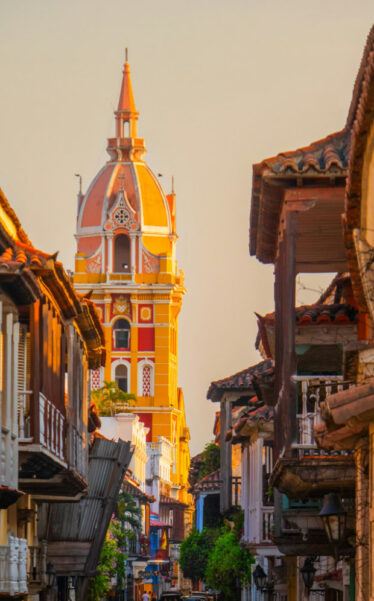
However, Cartagena represented a new challenge. It was a different city, with its own social, economic, cultural, and territorial dynamics.
The question was not how to replicate Envigado.
It was how to learn from that experience without forgetting that every territory needs to be understood through its own reality.
Solkes: What lessons from Envigado did you take to Cartagena?
Fundación Mi Sangre: One of the main lessons was that initiatives are more likely to be sustainable when they are connected to young people’s life projects. We also learned the importance of integrating well-being and psychological support, strengthening engagement with the private sector, and prioritizing quality over quantity. But above all, we learned that it is not about copying a formula. The principles must be adapted to each context.
Arriving in Cartagena did not mean starting from scratch, but neither did it mean continuing exactly where the work in Envigado had ended. The previous experience left behind questions and lessons. But the new territory required listening all over again.
This time, the challenge remains essentially the same: listen first, so that transformation can come next.
Cartagena: Learning from the Territory Before Transforming It
The contrast between the historic centre and peripheral neighbourhoods is often described as “two Cartagenas.”
Yet in both areas, young people remain essential to building a safer and more inclusive urban future.
That is why the programme seeks to strengthen collaboration and trust between young people and local authorities. Youth participation is incorporated into city processes from the beginning.
The journey began with a Leadership School designed to strengthen young people’s capacities.
An agreement was also signed with the Mayor’s Office to implement the programme and move toward building a closer relationship between young people and institutions.
One of the major challenges was trust.
The distance between young people and institutions cannot be resolved with a single meeting. It requires processes. Continuity. Listening. And real opportunities for participation.
Cartagena therefore took the principles developed over previous years and adapted them to its own context.
Listening to young people. Strengthening their capacities. Supporting their projects. Connecting their initiatives with their life projects. And building networks capable of sustaining them.
Youth Leadership in Colombia: Listening to the Differences Between Territories
Envigado and Cartagena are profoundly different cities.
Their social contexts are different as well.
Solkes: What differences did you find between Envigado and Cartagena in relation to youth leadership?
Fundación Mi Sangre: The main differences are not necessarily among young people themselves, but in the social, economic, and territorial conditions in which they develop their projects and exercise their leadership.
Each city has different challenges and barriers. That is why there is no single model of youth leadership that can be applied in the same way across every territory.
What we do find is a shared capacity. When trust, tools, and support exist, young people can identify challenges, propose solutions, and mobilize processes.
In Envigado, initiatives emerged around different social, cultural, and community challenges.
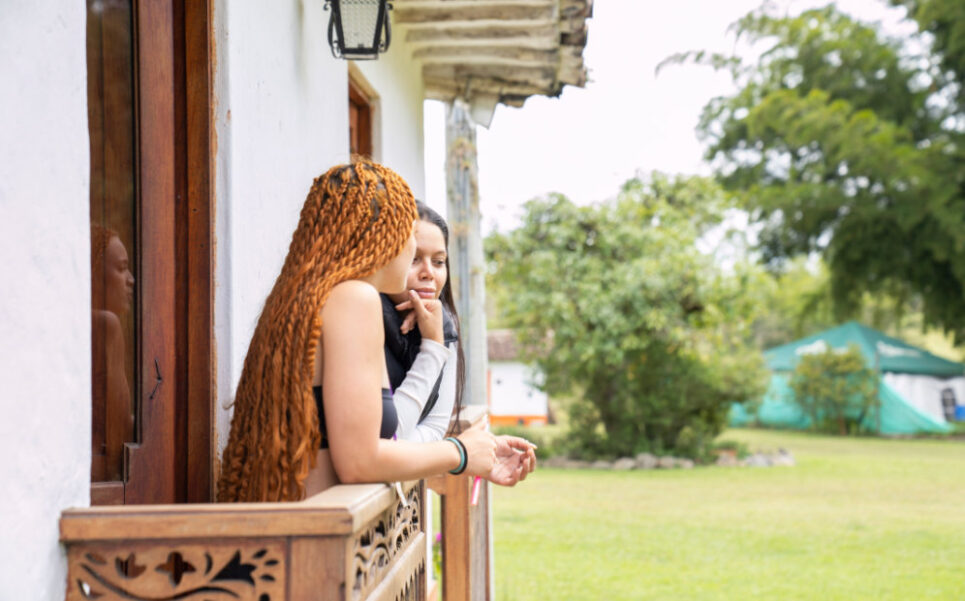
In Cartagena, many projects were closely connected to the needs and opportunities of their communities and to the search for better conditions for other young people.
The context required comprehensive support.
It was not enough to offer tools for developing an initiative. It was also necessary to recognize the personal and emotional challenges young people face.
That is why free psychological support spaces were incorporated in Cartagena.
Well-being is a condition for participation.
Well-Being Is Also Part of Leadership
Another lesson brought from Envigado was the importance of connecting youth initiatives with different actors.
In Cartagena, efforts were made to particularly strengthen relationships with the private sector and other partners capable of expanding opportunities for young people and their projects.
Another important lesson was confirmed: sometimes, working with fewer initiatives allows for better support.
Quality can be more important than quantity.
A close process makes it possible to better understand the needs of each team and increase the chances that an initiative can continue over time.
Youth leadership does not develop only when people have the tools to act. It also requires conditions that allow people to feel supported, heard, and capable of sustaining their own processes.
Peace Is Also Built in Everyday Life
Colombia is a country marked by decades of armed conflict and social divisions.
In this context, concepts such as a culture of peace and conflict resolution take on an everyday dimension: they seek to create space for dialogue, respect, and justice.
For a long time, talking about peace seemed to mean talking exclusively about violence and conflict.
Young people are broadening that perspective.
Peace is also about being able to walk through a city without fear. Having access to opportunities, feeling heard, and being able to imagine a future.
Young people have helped broaden that conversation.
Solkes: After 20 years of working with young people, what have they taught you about peacebuilding?
Fundación Mi Sangre: They have taught us to stop taking things for granted. Critical thinking means refusing to accept as part of the landscape those realities that cause harm. Young people show us that peace is also connected to mental health, safe public spaces, education, and well-being. They also teach us that organizations should not impose an agenda on young people. Our role is to accompany, make space for, and amplify their agendas. In addition, new generations naturally move between human and technological networks. Narratives, trust, and polarization are built there. Learning from how they inhabit those spaces is urgent.
To question what has been normalized also means learning to look again at what, for a long time, seemed inevitable.
Perhaps that is why listening to how they understand peace matters so much. Because when the questions change, the answers can change too. And when a generation dares to imagine that its community can be different, peace stops being a general idea and begins to take shape in the way people meet, listen to one another, and choose to live together.
Peace Begins with the Way We Inhabit a City
Talking about safer cities also inevitably means talking about peace. But peace is not always built on large stages, nor does it depend solely on decisions made by institutions. Many times, it begins in much more everyday places: in a conversation, a square, a park, or in the possibility of feeling part of the place where you live.
Relationships between people are one of those first spaces where peace is built. So is the way public spaces are inhabited and the opportunities available for each person to develop their life project.
Young people have helped broaden this conversation. Their participation makes it possible to understand that peacebuilding does not simply mean preventing violence. It also means creating the conditions for people to meet, participate, and recognize themselves as part of a community.
There is peace when there is a place to meet. When a person can express what they think and feel that their voice has a place. When they can imagine a future and find the conditions needed to begin building it.
In this sense, the city stops being merely the setting in which life takes place. It also becomes part of the conditions that make it possible to live that life differently.
And perhaps this is where one of the deepest transformations of these processes can be found: understanding that peace is also built through the everyday ways in which a community meets, listens, and decides how to inhabit its territory.
The Legacy
But every process of transformation eventually reaches an inevitable moment: the support comes to an end. Teams withdraw, and projects no longer have a daily presence in the territory.
That is when a question emerges that may be uncomfortable, but is fundamental to any social process: what remains when those who provided support are no longer there?
For Fundación Mi Sangre, this question does not appear at the end of the journey. It is part of the way the process is understood from the beginning. The intention is not to build something that forever depends on those who initiated the project, but to leave enough capacity for the territory to continue moving forward on its own.
That is why, when the Foundation talks about what it hopes will remain in Envigado after direct support ends, it speaks of an ecosystem.
That ecosystem is made up of people, but also relationships, tools, and networks. There is a tangible legacy, such as the Casa de la Juventud and the resources and tools that can continue to be used by other young people and actors in the territory.
At the same time, there is a less visible part. These are the methodologies that were learned, the experiences shared, the relationships built, and the partnerships that emerged throughout the process.
But for the Foundation, something else is even more important: that young people remain as agents of change.
Because if the support enables people to continue organizing, building relationships, driving initiatives, and participating in decisions affecting their territory, then the project no longer depends on those who started it.
The true legacy is not only what remains physically in a place. It is also what people have learned to do together and what they can continue building once the support has ended.
What Remains After the Programme
For the Foundation, the value of a process also lies in what continues after direct support ends.
In Envigado, the Casa de la Juventud remains, along with resources and tools that can continue to be used by other young people and actors in the territory.
Capacities, learning, and methodologies also remain.
So do the relationships built between sectors that previously did not work together.
And there is something more difficult to measure: the way young people see themselves.
As people capable of participating. Leading. Building and transforming.
An initiative that continues to grow after a programme ends demonstrates that the process can outlive its initial duration.
The initiatives that remain, the organizations that stay active, and the partnerships that continue creating opportunities are all part of that legacy.
So are the people who no longer need to wait for someone else to arrive before they begin to act.
A Footprint That Continues to Grow in Colombia
The S²Cities experience in Colombia leaves an open question. What would happen if cities placed greater trust in their young people?
Not simply as programme recipients. But as people capable of contributing solutions. As leaders, creators, and allies. As citizens who are already participating in the present.
Solkes: If you had to summarize the main lesson of this process in a single sentence, what would it be?
Fundación Mi Sangre: “If you want to go fast, go alone; if you want to go far, go together.” Transformation is collective. It needs people, networks, institutions, and communities capable of building together.
Perhaps that phrase summarizes much of what happened in Envigado and what is now continuing in Cartagena.
In Envigado, more than 90 young people demonstrated that an idea can become an initiative. And that an initiative can become an organization.
They also showed that a conversation can reach the spaces where decisions are made.
In [**Cartagena**](https://solkes.com/x-el-mundo/2020/01/suenos-de-cartagena/), a new generation continues writing its own story. It does so with different challenges, needs, and possibilities.
The territories and cities are different. Yet something connects both experiences.
When young people receive trust, tools, and real opportunities to participate, they can create changes that go far beyond a programme.
Young People as a Bridge Between Generations
If young people can identify what needs to change in their territories, they can also play another role within these processes: connecting those who have different experiences, resources, and ways of understanding the city.
This ability to connect is precisely one of the reasons Fundación Mi Sangre considers investing in young people so important. For the organization, it is not simply about supporting one generation. It is about recognizing their ability to build bridges.
“They are the bridge,” the Foundation explains. A bridge between sectors, territories, technologies, and generations. A connection that brings different realities closer together and creates conversations that might otherwise never happen.
In a country as diverse and complex as Colombia, this ability takes on particular value. Young people can move between different spaces, bring new questions, and connect people who do not always have the opportunity to meet.
This perspective also runs through S²Cities’ work. Investing in young people does not simply mean preparing them for the cities of the future. It means recognizing that they are already participating in the transformation of the territories they inhabit and can be part of the decisions that will shape those cities.
New generations are asking questions, creating projects, building networks, and imagining other ways of living in their territories. They are not waiting for the future to arrive before beginning to participate in it.
And when they find spaces to do so, what they build can continue long after a programme ends. A partnership can endure, an initiative can open new paths, and a conversation can become the starting point for others.
For Now, the Story Continues
A city does not change only when a new space is inaugurated, a policy is approved, or a programme is launched. It also changes when someone decides to participate. When a young person feels that their voice has a place and that their ideas can become actions.
That is where a transformation begins that goes far beyond a specific initiative.
Participation means entering a conversation that should never end: the one that exists between those who inhabit a city, those who make decisions, and the institutions responsible for responding to the needs of their communities. When that conversation exists and people can be part of it, the possibilities of building more responsible decisions and more connected societies also become stronger.
The challenge, however, is enormous. By 2030, it is estimated that 60% of the world’s urban population will be under 18. The cities we are building today will increasingly be the places where they grow up, study, work, build relationships, and develop their life projects.
That is why talking about safe cities and inclusive cities cannot be a conversation about some distant future. It is a task for the present.
And for that future to be possible, young people need more than to be heard.
Perhaps transformation begins there. With young people returning to their streets, daring to ask how the city they inhabit could be different, and finding others willing to build the answer together. A safer, fairer, and more human city is not something we build someday. It is built every time someone decides to be part of it.