Talking about Jesús Abad Colorado is talking about a way of seeing Colombia that unsettles, hurts, and at the same time sustains us. His photography does not seek the aesthetics of shock or the distance of detached documentation. Instead, it stays close to the human experience. His work embodies what can best be described as photographing memory in Colombia.
Through his lens, photographing memory in Colombia becomes a way of understanding the armed conflict, the resilience of communities, and the ongoing processes of truth, justice, and reparation.
For more than three decades, Abad Colorado has traveled across the country documenting the Colombian armed conflict. Yet reducing his work to “war photography” would be unfair. His images are, above all, an affirmation of life. Amid pain, there is always a hand reaching out, a gaze that resists, a gesture that refuses to surrender.
Jesús Abad Colorado and Photographing Memory in Colombia
To speak of Jesús Abad Colorado is to speak of a way of seeing the country rooted in proximity, patience, and memory. His work cannot be understood solely through photography but through a life dedicated to observing Colombia during its most fragile, complex, and deeply human moments.
Jesús Abad Colorado was born in Medellín, Antioquia, on April 22, 1967. He studied Communications and Journalism at the University of Antioquia.
It was there that he first approached photojournalism and documentary photography, a visual language that would eventually become the center of both his professional and ethical life.
His career began at the newspaper El Colombiano, where he worked as a photojournalist from 1992 until May 2001.
He later continued as an independent photographer, allowing him to expand the visual archive that is now considered one of the most important records of Colombia’s armed conflict.
Over more than three decades, his camera has traveled through territories marked by violence, documenting the impact of different armed and political actors on local communities.
His work certainly reveals the pain of war. Yet it also captures dignity, resilience, and the remarkable capacity of victims to rebuild their lives.
In his photographs, Colombia appears shaped by loss but also by the persistence of life. This constant tension between wound and hope defines much of his visual narrative.
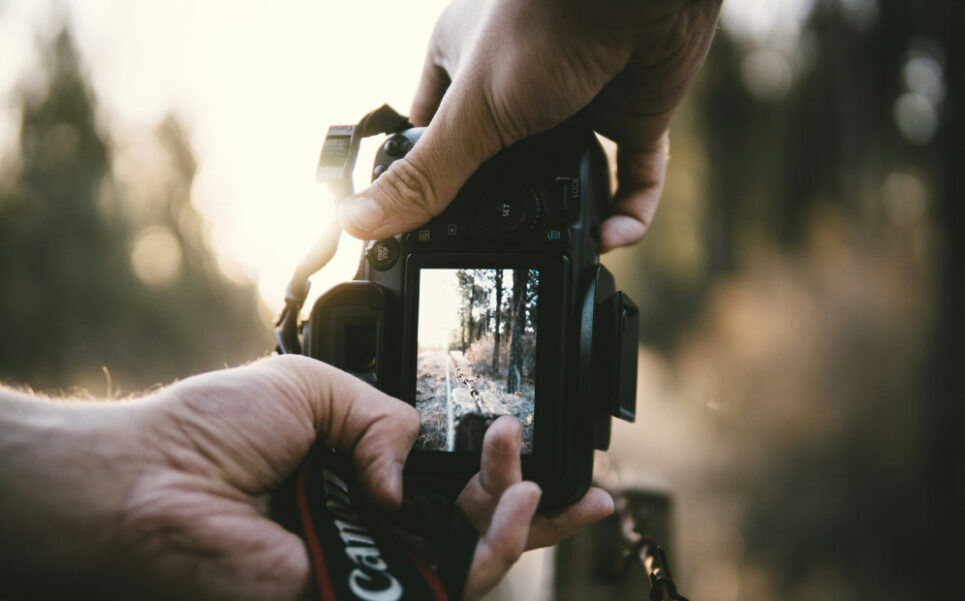
It is precisely this perspective that has made Colorado one of the leading figures in photographing memory in Colombia.
Beyond journalism, his work has played a crucial role in historical memory, truth, and justice processes. His photographs have been used by victims, social researchers, and judicial institutions in Colombia and abroad as part of efforts to seek truth and reparation.
Between 2008 and 2013, he was a member of the Historical Memory Group of the National Commission for Reparation and Reconciliation (CNRR), which later became the National Center for Historical Memory.
There, he contributed to reports on some of the most emblematic cases of violence in Colombia and participated in the creation of ¡Basta Ya! Colombia: Memories of War and Dignity, one of the most significant publications on the country’s armed conflict.
The report ¡Basta Ya! Colombia: Memories of War and Dignity (2013) was a landmark achievement.
Within its pages, his photographs serve not merely as illustrations but as essential components in the construction of collective memory surrounding the conflict.
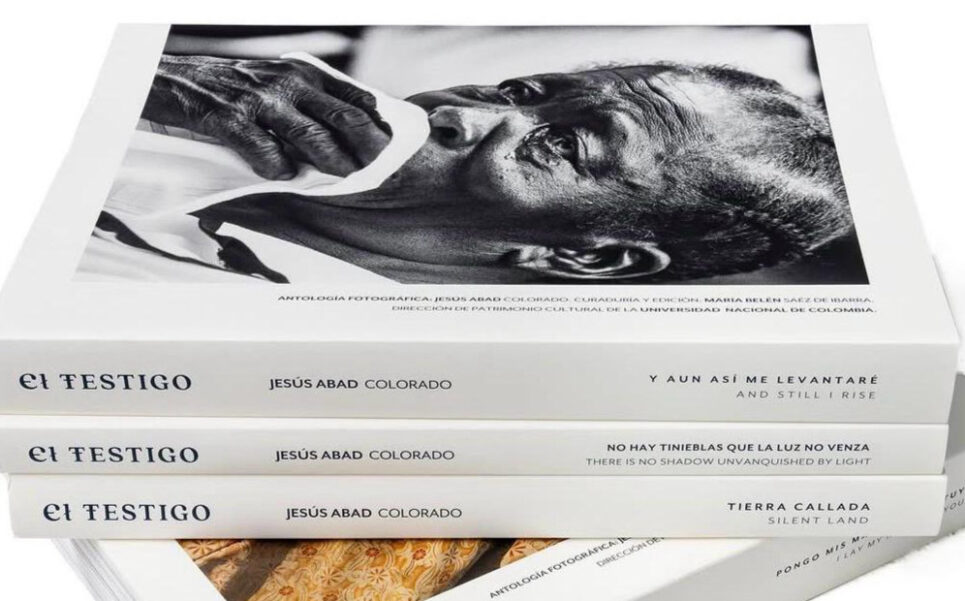
In addition to his photographic work, he is the author and co-author of several publications, including The Witness: Memories of the Colombian Armed Conflict Through the Lens and Voice of Jesús Abad Colorado (2022), Looking at Deep Life (2015), From Prison: Realities of Colombian Prisons (2006), and Stories and Images: Forced Displacement in Colombia (1997).
Another fundamental aspect of his work is his personal archive spanning more than three decades, which has been exhibited in multiple venues under the title The Witness.
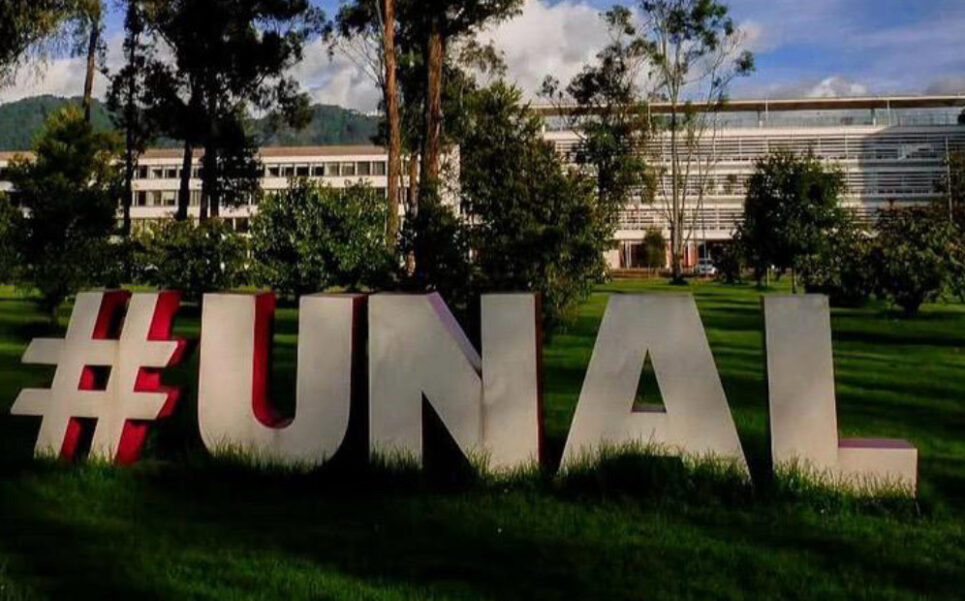
The exhibition was first presented at the San Agustín Cloister of the National University of Colombia and later traveled to different cultural spaces throughout the country.
It brings together much of his work on massacres, forced displacement, and, above all, the everyday life that persists in the midst of war.
His documentary work on forced displacement in Colombia is equally significant. Developed in collaboration with organizations such as CINEP (Center for Research and Popular Education), it is especially reflected in the book Stories and Images: Forced Displacement in Colombia (1997). Even there, the duality that characterizes his work is evident: the pain of uprooting alongside the determination to rebuild life.
This was complemented by his work with the National Commission for Reparation and Reconciliation and the National Center for Historical Memory, where he documented emblematic cases of violence across different regions of Colombia, contributing to reports focused on truth, justice, and reparation.
His work does not merely document a war. It continually asks how a nation remembers, forgets, and reconstructs its own history.
In that search, photography becomes something more than a record of events. It becomes a way of accompanying Colombia’s collective memory. Through photographing memory in Colombia, Jesús Abad Colorado has created a visual legacy that preserves both the pain of the past and the resilience that continues to shape the country’s future.
Between Urgency and Memory: The Language of His Photography
To understand the work of Jesús Abad Colorado, it is also necessary to understand the visual language from which he works. His photography exists at the intersection of two disciplines that are often confused but serve different purposes: photojournalism and documentary photography.
Photojournalism is the discipline of immediacy. Its purpose is to inform audiences about current events as they unfold. It operates under the pressure of time, where an image must be clear, direct, and capable of capturing an event in a single moment.

In this sense, photojournalism focuses on what is happening now, on the urgency of the event itself.
Documentary photography, by contrast, operates on a different timeline. Its goal is not merely to inform but to explore social, cultural, and human realities that require sustained observation.
Here, time unfolds more slowly. A project may develop over months or even years.
The image does not simply seek to describe; it seeks to build a deeper understanding of the reality it represents.
While photojournalism may center on a single powerful image, documentary photography is often constructed as a series—a collection of photographs that together create a more complex narrative.
The relationship between the photographer and the subjects also changes. Traditional photojournalism is often associated with detached observation.
In documentary photography, there is usually a closer and more prolonged relationship, allowing for a deeper and, in many cases, more subjective perspective.
Both disciplines work with reality. However, their intentions differ. Photojournalism prioritizes immediate information, while documentary photography seeks long-term understanding.
The work of Jesús Abad Colorado exists precisely within that space. Although his career began in photojournalism, his practice gradually evolved into a profoundly documentary approach, where the urgency of news gives way to the construction of memory.
His camera does not merely record the present. It questions time, absence, and what remains after the cameras have left. In this balance between informing and remembering, his work becomes a form of visual resistance against forgetting.
From his earliest assignments in the 1990s, Jesús Abad Colorado shaped his vision through an ethical decision that would define his entire career: never to photograph from a distance.
His camera does not function as a tool of cold observation but as a form of presence—close, attentive, and often almost silent—within territories marked by conflict.
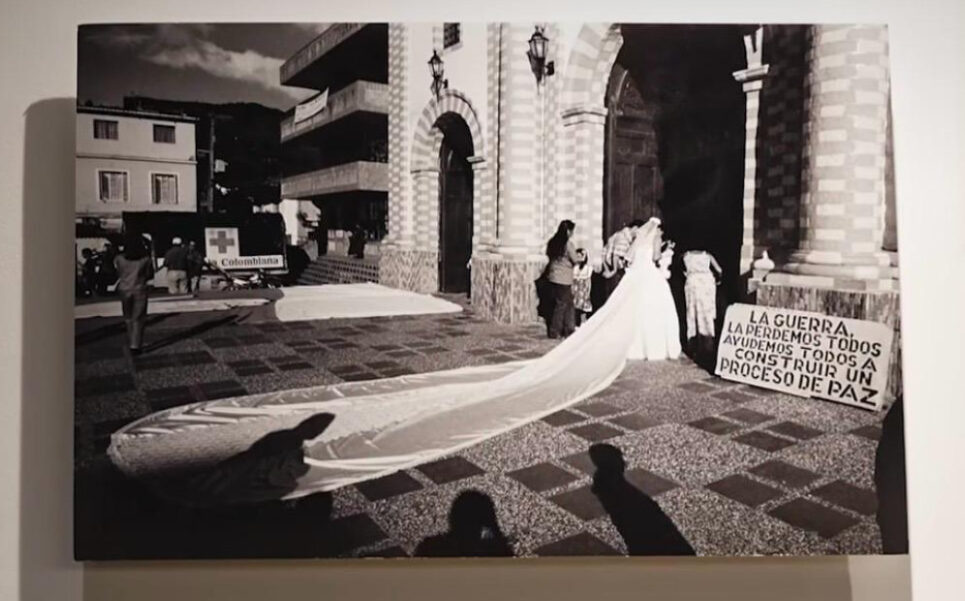
His images contain no spectacle of suffering and no search for shock value. Instead, they reveal something else: proximity. The mud on rural roads, restrained grief, and the silence that settles after violence.
They also reveal life’s determination to endure: communities supporting one another, shared mourning, and small acts of care that survive even in the midst of horror.
This closeness is not merely an aesthetic choice. Above all, it is an ethical and political position. Colorado has repeatedly argued that photography cannot be neutral when confronted with human suffering.
From this conviction, his camera ceases to be a device for capturing images and becomes a form of accompaniment—a way of being with others rather than extracting an image from them.
Photographing Memory in Colombia Against Forgetting
Over more than three decades, Colorado’s work has documented some of the most painful chapters of Colombia’s armed conflict. Through **Photographing Memory in Colombia**, his archive has become one of the most important visual testimonies of the human consequences of war.
His photographs have been taken in places such as Bojayá, in the department of Chocó, where he documented the aftermath of the 2002 massacre that took place inside the town’s church.
His lens was also present in La Chinita, in Apartadó, following the 1994 massacre. He worked in eastern Antioquia, in communities such as San Carlos and Granada, deeply affected by forced displacement, and throughout the Magdalena Medio region, where armed conflict persisted for years among multiple actors. There he documented massacres, forced displacement, collective funerals, and entire communities living under the daily reality of war.
Yet his work does not remain fixed on the violent event itself or on the brutality of the moment. Again and again, it returns to what remains after the impact.
Within each series, a second layer of meaning emerges—quieter, yet equally powerful—because life continues. This persistence is not portrayed as something extraordinary but as a fragile form of everyday resilience.
We see a mother embracing her child in a temporary shelter in Medellín or in a sports arena transformed into a refuge after displacement. Farmers in eastern Antioquia are rebuilding wooden and zinc homes after returning to territories still marked by violence. Women preparing communal meals in shared kitchens, organizing collective care amid uncertainty. We witness funerals where dozens of people accompany the deceased along dirt roads, while silence becomes almost tangible, dense, and impossible to ignore.
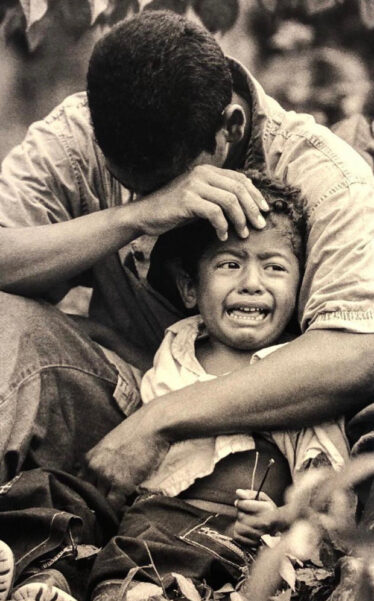
In these scenes, tragedy does not disappear or become softened. It remains visible in faces, empty spaces, and objects left behind after displacement. Yet it coexists with another force just as powerful: dignity.
This dignity is not expressed through heroism but through continuity—the decision to keep caring, to keep naming the dead, and to keep rebuilding what is necessary to inhabit the world once again.
It is precisely here that photographing memory in Colombia finds one of its deepest meanings: preserving the humanity of those who have lived through violence.
This tension between pain and resistance has transformed Colorado’s archive into something far greater than a journalistic record. His work has been used in judicial proceedings and historical memory initiatives in Colombia, particularly through the work of the National Center for Historical Memory, where he contributed to the landmark report ¡Basta Ya! Colombia: Memories of War and Dignity (2013).
Likewise, his exhibition The Witness (El Testigo), presented at the National University of Colombia and the San Agustín Cloister, has brought together thousands of images documenting massacres, displacement, and everyday acts of resistance. Through these exhibitions, his archive has moved beyond documentation to become a public experience of memory. Thanks to this contribution, photographing pemory in Colombia has become a fundamental tool in the pursuit of truth, justice, and reparation.
In these contexts, his photographs function simultaneously as evidence of what happened and as human testimonies that restore faces, names, and gestures to realities that too often survive only as statistics.
The Image as Testimony and Mourning
In a country where violence has been prolonged, complex, and deeply embedded in the territory, the photography of Jesús Abad Colorado takes on a unique dimension: it becomes testimony, but also a space for collective mourning. For this reason, his work stands as one of the most significant examples of **Photographing Memory in Colombia**.
His images do not close stories or offer definitive explanations. Instead, they do the opposite: they open them. They invite viewers to confront realities that have often been pushed into oblivion or reduced to simplified official narratives, while preserving the humanity of those who appear within them.
It is within this tension that one of the most valuable and complex aspects of his work emerges. Each photograph functions simultaneously as an act of denunciation and as an act of care for the memory of those who have lived through war. In this way, photographing memory in Colombia moves beyond visual documentation and becomes an ethical practice of accompaniment, recognition, and remembrance.
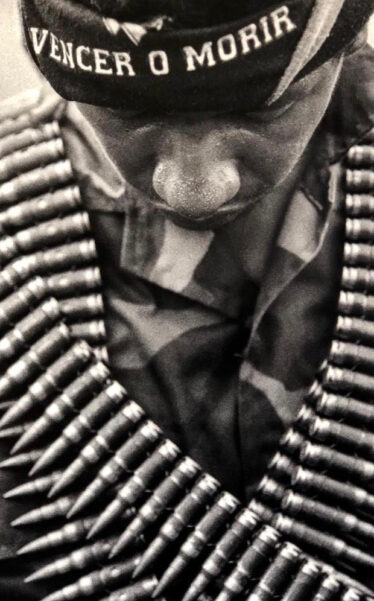
Over time, Colorado’s work has expanded beyond the boundaries of journalism to inhabit exhibitions, books, and museums. In these spaces, his photographs cease to be isolated records of individual events and become part of a broader visual narrative about Colombia.
Experiencing his archive as a whole creates an accumulative effect that is difficult to ignore. It is not a single story but many interconnected stories that reveal a complex Colombia—one marked by loss, yet equally defined by everyday acts of resilience.
Many of his most iconic photographs are presented in black and white, reinforcing their enduring presence in memory. The absence of color strips away distractions and directs attention toward the human experience itself, helping to preserve the reality of war and its consequences.
His work often appears less concerned with capturing the event itself than with immortalizing its aftermath. Rather than focusing solely on acts of violence, he presents the human consequences of conflict—the lives disrupted, the communities fractured, and the emotional scars that remain long after the headlines have faded.
The lens of his camera has consistently focused on civilians. His gaze turns toward those caught in the crossfire, the ordinary people whose lives have been shaped by the hundreds of thousands of violent deaths and acts of displacement that have marked Colombia’s recent history.
Through this visual journey, the country emerges not merely as a setting for conflict but as a territory inhabited by people who have survived, mourned together, and rebuilt their lives amid uncertainty. The public exhibition of his work transforms individual experiences into a collective encounter with memory. In this sense, photographing memory in Colombia becomes a bridge between personal stories and the construction of a shared national memory.
Photography as a Way of Not Forgetting
At its core, all of Abad Colorado’s work revolves around remembering a country shaped by violence.
In this regard, photographing memory in Colombia finds one of its most profound and consistent expressions in his photography.
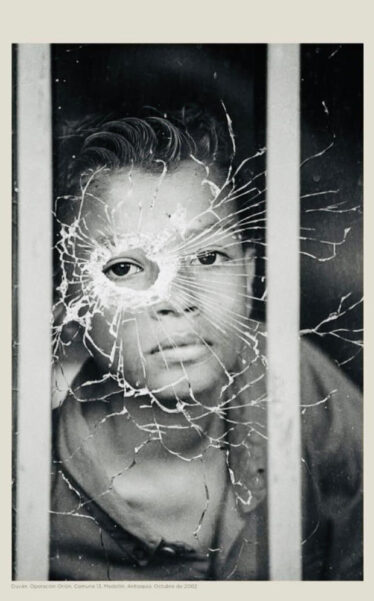
He is perhaps the photographer who has most powerfully portrayed the human cost of war in Colombia over the last several decades.
His images do not offer simple answers. Instead, they function as bridges between lived experience and what remains, between individual and collective memory, and between the past and the wounds that continue to shape the present.
For him, photographing is not about capturing the past. It is about resisting its disappearance. Through this quiet, patient, and deeply human gesture, his work has become one of the most significant contributions to contemporary Colombian photography.
The work of Jesús Abad Colorado is not comfortable, nor does it seek to be. It forces viewers to confront realities that are often avoided, to look directly at experiences that have frequently been pushed to the margins of public conversation.
Yet that is precisely where its importance lies.
In a world saturated with fleeting and easily consumed images, his photography demands a different sense of time. It requires pause, attention, and a willingness to look more deeply. The challenge is not simply to see, but to acknowledge what is being seen.
That discomfort is part of its power. His work does not seek to please; it seeks to engage, question, and provoke reflection. In that profoundly human gesture, photographing memory in Colombia becomes more than a photographic practice—it becomes a tool for awareness, empathy, and collective understanding.