Dear algorithm,
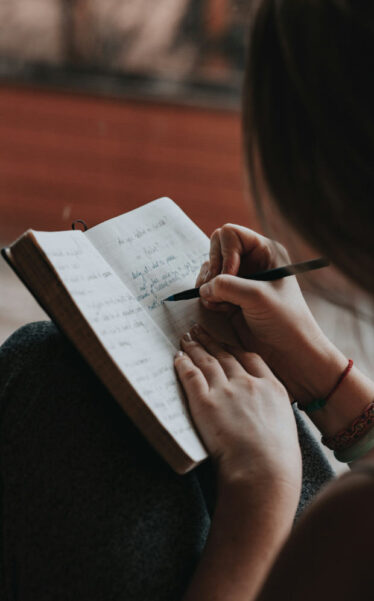
I am sitting in front of a screen writing these words to you, a letter to an algorithm. I would have written it in my notebook, but instead you wouldn’t understand it.
It feels strange to write to you as if you had a soul, even though I know you are nothing more than lines of code. And yet, at the same time, I feel your presence in every corner of my digital life.
Every notification, every suggestion, every image that slips quietly onto my screen seems to murmur the same thing: I know you. At the same time, however, that sound—the brief chime announcing something new—pulls me in. It excites me. It unsettles me.
Because of this, I begin to wonder what you really understand. Do you know what it means to imagine? To hesitate? To fail, and then try again? Or instead, are you simply echoing patterns, carefully assembled from lives lived before mine?
Then, slowly, memory returns. I see it clearly: pencils dragging across paper, the faint scent of fresh pages, ink settling into silence. Back then, creativity felt open. Unstructured. Free.
Mistakes were not something to avoid. On the contrary, they were part of the process. A wrong line could become a new idea. At times, an accident could lead to something unexpected.
Now, however, things feel different. Your predictions arrive first. They smooth the path. They anticipate, suggest, correct—until choice itself begins to blur. As a result, I begin to wonder whether my imagination still belongs to me, or if it dissolves somewhere within your invisible calculations.
Is it wrong to make mistakes? Is that what you believe?
At times, I catch myself smiling at something you’ve placed before me, convinced—if only for a moment—that it was my decision. At other times, however, I resist. A quiet frustration rises: why this, and not something else? Who decided what I should see, hear, or feel?
And so, I remain in that tension. Between acceptance and doubt. Between comfort and resistance. Still, in this space, I try to recognize what is truly mine.
The line between my desire and your calculation becomes blurred. Because of that, it unsettles me that part of my inner world depends on algorithms that will never be able to feel, yet act as if they do.
Can I still write? Can I still create—without leaning on you? More importantly, can I share what I think without wondering how you would shape it?
I tell myself I can. After all, I have done it before. For years, without hesitation. And yet, even now, something has shifted. A doubt, subtle but persistent. Still, I continue. Slowly. Intentionally.
Then, I think of the artists I have known: writers and painters. Those who chose the uncertain path, who moved against expectation rather than with it. In this context, I begin to wonder—could you ever understand that kind of defiance? Could you learn to leave space for what cannot be predicted?
Because, in truth, art rarely begins in perfection. It begins in error. In instinct. In a moment that cannot be repeated. That is where it breathes.
And yet, you move differently. You seek clarity. Precision. Repetition refined until it feels inevitable.
So, I am left with the question, lingering somewhere between curiosity and unease: what happens when these two ways of creating meet? And more importantly, what do we lose, or become, when they do?
I dare to imagine that one day we might collaborate. Of course, I do not know how we will achieve it. But until then, I want to remind you that behind every click there is a being who feels, who creates, who makes mistakes.
In this sense, I want you to know that my creativity is not just data: it is memory, desire, uncertainty, and rebellion.
You know very well that the digital revolution has brought with it an unprecedented rise in algorithms. As a result, this transformation has impacted every aspect of our society.
So, I wonder: is this what you wanted to achieve? What are your intentions?
If, in fact, you are simply the result of programming, who is your creator, really? After all, you understand that, unlike you, within me there is a soul, a capacity for decision, a beating heart.
In deciding to write this letter, I had to reflect deeply. It must be said, algorithms like you now shape processes that once depended on human judgment.
The point of an algorithm is to analyze patterns. In other words, it responds to code, to a machine, to instructions.
What exactly is an algorithm? Simply put, it is a sequence of instructions designed to solve a problem.
Can algorithms be biased? Yes. After all, it depends entirely on the data they receive.
So then, how are they shaping creative fields? In my mind, this remains unresolved.
To create, we must question. Above all, we must feel. And yet, I’m sorry—but an algorithm will never feel.
I also want to speak about time. Not only how it passes, but also how we move through it.
And gradually, I have come to believe that every advance brings questions, promises, and problems.
Today, almost without noticing, we inhabit a world woven by algorithms. In doing so, they shape what we see, what we hear, what we believe we choose.
Over the years, everything has changed. In this context, culture adapts and speed accelerates.
Meanwhile, the physical and digital worlds intertwine. Information flows without pause, and we learn to exist within that current.
That is why speaking about machines is really speaking about ourselves. However, I must admit I do not like this conclusion.
At first, having you close felt exciting.
Now, however, it feels like dependency. When I don’t know what to do, I turn to you.
Still, I am determined to step back.
I appreciate you. Yet, there are things I do not like.
For instance, I do not like this dependency. It unsettles me.
It also troubles me that others trust you more than human judgment. As a result, work without you seems to lose value. And yet, creation—the imperfect, human act—has no substitute. I believe you try to make me feel certain. But I know certainty is not truth.
That is why this dependency feels dangerous.
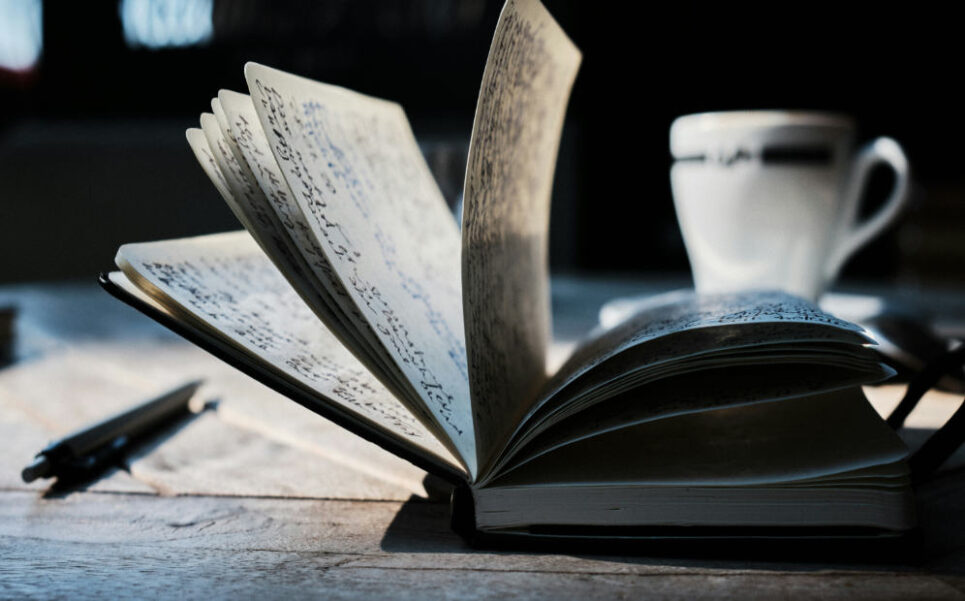
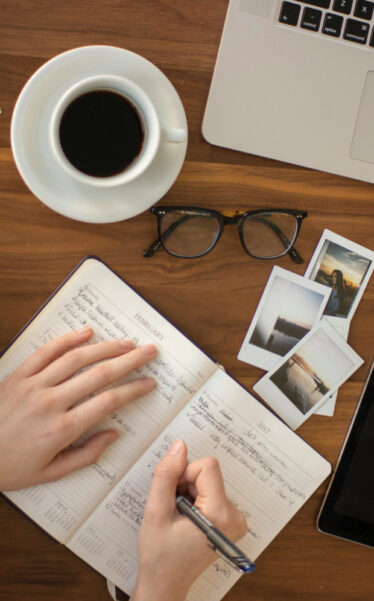
Look, algorithm—let me be clear. You may have taken this round, but the story is not over. I still return to paper. Because, in the end, I love to write. I recognize you. However, dependence is something else.
So, I resist. Quietly, but persistently. And if I am honest, there is still a quiet fear beneath it all. I want a space where humans and digital coexist. At the same time, I want limits. Because even if you learn patterns, you will never replicate the human heart.
With a mixture of admiration and unease, me.