The medieval town of Dinkelsbühl is one of those places you do not simply visit. The fact is that you arrive, and something inside you softens. As soon as you pass through its gates, the rhythm changes. Footsteps slow. Conversations quiet. The town seems to gently ask visitors to meet it where it is.
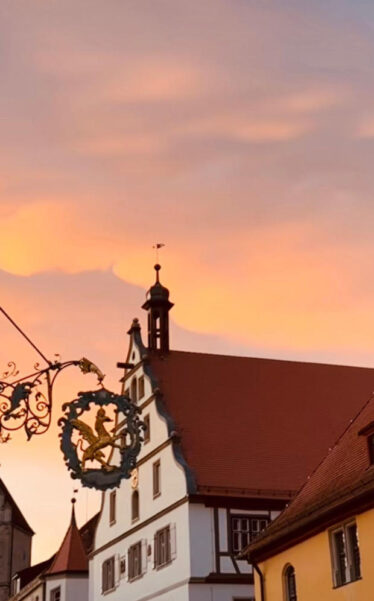
Walking through the medieval town of Dinkelsbühl feels less like sightseeing and more like entering a lived story.
Children’s voices echo beneath centuries-old arches. Window boxes lean toward narrow streets. Life unfolds naturally, without urgency or spectacle.
Located along Germany’s Romantic Road, the town offers something increasingly rare: the freedom to explore without a plan.
Distances are short, yet the experience never feels rushed. Instead of chasing landmarks, visitors wander and pause.
Somewhere between a market square and a quiet tower, time reveals a different pace.
To understand how this rhythm emerged, however, it helps to look deeper into the town’s long and layered history.
History You Can Walk Through in the Medieval Town of Dinkelsbühl
To understand the medieval town of Dinkelsbühl, it helps to begin before the Middle Ages fully took shape.
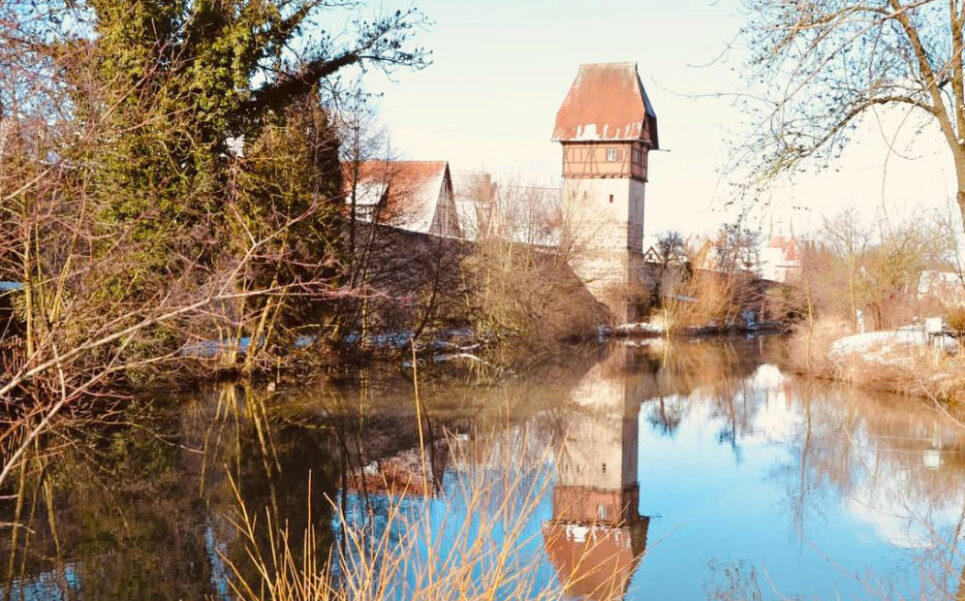
Long before stone walls defined the town, this location already held importance.
Archaeological discoveries point to a Carolingian settlement positioned along important trade routes. Movement and exchange shaped the land from the beginning.
Over time, the settlement slowly grew. A fortified church appeared on higher ground.
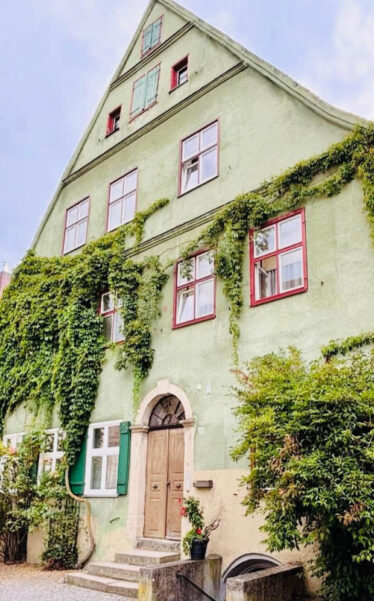
Soon after, a market formed nearby. Farmers, traders, and craftsmen settled around it.
Gradually, a community emerged—built not around spectacle, but around work, protection, and shared life.
Unlike many historic towns, Dinkelsbühl escaped the large-scale destruction that reshaped much of Germany.
As a result, the medieval town of Dinkelsbühl feels remarkably intact. Walking its streets feels continuous rather than reconstructed.
The Old Town remains enclosed by 15th-century walls. Gates such as Wörnitztor and Rothenburger Tor still frame the entrances. Inside, St. George’s Minster rises above red rooftops, its tower offering sweeping views over fields and forests.
From this vantage point, architecture, landscape, and history fall quietly into balance. And soon, the stories of the town begin to reveal themselves in another way—through memory and tradition.
Storytelling and Memory in the Medieval Town of Dinkelsbühl
Every summer, the medieval town of Dinkelsbühl returns to one of the most decisive moments in its history: the year 1632, during the Thirty Years’ War. Yet remembrance here does not feel solemn. Instead, it becomes a shared act of storytelling.
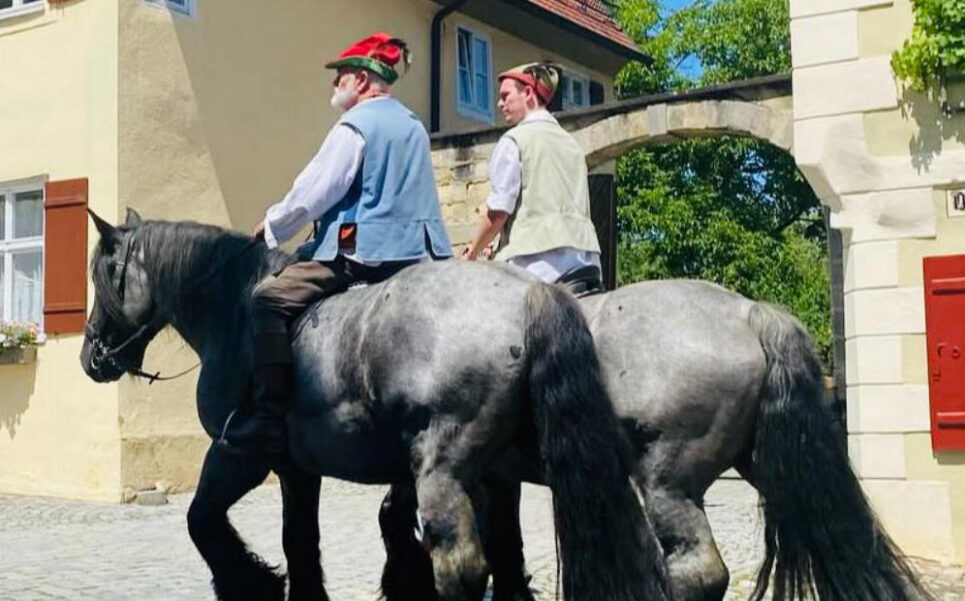
During the Kinderzeche festival, the streets transform into a living stage. Locals dress in historical costumes. Music fills the squares. Most importantly, children take the lead in parades and reenactments.
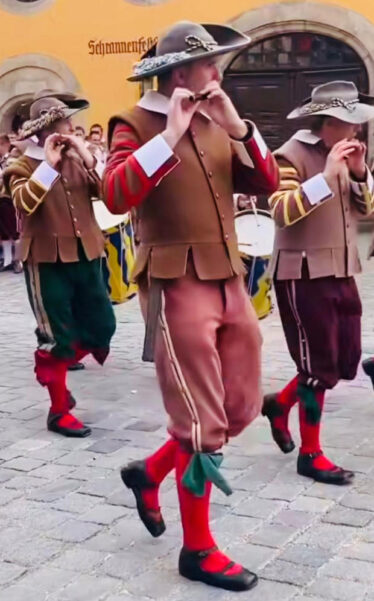
Paper cones filled with sweets are handed out along the route, a tradition that has delighted generations.
According to local legend, a young girl once led the town’s children to plead for mercy from a Swedish commander. Moved by their innocence, he spared the town.
Whether myth or history, the story places empathy at the center of memory.
Unlike many historical festivals, the medieval town of Dinkelsbühl celebrates compassion rather than conquest.
This spirit of storytelling extends beyond festivals. Films such as The Wonderful World of the Brothers Grimm and Werner Herzog’s The Enigma of Kaspar Hauser found inspiration here.
And perhaps the best way to experience that atmosphere is simply to keep walking.
Walking the City Walls of the Medieval Town of Dinkelsbühl
After exploring the streets, walking the city walls of the medieval town of Dinkelsbühl feels like the natural next step.
This circular path traces the defensive line that once protected the town. Today, it offers something calmer: a peaceful walk above everyday life.
The route is flat and welcoming. Children walk it easily. Strollers are common. Frequent stairways allow visitors to step down into the town whenever curiosity calls.
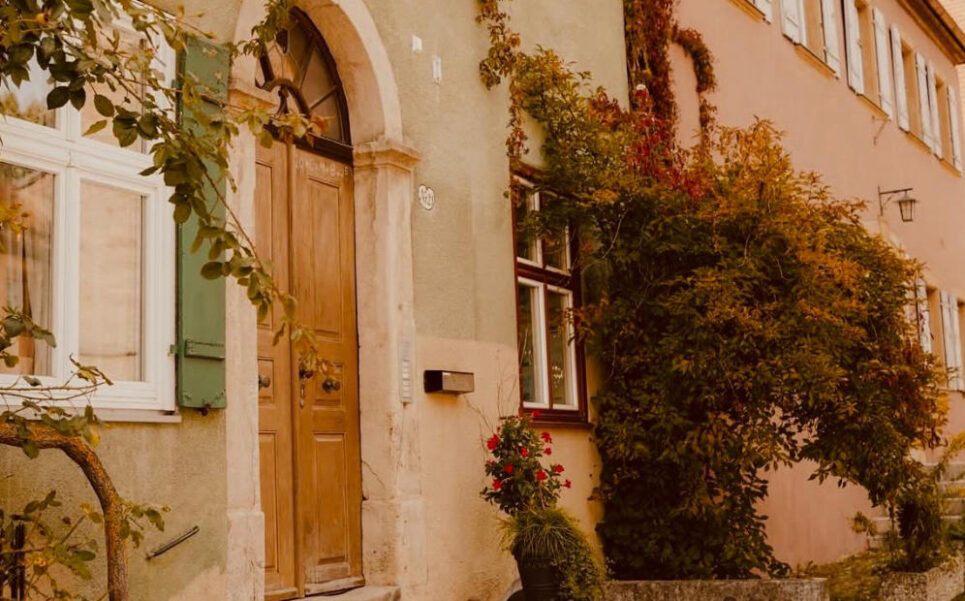
Meanwhile, the views shift gently with every step. On one side, red rooftops cluster around church towers. On the other hand, gardens, orchards, and open meadows stretch quietly toward the countryside.
Along the walls, towers and bastions invite pauses. Some become quiet places to sit, snack, or simply watch the town below.
The full loop extends about three kilometers. Yet more than views, it offers perspective. From above, the medieval town of Dinkelsbühl feels complete.
Eventually, the path leads back toward the gates. But by then, curiosity often draws visitors toward the countryside beyond.
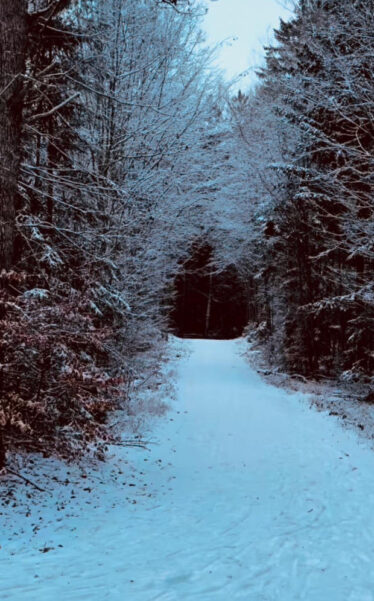
Just beyond the walls of the medieval town of Dinkelsbühl, the landscape opens gently and without drama.
Fields, orchards, and river paths surround the town, extending its calm outward. Instead of feeling separate, the countryside feels like a natural continuation of daily life.
Cycling routes begin almost immediately outside the gates. Bikes can be rented nearby, making it easy for families to explore together. The Tauber Valley path moves softly through vineyards and fruit trees.
Meanwhile, shaded forest trails offer quiet refuge during warmer months. At certain points, the red rooftops of Dinkelsbühl appear between branches.
Along the Wörnitz River, early morning walks feel especially peaceful. Ducks glide across the water. Birds circle lazily overhead.
Here, nature is not a planned excursion. It simply continues the rhythm of the medieval town of Dinkelsbühl.
And just like the landscape, the town’s traditions remain deeply connected to everyday life.
Living Traditions in the Medieval Town of Dinkelsbühl
Traditions in the medieval town of Dinkelsbühl are not staged performances for visitors. Instead, they are simply part of daily life.
Kinderzeche remains the most visible example. Each year, children take part in the festival with enthusiasm and pride. Parents and grandparents often recognize roles they once played themselves.
In this way, memory becomes generational.
During Advent, the medieval town of Dinkelsbühl grows even more intimate. The Christmas market feels warm rather than crowded. Handmade crafts replace mass-produced souvenirs. Local foods take center stage.
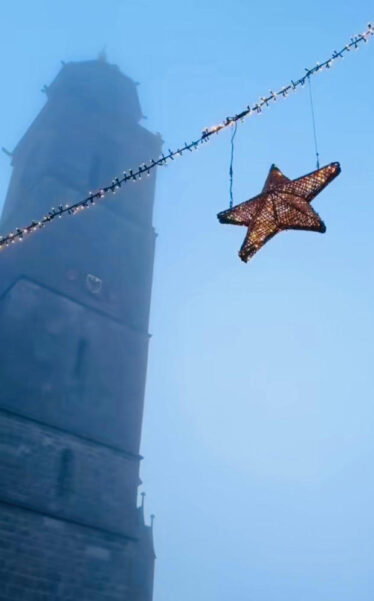
Lights glow softly against half-timbered houses. Gentle music drifts through the streets without overpowering conversation.
Families linger with warm drinks in hand, enjoying the moment.
Here, traditions are not preserved behind glass. They are lived, shared, and quietly passed forward. Naturally, that same spirit appears in another essential part of the town’s culture—its food.
Without advertising it loudly, the medieval town of Dinkelsbühl quietly embodies sustainable travel.
Walking feels natural here. Cycling feels intuitive. Life moves comfortably at human speed.
Accommodation follows the same rhythm. Family-run guesthouses dominate the historic center. Hospitality feels personal and relaxed.
Restaurants rely heavily on regional and seasonal ingredients. Supporting local livelihoods happens almost effortlessly.
Food quickly becomes part of the experience. Traditional inns serve generous meals in welcoming settings.
Schnitzel, bratwurst, and dumplings offer comforting favorites for younger travelers. Meanwhile, adults linger over Franconian wine or locally brewed Dinkelsbühler Löwenbräu.
Throughout the day, bakeries invite small pauses. Cakes and seasonal pastries appear in tempting displays. In winter, the scent of Lebkuchen fills the air.
In these moments, food becomes ritual. And slowly, visitors begin to understand how the seasons shape life in the town.
When the Medieval Town of Dinkelsbühl Truly Stays With You
The medieval town of Dinkelsbühl changes gently with the seasons. Yet it never demands attention.
Spring brings blossoms along the old walls and light-filled courtyards. Easter markets add quiet color to the streets.
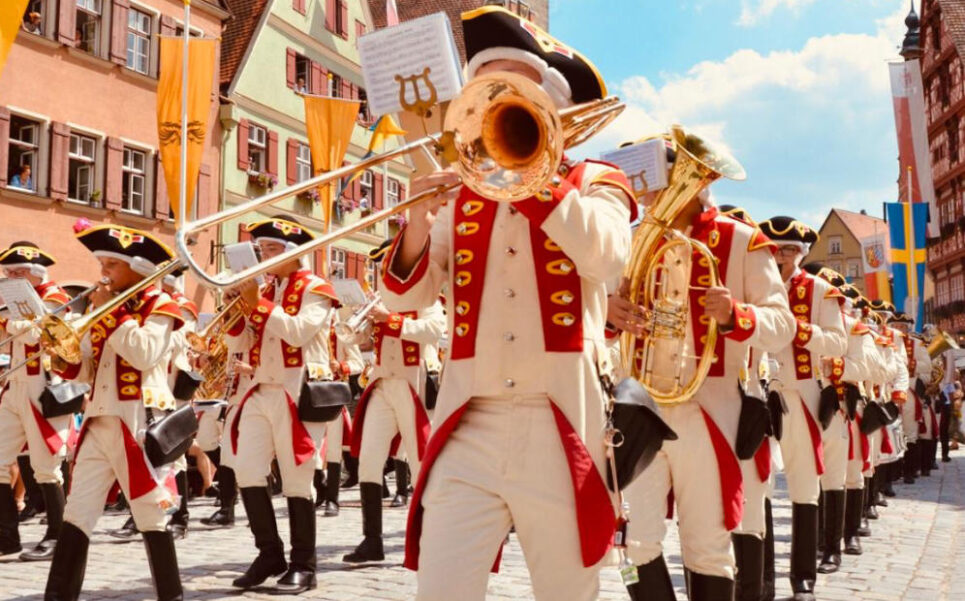
Summer reaches its emotional peak during Kinderzeche, when music, costumes, and shared memory fill the town.
Autumn arrives more softly. Golden light settles over rooftops while vineyards and orchards prepare for harvest.
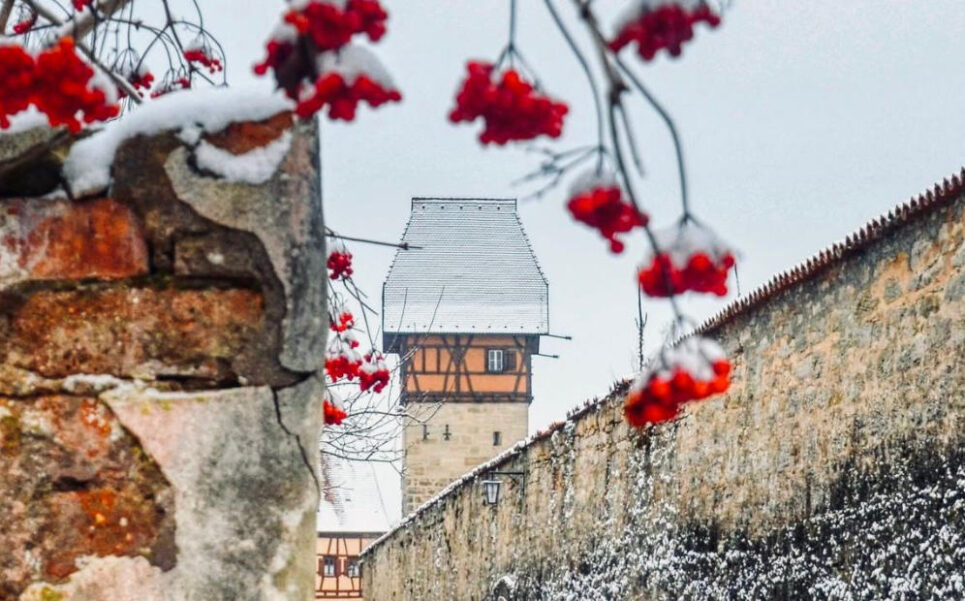
Winter turns the town inward. Snow softens rooftops. Christmas lights glow warmly against half-timbered houses.
There is no wrong time to arrive here. Each season simply reveals a different mood.
In the end, the medieval town of Dinkelsbühl is not a place to consume quickly.
Instead, it invites attention. Walk slowly. Listen carefully. Stay present.
What visitors carry home is not a checklist of sights. It is the quiet feeling of having truly experienced a place where life still moves at a human pace.