In Venice, everything shines: the water, the wine, the attitude, and the artistic atmosphere. In my view, anything is possible; one could easily say it’s heaven on earth, or, as my friend Alice says: “I must be near the center of the Earth” (Alice in Wonderland). Traveling to Venice is an experience that feels like a dream.
Venice is an island city: the “centro storico” or historic center is made up of over 118 small islands connected by around 455 pedestrian bridges. This means that every time you cross a canal, you enter a different island. The entire area is divided as follows: 1,569 km² of land and 2,577 km² of water, making a total of 4,146 km².
Arriving and traveling to Venice for the first time
Inside the city, there are no cars; it is pedestrian-only. Public transport is provided by ferry boats known as vaporettos (water taxis).
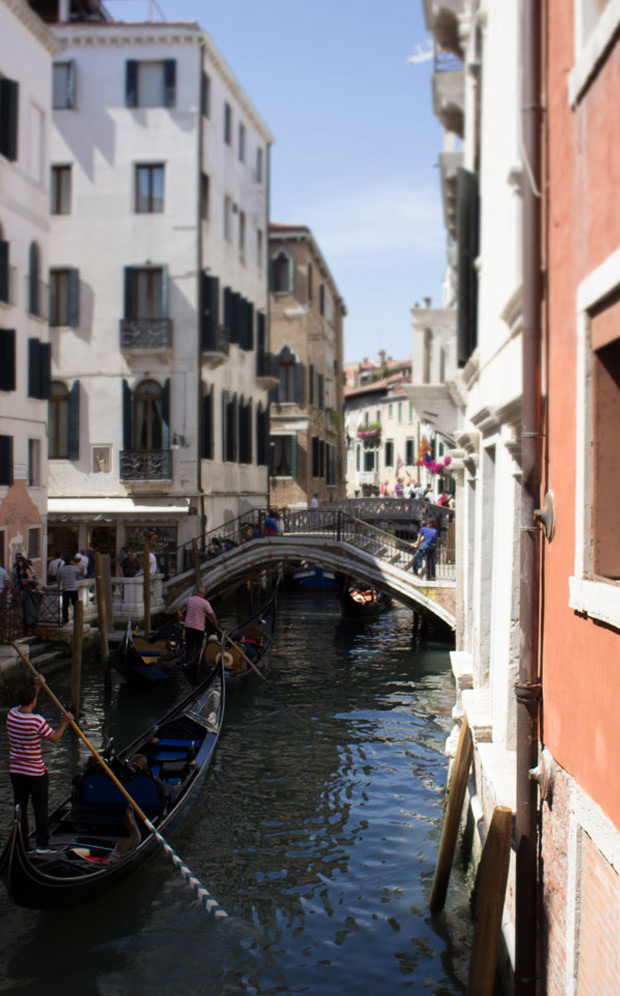
The moment I arrived in Venice, I fell in love with the city. During my stay, I slept in Mestre, the only town on the mainland, connected to Venice by a bridge built in the early 19th century.
In my experience, the only way to truly discover this little piece of heaven on earth is by walking through the narrow streets, passing through arched passages and mazes called calli (alleys). Traveling to Venice on foot allows you to truly understand the city’s rhythm.
Walking there feels like falling down Alice’s rabbit hole.
In fact, to know Venice like the Venetians, no magic potion is necessary. All you need is to free yourself from all chains, let the fresh air in, and hear the water splash.
Adventures and experiences when traveling to Venice
The first thing I learned is that every Venetian adventure begins and ends with a glass of Prosecco. Then, I let myself get carried away through the old red district, Santa Croce, a place where temptations are always at hand.
I’m almost certain that window-shopping was one of the highlights for me. Every shop, no matter how small, was full of color and atmosphere. But the city saves the best for last, when fire meets water in the sunsets experienced in San Marco.

I should clarify a few things. In the minds and hearts of locals, the Rialto is made up of the Rialto markets. These historic markets date back to 809 BC, when Venice was a Byzantine settlement with no palace but full of ambitious fishermen.
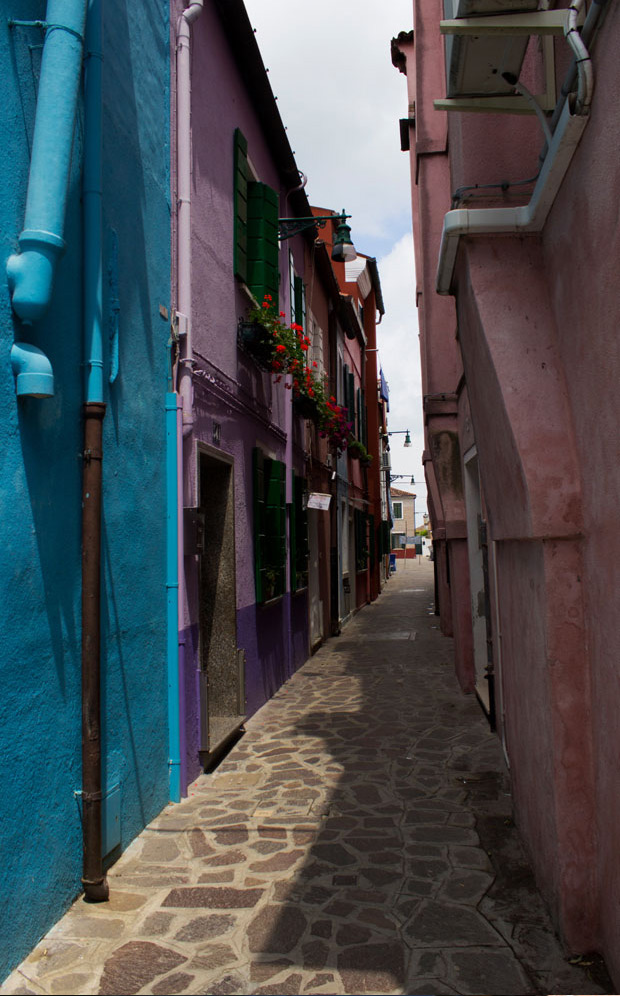
Today’s fish market is a personification of the original market that lasted 600 years.
Beneath the stone fish gargoyles on the peaked roof, sustainable fishing standards in the lagoon are literally carved in stone. Fishermen rise before 3 a.m.
It must be noted that the Republic of Venice was a commercial and political power for centuries. Today, it is also considered a romance epicenter. However, many people only visit the city during the day and leave around 7 p.m.
Even when crowded, it’s possible to escape the masses. Traveling to Venice also means discovering quiet corners away from mass tourism.
A city full of warm pistachios, elegant dresses, and beautiful glass.
One thing I loved is that Venetian cuisine is 90% fish and seafood, sourced from the lagoon and the Adriatic. There’s a long tradition of cicheti, or small plates, in Venice, served in bacari or small bars: it’s the Italian version of tapas.
Even if you visit Venice for a short time, having a spritz is a must. Here’s a fact many people don’t know: when the Austrians invaded, they brought white wine and soft drinks. But Venetians thought it lacked flavor, so they added a third ingredient: Aperol or Campari.
Tourism and the invasion of tourists
Despite the overwhelming number of tourists, some neighborhoods maintain their traditional atmosphere: butchers and bakers behind every door. Life, love, pleasure, flavors, and aromas that transcend.
You might find yourself surrounded by art students falling in love and flirting.
Many people think the best times to travel to Venice are June for the Art Biennale, September for the Film Festival, or February for Carnival.
While these moments are certainly incredible, it’s not entirely true. To experience the wonders of Venice, it’s enough to spend just a few nights there.

It may sound absurd, but less than a third of visitors stay to watch the Venetian sunset, missing a romantic dinner in Cannaregio (a northern neighborhood). This area is home to the Gothic church of heartbreak, Chiesa della Madonna dell’Orto, as well as the historic Ghetto.
The Ghetto was home to the Jewish community from the 16th to the 18th century and also took in refugees from the European Inquisition.
Masks
This city is one of the most charming places in Italy, and as we know, that means art. Masks are undoubtedly exceptional works of art. They are the hallmark of the Venice Carnival. The carnival began in the 11th century, and mask usage became formalized in 1436 when mask makers were recognized as a guild.
Mask use peaked in the 18th century, when Venetians from different social classes mingled with the elite or performed sexual favors without being recognized.
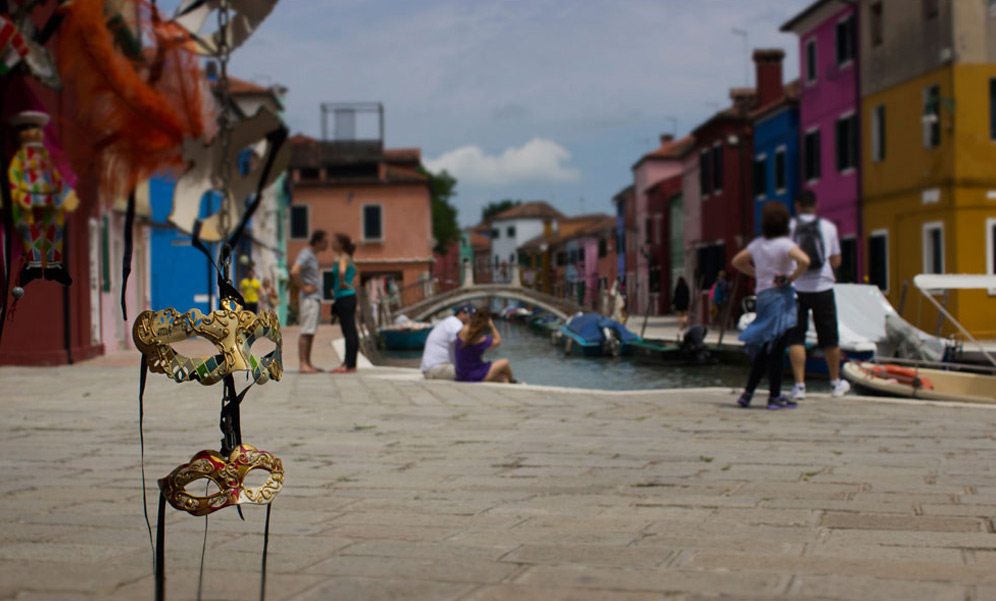
Since then, much has changed, and today Venetian masks have two main purposes: expression during Carnival and as a souvenir of this city.
Of course, getting a mask is easy… street vendors sell them in large versions or ceramic miniatures. However, if you want a truly beautiful piece, it’s recommended to buy it in the shops where they are made.
The truth is, Venice is always full of tourists. So much so that at times, for every local, there are two tourists. Even so, Venice never loses its capacity to enchant.
It is the city of mirrors, the city of mirages, at once solid and liquid, both air and stone.
– Erica Jong –
Before traveling to Venice, I researched and read some travel guides. It was mostly the same content with different packaging. But I discovered there’s always the possibility of acqua alta (floods), and Venice has a good supply of luggage storage facilities.
Although municipal workers set up high wooden walkways in critical areas during high water, there are times when wading is the only option. Locals use rubber boots (available in local hardware stores and other shops), but tourists who don’t want to carry heavy rubber boots often settle for cheap plastic shoes.
Regarding luggage storage facilities, they exist at Marco Polo Airport, at Santa Lucia and Mestre train stations, at Piazzale Roma (bus and taxi entry point), and at the cruise port.
After traveling to Venice: a light heart
After my trip to Venice, both my heart and soul felt a little lighter; I understood so much more. One thing that became clear to me is that it was no coincidence that one of history’s great explorers, Marco Polo, came from Venice. After all, his home was Europe’s gateway long before 1721.

This place, this magical rabbit hole, is like a postcard. Everything shines there. Venice is beautiful; it sits somewhere between water and land.
The city is flooded with splendor. The marks of centuries on its stones with their succulent decay. Without a doubt, one of the best things Venice offers, in my humble opinion, is the way it has submitted to the water.
This is a city of water, canals, crafted glass, and mask festivals. The mere charm of a city that seems miraculously built on water.
In some ways, like Wonderland, it always felt unreal. I will never forget this adventure, which will soothe my soul forever. My adventures in Venice were short but fabulous, reinforcing all my fantasies. The rhythm of the Adriatic waves and the sparkle of chandeliers dancing in my mind will last forever.