Music festivals trace their origins back to the hippie era, yet today events like Fête de la Musique show how far they have evolved beyond clichés of mud, acid, and rock. Each year, these vibrant gatherings expand in size, scope, and popularity, shaping the social lives of music lovers and creating an atmosphere of celebration and connection.

The Festivals
So much so that music festivals are truly unique places. Each one has its own particularities—whether it’s the location, the people who attend, or the musicians who perform. They are never repeated.

And it’s simple: a music festival is what your grandparents criticize (though they attended once upon a time, now they no longer find it so interesting). For many parents, it is the event of the year they dread. Yet for our generation, it represents a real effort toward social awareness.
Ultimately, they are an exceptional celebration of love, happiness, fashion, camping, and massive confusion, alongside the artists who define an entire generation of music.
Another wonder of festivals is that, for some reason, the best time to enjoy them is without a doubt summer. Europe alone offers thousands of summer music festivals every year. However, the Fête de la Musique is a festival celebrated all around the world.
The Fête de la Musique, also known as Music Day, is an annual celebration held on June 21.
The best part is that it gives musicians the opportunity to perform freely in public spaces. The worst part is that it lasts so little. The concept of a 24-hour celebration of music on the summer solstice was the idea of French Minister of Culture, Jack Lang.
Solkes: How long has Fête de la Musique been celebrated in Berlin or Germany?
Simone Hofmann: FDM has been celebrated in Berlin since 1995, and it was the first German city to participate.
Solkes: How has it impacted the community?
Simone Hofmann: Today in Berlin, FDM is a highlight of the summer cultural calendar. It spreads across the entire city through hundreds of stages and districts. It is organized by cafés, clubs, churches, neighborhood initiatives, youth centers, and schools. All types of music are represented, including classical, world, chanson, and jazz.
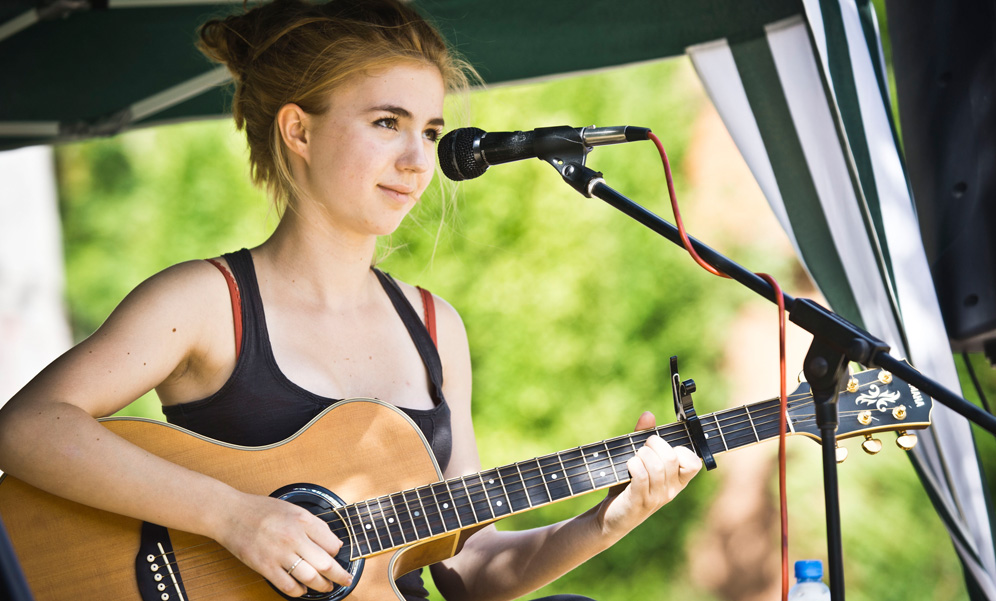
Music Everywhere
It all began two decades ago, in October 1981, when Maurice Fleuret became Director of Music and Dance. He decided to put his reflections into practice: “music everywhere and nowhere in particular.”
Music unites us, connects us in a magical way—without it, one could argue, humanity wouldn’t exist as it does.
A year later, in 1982, a study revealed the cultural habits of the French: five million people, one in every two children, played a musical instrument. That was the real beginning. Fleuret started dreaming of a way to bring people into the streets.
From that moment, the festival took on a life of its own and became an international phenomenon. Today, it is celebrated on the same day in more than 700 cities across 120 countries—Germany, Italy, Greece, Russia, Australia, Peru, Brazil, Ecuador, Mexico, Canada, the United States, and Japan, to name a few.
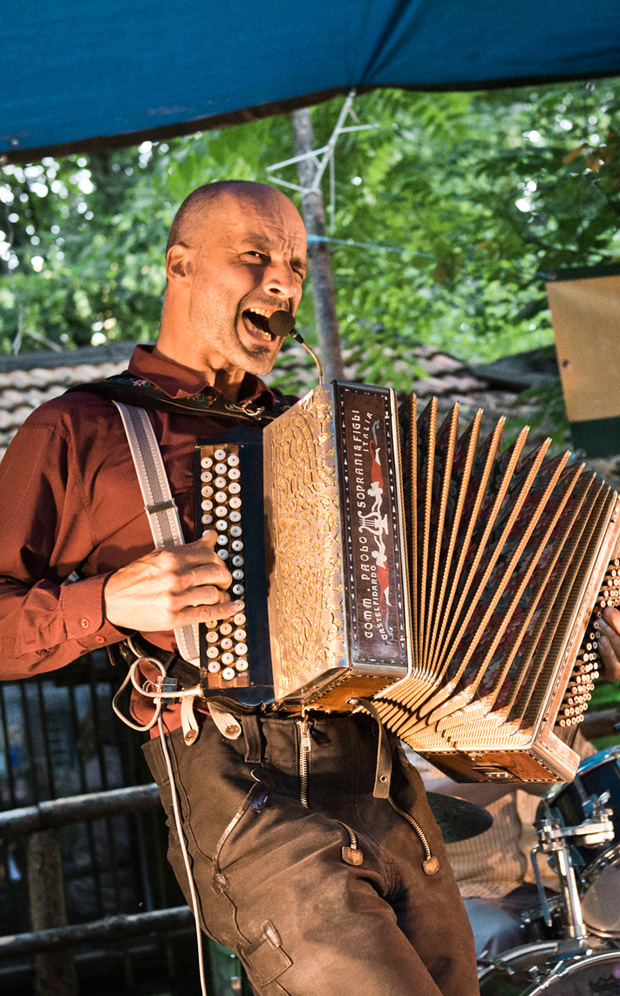
The purpose is to promote music in two key ways. First, by encouraging both amateur and professional musicians to play in the streets. Second, by offering free concerts that make all musical genres accessible.
Preparations for this open-air spectacle move quickly, but the results always exceed expectations. On the summer solstice, light clothing and relaxed atmospheres dominate the scene. Shade is scarce, and thousands of initiatives take place across France and beyond. Musicians set up everywhere: in streets, public gardens, kiosks, train stations, and squares.
In the German Capital
Solkes: How has the Berlin public reacted?
Simone Hofmann: The public loves FDM. Hundreds of thousands roam the streets celebrating music, even in the rain. It feels like New Year’s Eve in summer.
Solkes: How will FDM evolve?
Simone Hofmann: Fête de la Musique Berlin is fully funded by the public sector, with 75% from Stiftung Deutsche Klassenlotterie Berlin, and its support continues through 2017.
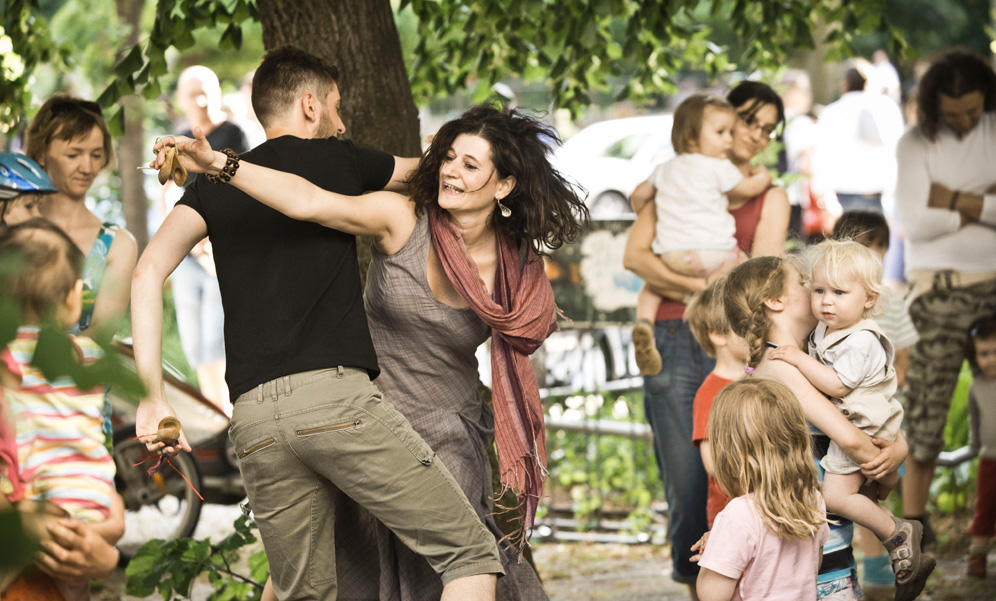
The Fête de la Musique is a brand, a trend, and a movement that continues to gain momentum internationally. Everyone wants to go, everyone talks about it. The best part: it’s completely free. Anyone who wants to enjoy it simply needs to step outside.
Entire families, music lovers, couples, grandparents—everyone is welcome. The streets overflow with good vibes, food, and above all, a sense of unity through music.
The Power of Music
Music is something magical. It is a remedy for all of life’s emotional wounds. The craziest part is that there’s so much music out there that there is literally something for every imaginable taste.
It is music for the people and with the people. There is music to relax, to transport you to another realm, to excite you and make you lose control, and music that simply fills the silence.
Everyone has a favorite song or artist. So it’s no surprise that liking the same music can spark conversation and serve as a tool for connection. In fact, a person’s personality is often revealed by the kind of music that surrounds them.
This should not be taken lightly. There are classical people, artistic/indie people, rockers, alternative listeners, and country lovers. So many things in the world have been born from or influenced by music that, for many, it can be as polemical a topic as politics or religion. Music means something different to everyone.
The Fête de la Musique
In 2014, more than 120 countries around the world participated in the Fête de la Musique. It also serves as a platform for new musical trends: the revival of traditional music, the explosion of world music, the development of choirs, the rise of rap, techno, and more.

The Fête naturally promotes visibility and access to artistic and cultural practices, proving each year its ability to evolve and endure.
Solkes: Could you share some of your best memories of FDM?
Simone Hofmann: A summer day with sunshine, people walking and enjoying music. Concerts by popular groups like Element of Crime or Bonaparte causing traffic jams. Savignyplatz closed because people were dancing in the streets in front of Café Brel.

Solkes: If someone is reading this who has never visited Berlin or experienced FDM, what would you say to them?
Simone Hofmann: Join the party! FDM is the best opportunity to explore the city and see it from every angle.
Thanks to the wide variety of musical genres, it is possible to see artists in a more intimate, personal way. Just last year, hundreds of musicians and music lovers came together to celebrate. Every year on June 21, soloists and groups take to the streets to perform live.
A whole day full of live music of every genre and for every taste—it sounds like heaven. Bands, orchestras, choirs, soloists, and DJs perform in public spaces, spreading joy and creating a pleasant atmosphere for everyone.
Ending on a High Note
Many people decided to pick up an instrument for the first time, only to discover a community they never knew existed. It is a day of celebration and the longest day of the year.
The festival originated in a humble explosion of musical idealism and a few connections. Yet in just two decades it has become a hugely popular global event.
When it comes to music festivals, there is nothing quite like the Fête de la Musique. Without a doubt, it is the place to be and be seen. A nearly perfect, sublime union. It is a space where you can dress as you want, do as you want, and ultimately, be who you want to be.